
Find Out Why the Electric Mini Skid Steer Is Ready for Your Jobsite
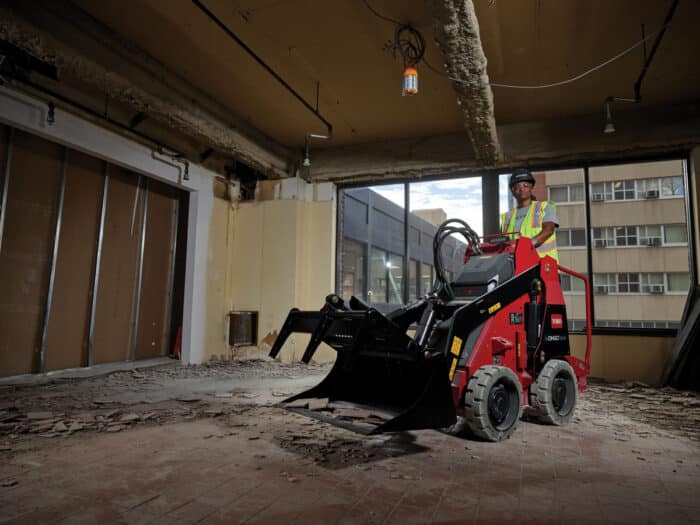
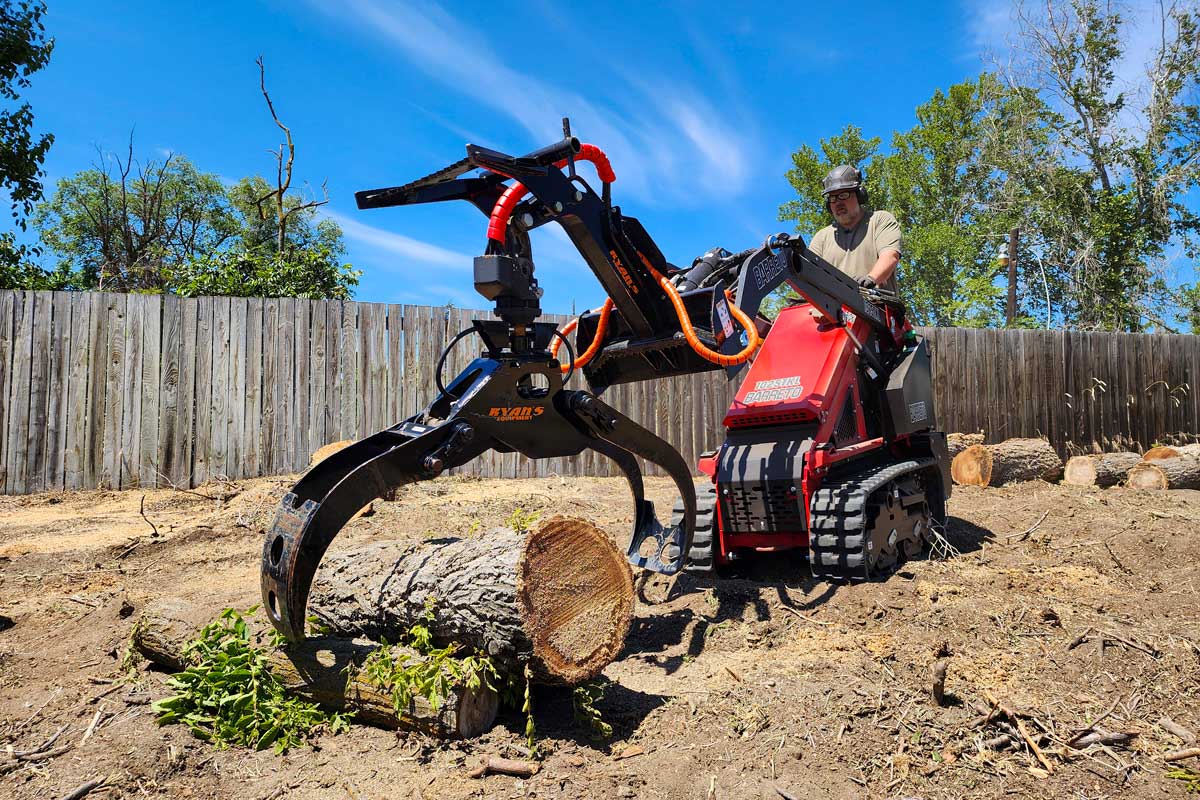
The compact tool carrier, also known as the mini skid steer, compact utility loader or stand-on loader depending on who you ask, has always punched well above its weight. Fit through a 36-in. gate, run a hydraulic breaker, move a half-ton of material in a tight basement, then load back onto a trailer before lunch. It does things other machines can’t, in places other machines can’t go.
Now, that same versatility is going electric, and the timing couldn’t be better.
Battery-powered mini skid steers are arriving from multiple directions at once: established OEMs rolling out electrified versions of proven platforms, electric-first specialists making a push into North America and distributors assembling complete all-electric jobsite ecosystems. The machines are real, they’re in the field, and for the right application, they may be among the most compelling equipment investments you can make right now.
Here’s what buyers need to know.
Why Go Electric in the First Place?
The case for going electric in this machine category is actually stronger than it is for larger equipment. Mini skid steers already operate in environments where the traditional drawbacks of combustion power are most acute: confined spaces, indoors, noise-sensitive sites, finished surfaces, schools, hospitals, occupied buildings.
Electric mini skid steers produce zero emissions, making them ideal for indoor or noise-sensitive applications where air quality and sound levels matter. Warehouses, interior renovation and occupied-building maintenance are chief among them. Ryan Anderson, product manager for subcompact equipment at Case Construction Equipment, frames it as a business opportunity as much as a compliance play. “Electric mini track loaders are a recent entry to the market and are ideal for niche applications where companies may need machines for interior demolition in buildings like hospitals, schools and food processing,” Anderson says. “Look at it as an opportunity to enter new markets.”
The maintenance equation is compelling too. Electric drivetrains eliminate engine oil changes, fuel filters, belts, coolant systems and exhaust components. Fewer moving parts means fewer failure points and less downtime managing consumables.
For contractors bidding municipal or corporate work, the emissions advantage is increasingly a differentiator. Zero-emissions operation helps contractors meet strict environmental standards, a growing requirement on public-sector and corporate jobsites where diesel or propane equipment is being phased out or restricted outright. And as electric adoption scales, total cost of ownership continues to improve: With no fuel spend and minimal fluid maintenance, the machines tend to pay back the purchase premium faster the harder they’re worked.
There’s also a performance angle worth noting. Anderson points out that electric drive motors produce higher torque during operation, which translates to more responsive travel, digging and loading compared to equivalent combustion machines.
The Honest Tradeoffs
None of that means electric is right for every buyer or every application. Runtime is the most common concern, and a legitimate one. Most electric mini skid steers on the market today deliver somewhere between four and eight hours of continuous operation on a full charge, depending on load, attachment use and temperature. Cold weather can temporarily reduce battery capacity — a factor contractors in northern climates need to plan around. Lithium-ion chemistry handles cold better than lead-acid, but neither is immune.
Charging access matters too. Most units support standard 110V or 240V charging, with overnight charging being the typical cycle. If your operation deploys machines across multiple sites without a reliable power source, logistics require advance planning. Some manufacturers address this with swappable battery packs, a useful option for intensive, multi-shift applications.
Purchase price is higher than equivalent combustion units, though the gap is narrowing. For high-utilization operations, the fuel and maintenance savings tend to offset the premium over time, but low-hour seasonal users may find the math less favorable.
Who’s Building Them
The electric mini skid steer market is still early but moving fast, with a widening field of options across price points and use cases.
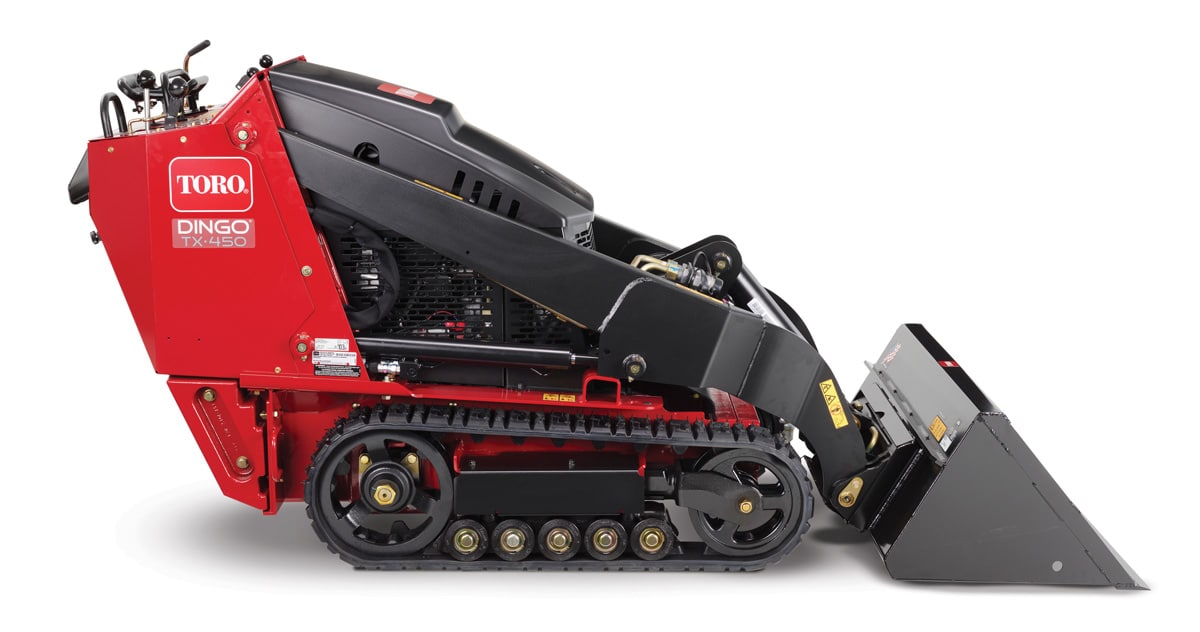
Toro has been the most visible domestic player with its eDingo 500, powered by the company’s proprietary HyperCell Power System, a battery platform engineered to match the output of traditional combustion products while delivering zero exhaust emissions and reduced noise. The machine carries a 515-lb rated operating capacity, fits through a 36-in. gate and is designed to deliver up to eight hours of continuous runtime on an overnight charge from a standard wall outlet. It maintains full compatibility with the Dingo attachment ecosystem, making it a natural upgrade path for contractors already running Toro equipment.
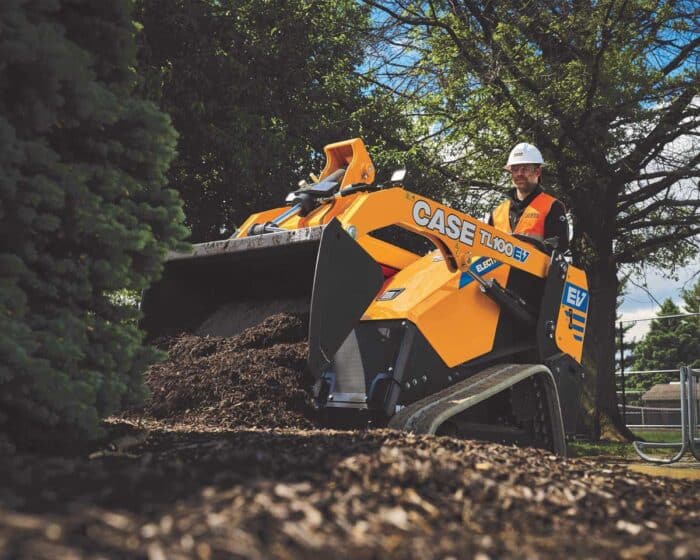
Case Construction Equipment recently entered the segment with the TL100EV, a stand-on electric mini track loader built around a 1,000-lb rated operating capacity and a purpose-built battery platform. Designed for landscapers, contractors and grounds maintenance crews, the machine is compatible with more than 40 industry-standard attachments, meaning contractors don’t need to invest in a new set of specialized electric tools to put it to work. “With its 1,000-lb rated operating capacity and robust battery platform, the purpose-built Case TL100EV delivers construction-grade performance similar to a diesel, but for environments where traditional diesel equipment may not be as practical to operate,” says Anderson.
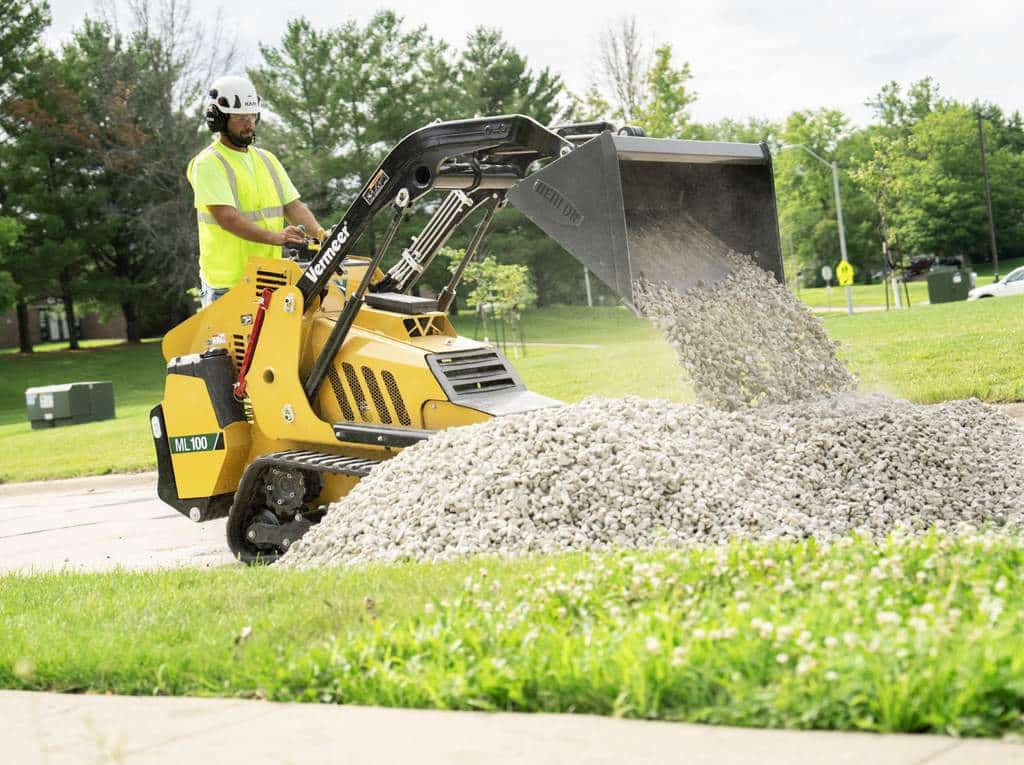
Vermeer has been building its electrification strategy on multiple fronts. The company recently introduced the S450TX electric mini skid steer as part of a limited field validation program, making it available to select tree care operators to gather real-world performance feedback. The S450TX joins electric brush chippers and a stump cutter in a tree care-focused lineup currently being refined with input from working contractors.
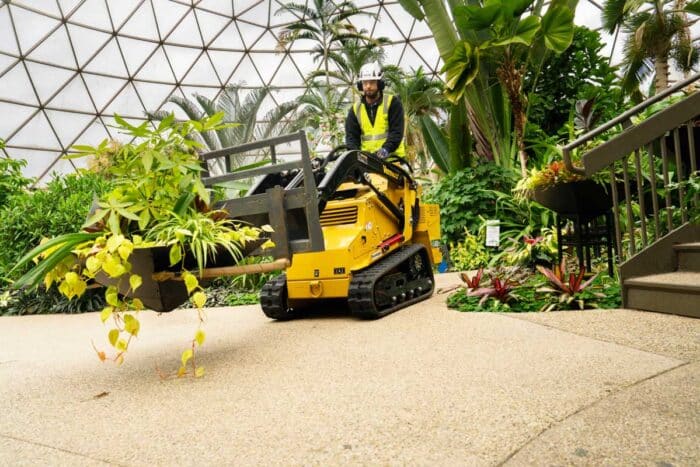
“This lineup is a critical step in our electrification journey,” says Josh Vrieze, senior product manager for Vermeer. “By working directly with tree care professionals in the field, we can better understand the real-world performance of these machines and refine them to meet the challenges of tomorrow’s jobsites. This is about practical innovation, driven by the needs of our customers.”
Vermeer is also previewing the prototype ML180, which introduces electric-over-hydraulic controls, a suspended undercarriage and an air-ride operator platform, a clear signal of where the category is headed.
Firstgreen Industries, headquartered in the Czech Republic with U.S. operations in North Carolina, has taken a different approach: electric-only from the start. The company currently offers 11 electric machines across five model lines, including the remote-controlled MiniZ 400 tracked loader, compact enough to pass through a standard doorway, and the larger cab-equipped Elise line with load capacities up to 2,645 lbs. Battery options span both lithium-ion and lead-acid configurations, with hot-swappable packs available for minimal downtime in high-demand applications.
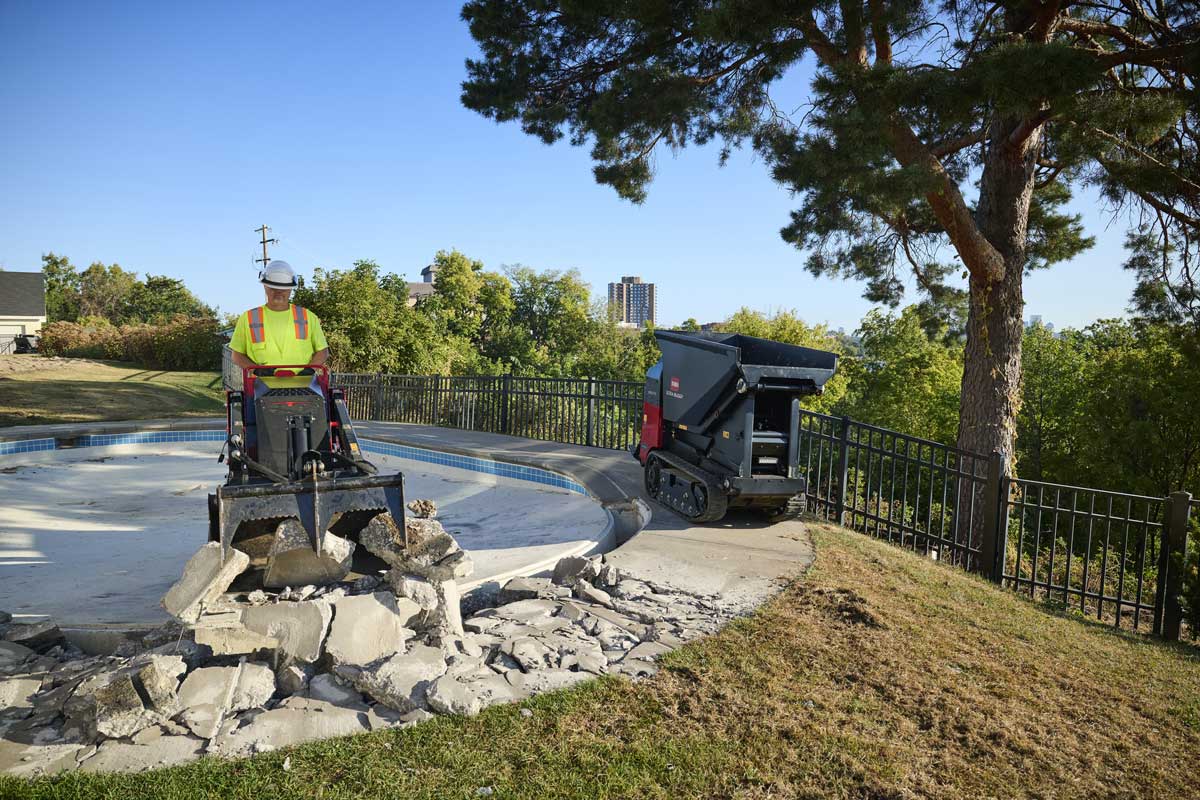
Firstgreen’s North American distribution gets a significant boost through its partnership with Brokk Inc., the Monroe, Washington-based distributor of Brokk AB electric demolition robots. Brokk has carried electric-powered equipment for more than 50 years and has been assembling what it describes as a complete, all-electric jobsite solution, pairing its own demolition robots with Firstgreen loaders and Ecovolve dumpers for a full break-load-haul workflow.
“We are very excited to add Firstgreen’s innovative technologies to our offerings in North America,” says Jeff Keeling, VP of sales and marketing at Brokk Inc. “Being electric and remote-controlled fits perfectly with our commitment to seeing operators safe in hazardous environments.”
Marcus Suess, COO of Firstgreen Industries USA, sees the Brokk partnership as a meaningful step in the company’s North American expansion. “Brokk’s extensive experience and leadership in the industry align perfectly with our mission to drive innovation, safety and sustainability,” he says.
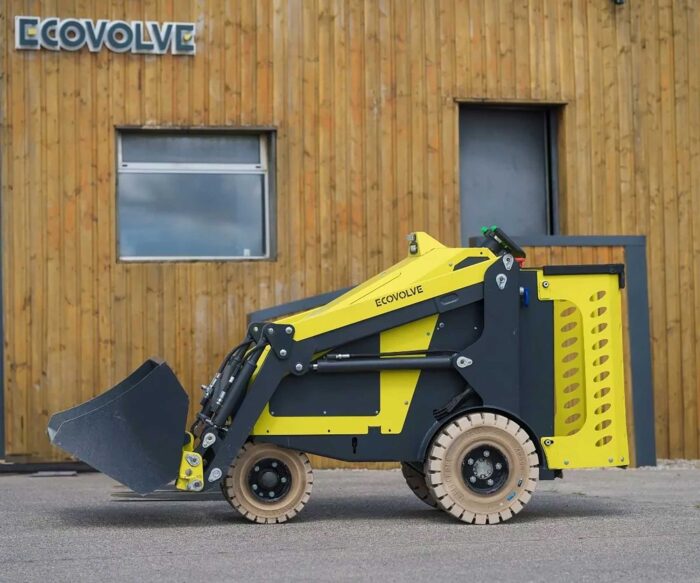
The newest addition to Brokk’s distribution portfolio is the Ecovolve EL500 mini loader, which was recently introduced to the North American market through this partnership. At less than 32 in. wide, the EL500 fits into spaces inaccessible to larger machines, won’t scratch finished floors and operates at a low 65 dB, a real advantage on interior demolition and renovation work where noise compliance is required. Keeling frames the Ecovolve lineup in straightforward terms: “Ecovolve products are electric and compact, perfectly suited for interior demolition or any situation where fumes and access are a concern. Adding this innovative equipment to our lineup provides customers the possibility of a fully electric demolition project, including clean-up.”
What to Look for When Buying
Battery technology matters more than raw kilowatt-hours. Look for lithium-ion chemistry if the machine will see heavy daily use. It charges faster, holds capacity longer over its service life and performs better in cold conditions than lead-acid alternatives. Ask about warranty coverage on the battery pack specifically, because this is where long-term operating cost lives.
Charging flexibility is worth evaluating carefully. Can the machine charge from a standard 120V outlet, or does it require 240V? Is there an option for faster DC charging? For fleet buyers, onboard vs. off-board charger configurations affect how you structure depot charging. Some manufacturers offer swappable packs, a real advantage in multi-shift operations.
Attachment compatibility deserves careful attention. Anderson’s point about industry-standard mounting systems is worth taking seriously: a machine that accepts your existing attachment inventory is a very different value proposition than one that requires a parallel investment in proprietary tooling. Confirm the mounting plate is compatible before you buy.
Finally, consider what support looks like in your market. The electric mini skid steer field includes both established dealer networks like Toro, Case and Vermeer and newer regional distribution models like Firstgreen and Ecovolve through Brokk. Service availability and parts response time are still more variable in the electric segment than in conventional equipment, so ask the questions before you sign a purchase order.
Where the Market Is Headed
The trajectory is clear. More OEMs are bringing electric mini skid steers to market, battery technology continues to improve and runtime concerns that stalled adoption a few years ago are being actively addressed. Vermeer’s ML180 prototype, with its EH controls and suspension system, signals that the next generation of electric compact tool carriers won’t just be quieter. They’ll be fundamentally better machines to operate.
For contractors doing any significant volume of indoor work, working in regulated environments or building a fleet with an eye toward lower operating costs, the electric mini skid steer has crossed the threshold from “interesting technology” to “serious equipment purchase.” The plug-in era for compact tools is here.


Comments are closed here.