
Grow Your Landscaping Business with These Compact Utility Loader Attachments
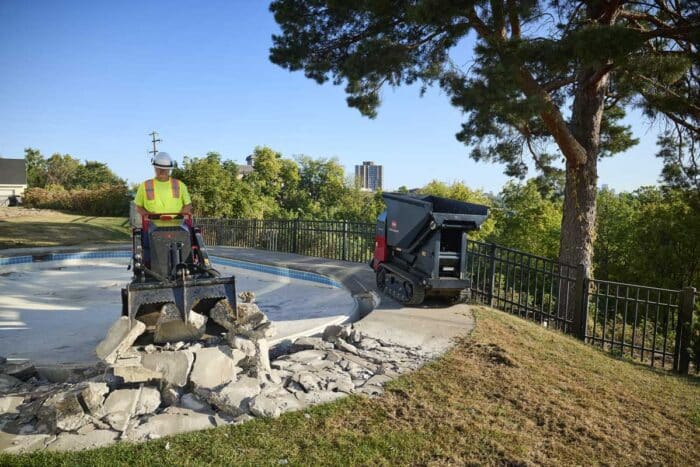
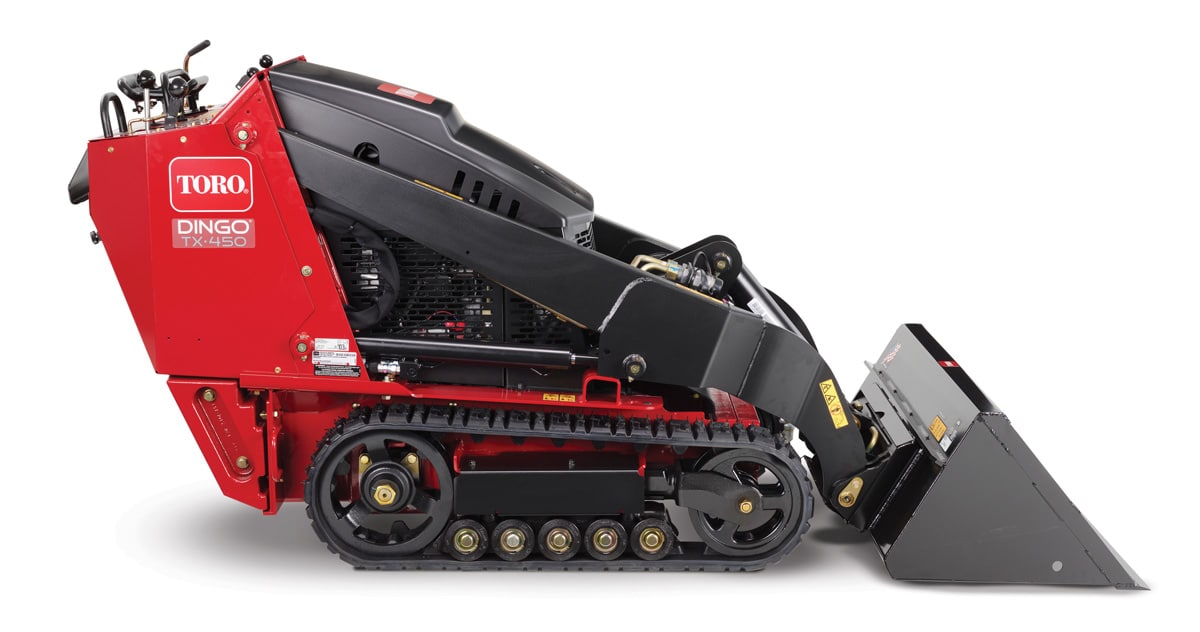
Compact utility loaders (CULs) — also called mini skid steers, compact tool carriers, etc. — were originally developed to help contractors reduce their dependence on manual labor and large equipment that could damage turf. These machines are lightweight, easy to maneuver and adaptable to a wide range of tasks. So, it makes total sense why they’ve become a staple on landscaping jobs.
“These machines can move through standard gates and doorways, operate in tight spaces that previously required hand labor and travel over sensitive turf without causing damage,” says Kaitlyn Ingli, product marketing manager at Toro. “Additionally, their compact size means they can be transported on a single-axle trailer, simplifying logistics.”
Ingli points out that CULs are especially appealing because they’re able to accommodate a wide array of attachments — transforming a single machine into a multitasking powerhouse. In landscaping, those tasks can include anything from hauling loads of mulch to digging holes for trees. Below, Ingli discusses five essential attachments for landscaping.
Material Handling Attachments
Landscaping requires a lot of moving materials from Point A to Point B. A CUL paired with a standard bucket fits the bill. Ingli says this attachment is the “gold standard” in material handling as it can easily move rock, dirt, sand and more — reducing the need for manual labor. Landscapers can choose buckets between 30- to 42-in. widths, depending on what best fits their needs. Ingli offers this advice when using a bucket: “When moving heavy or loose materials, keep the bucket close to the ground to maintain stability and prevent spillage,” she says. “Avoid overloading to protect your machine and extend bucket life.”
In addition to a bucket, grapple rakes are a great option for grasping and moving landscaping materials. Ingli says Toro’s grapple rake is perfect for grabbing, dragging and lifting materials like rocks and debris. It provides crews with 3,000 lbs of clamping force for heavy-duty tasks. When using a grapple rake, it’s important to approach materials slowly, clamp firmly and lift carefully to maintain stability. Ingli cautions operators to avoid overreaching or swinging heavy loads too fast.
Soil Preparation Attachment
Landscaping involves clearing and leveling ground, and a power box rake is an ideal attachment for that. Ingli explains that a power box rake helps prepare seedbeds and levels uneven areas in a single pass. It also removes rocks and debris. Available in a 48-in. width, the Toro power box rake boasts adjustable wheels so operators can make depth changes to fill, plane and pulverize soil with ease. Ingli encourages operators to use the rake at a steady, moderate speed and overlap passes slightly to ensure an even surface. Crews should avoid raising the rake too high to prevent leaving behind debris or uneven soil.
Planting and Digging Attachments
When it’s time to break ground during a landscape project, augers and trenchers are go-to attachments. A high-torque auger excels at digging and is capable of producing holes up to 6 ft deep — even in tough conditions like clay or gravel. With one, a crew can quickly create the holes needed for fence posts, trees and shrubs. Ingli tells operators to start slowly to ensure the auger bites into the soil and keep the attachment vertical for straight holes. It’s also important to lift the auger periodically to clear debris. She adds, “Never force an auger attachment through rock or roots to avoid motor strain.”
If pipe or irrigation installs are on the docket for the day, a CUL paired with a high-speed trencher is essential for the work. A trencher allows a landscaping crew to cut trenches quickly and efficiently. Its heavy-duty design allows the attachment to slice through a variety of ground conditions while reducing wear and tear to the trencher and CUL. Ingli says operators should maintain a steady pace and let the trencher do the work. Forcing the trencher can increase wear and reduce efficiency.

Comments are closed here.