
Explaining Attachment Interface Pitfalls and Opportunities
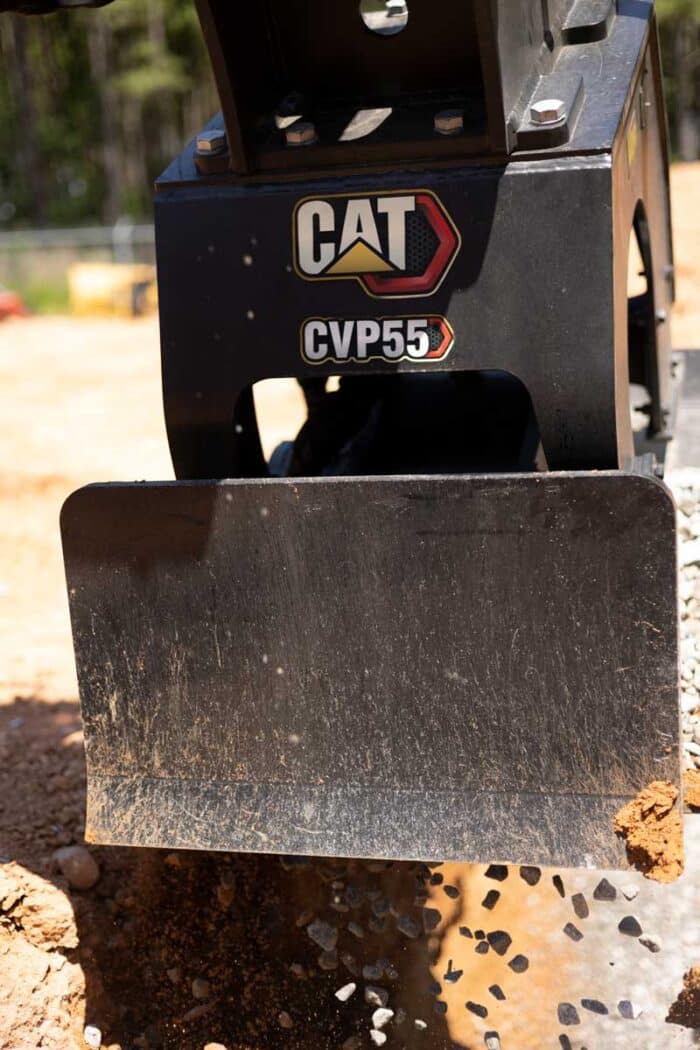
Compact equipment is revered for its versatility; the variations of attachments and carriers seem almost endless. The tricky thing is getting Attachment A to play nicely with Host Machine B. The industry works hard to make this happen, but the result is a range of considerations that can be overwhelming. It helps to keep in mind two general concepts: things that could go wrong and things that offer new opportunities. We’ll look at both in each of the several categories.
Couplers
The very name “common industry interface” is misleading. Used almost exclusively on compact utility loaders, CII is found in wide and narrow configurations and in a variety of proprietary designs from various OEMs with additional designs in development. There is not one “common” design, and customers need to confirm compatibility between their attachments and carriers and the specific CII style needed to connect them.
Similarly, “skid steer plate” can refer to the coupler or to a plate welded to an attachment to make it compatible with the skid steer coupler. More accurate names for the coupler itself include SSQA, for skid steer quick attach; universal quick attach, or UQA; and SAE J2513, which defines the design.
SAE J2513 is intended for machines of up to 9,920-lbs operating weight, expressed as 4,500 kg of mass in the SAE documentation. Scott Britton, attachment marketing manager at Caterpillar, notes that every Cat compact track loader (CTL) from the 265 and up has an operating weight greater than J2513 cites. He says Caterpillar’s 285 and 285 XE CTLs have operating weights of 13,497 and 13,669 lbs and ROCs of 4,461 and 4,520 lbs at 35 percent of tipping load. “As compact machines get larger and more powerful, the industry needs to consider whether the skid steer coupler is sufficiently robust to handle these loads.”
Hydraulic couplers are commonplace. They have a high stack height, which reduces breakout force. And although they fit a wide range of buckets and attachments, some can be limited in what they accept in terms of pin diameter, pin spacing and connection process. Zac Evans, product manager of excavators and carriers at Yanmar, says all its models from the ViO25 and above have variable pin grabbers. This variable design allows the pin grabber to match with most attachments within a model’s recommended range. The design also allows attachments to be raised and locked while suspended off the ground, eliminating challenges from uneven terrain.
The S coupler (“S” for “symmetrical”), popularized in Scandinavia, is rapidly gaining ground in North America. The pins are placed symmetrically so, for example, the same bucket can be used for shovel- or excavator-style digging. S couplers have piggybacked on the popularity of tiltrotators by further enhancing tiltrotators’ versatility. Tiltrotators can have pins for quick and easy mounting to the stick and an S coupler to mount the attachment.
Hydraulics
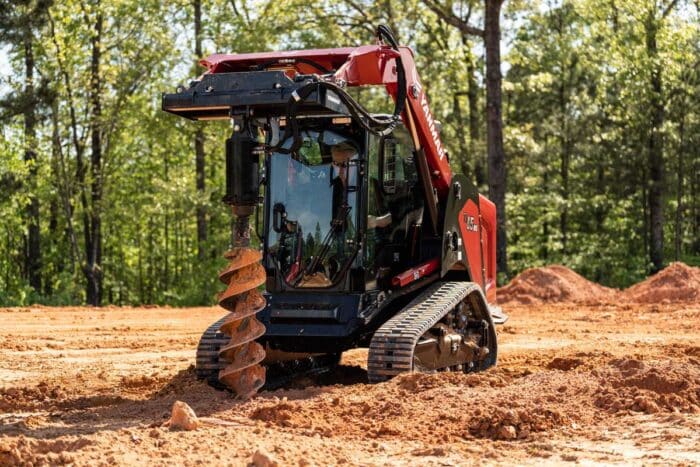
The actual hydraulic connectors are straightforward and standardized since flat-face quick couplers have almost entirely replaced the older poppet-style connectors. But there are points relevant to hydraulics that bear mentioning.
Dan Sauber, senior product manager of compact track loaders at Yanmar, says discussions about hydraulics usually center on whether there’s enough. There should also be consideration of whether there’s too much. “It’s what the attachment needs, but it’s also what it can handle. Flow or pressure in excess of what an attachment is designed for can lead to damage to the attachment, often by burning out the hydraulic motor.” He says standard flow is typically fixed; high-flow has some adjustability.
Attachments can often be tuned to the host machine by adjusting flow, as well as hydraulic motor displacement and speed, to prevent stalling while maintaining peak efficiency. Newer “smart” attachments complete this process automatically, configuring hydraulic flow and in-cab controls through digital communication.
Evans says that the hydraulic needs of a tiltrotator and the attachment it carries must be compatible. A flow diverter valve is available that enhances flexibility at a lower cost than having two auxiliary circuits. Yanmar’s ViO80-1 and SV100-2 have newer pumps that better maintain flow as backpressure increases in response to load.
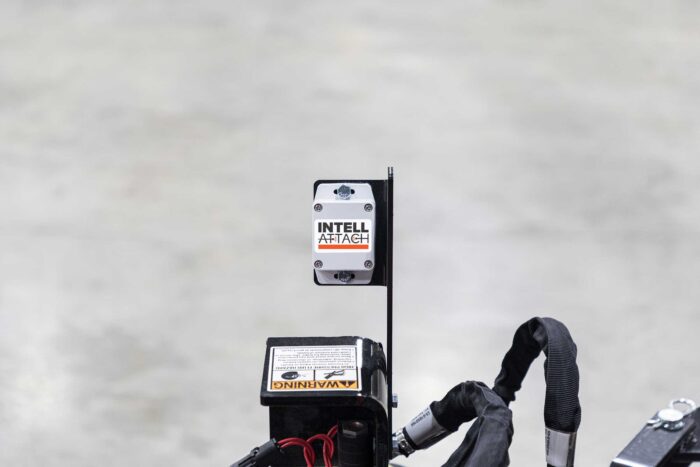
One effective way to ensure compatibility between the attachment and the carrier is to stay within the OEM’s ecosystem. This can include OEM-branded attachments, but it can also include joint ventures such as the one between Kubota and Land Pride. Michael Butler, CE product manager at Land Pride, uses the Kubota SVL97-3 CTL as an example. “With Intell-Attach, operators can program attachment data into the MyKubota app.” The system then communicates the required hydraulic flow to the loader when it comes within range. Proprietary technology prevents cross-talk with other units in proximity. “The technology was jointly developed by Kubota and Land Pride for communication between the SVL97-3 compact track loader and compatible Kubota by Land Pride attachments,” Butler adds.
Hydraulic horsepower (HHP) is gaining popularity as a performance spec, but customers need to proceed with caution. HHP is derived from a formula: HHP = PSI x GPM/1714. A bump in either flow or pressure will result in an increase in hydraulic horsepower even if the other value remains unchanged. And a very high value in either will overshadow a comparatively low value in the other even if the HHP seems to indicate otherwise. High hydraulic horsepower should indicate sufficient of both pressure and flow, but customers are wise to confirm each of those numbers in choosing attachments and carriers.
OEM hydraulic performance presets are found on many machines. They are optimized for OEM attachments and may not work well with non-OEM attachments.
Electrical
Electrical connectors are categorized as “X-pin,” such as 3-pin or 14-pin. This can be confusing because what the connectors have is three holes or 14 holes, not pins — and even the 14-pin connector may have as few as two pins in active use.
There’s more. The 3-pin is a John Deere exclusive, as is the less-common 5-pin. Likewise, the 7-pin connector is unique to Bobcat and is used for proprietary digital communication from the host machine’s CANbus system. Yanmar and ASV use 8- or 14-pin connectors, depending on the model, and Caterpillar used 8-pin until it moved to a 14-pin connector in 2014. That 14-pin design is shared by Kubota, newer Deere equipment, Case and New Holland.
This complexity may seem like a bit much given that you have two choices for connecting a trailer and a tow vehicle (but also see the sidebar below). A Wells Cargo 9-ft box trailer to a Silverado 1500 on a 2-in. receiver hitch or a Big Tex 30-ft gooseneck to an F350 dually on a fifth wheel: two choices.
Trailer Electricals Aren’t Simple, Either
Attachment electricals would seem overly complex compared to trailer electricals, which come down to 4-way flat for light-duty use and 7-way blade for RVs. But tow electricals also include 5-way flat for boat trailers, 6-way round for older horse trailers and RVs, 7-way round (SAE J560) for semis, 12- and 13-pin (ISO 11446) common in Europe and Australia and 9-pole for specialized applications. (The “blade” and “round” for 7-way refer to the shape of the pins.)
If the attachment will always be paired with the same host machine, the connector can be re-pinned. There are tools for that purpose. There are aftermarket harnesses and adapters to help, but they can be expensive. Making these adaptations is more than matching connections, however. There is an opportunity to scale down the complexity of machine operation to make it more suitable to the lesser-experienced operators common in today’s marketplace. There is also the need to preserve haptics — the “feel” of the controls — that operators find essential to the operating experience. AI is emerging as a useful tool in this effort.
Final Thoughts
We’ll close with an insight Autumn Skoog, product manager of attachments at Yanmar. She says knowing the attachment is important in defining the interface, but it’s not enough. “Attachments have multiple use cases that vary among customers and locations. Do your own research specific to your needs but also consult with the product expert at your local dealership.” Her advice summarized in three words: “Trust your dealer.”


Comments are closed here.