
Buying Tips for Compact Tractor Attachments
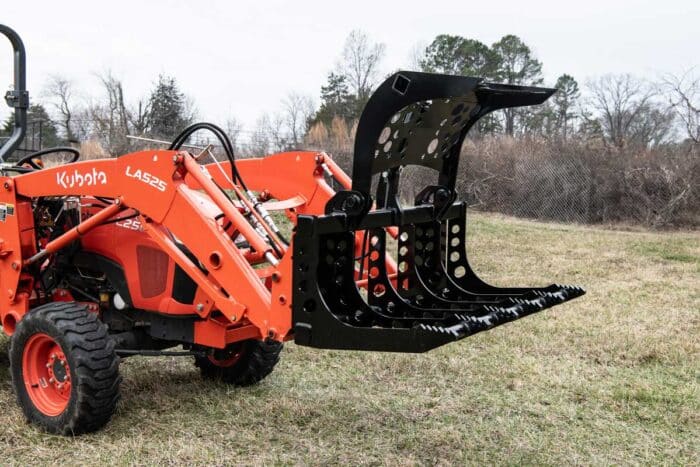
Owning a compact tractor has a way of making you think you can do just about anything with it. And, to be fair, with the right attachment, you can get an amazing amount of work done.
You can clean up storm debris, move logs, maintain a gravel driveway, carry materials, clear brush and knock out jobs that used to mean a lot more hand labor.
The catch is that attachment shopping can get out of hand pretty fast. You see a grapple or a set of forks that looks perfect, it fits the loader, and the next thing you know you’re trying to justify why you absolutely need it.
Before buying anything, back up and ask two questions: Can my tractor handle it, and is this really the right tool for the work I’m doing?
Start With the Tractor You Already Own
Horsepower gets most of the attention when people talk about tractors, but for front-loader attachments, loader capacity is usually the better place to start. Two tractors that look similar can have very different loader ratings. Those ratings also come from specific test points and conditions. The practical part is simple: look up the specifications for your exact tractor and loader before you start shopping for attachments.
And remember that the attachment itself is part of the load.
A heavier grapple may be built like a tank, but that weight is already hanging on the loader before you grab the first log on a compact tractor, which can make a real difference. That doesn’t mean you should automatically buy the lightest attachment. It still needs to be strong enough for the work. The goal is enough steel in the right places without carrying around weight that doesn’t help.
“Heavy Duty” Can Mean a Lot of Things
We’ve all seen equipment with “heavy duty” in the name. Sometimes it means the attachment is genuinely better built. Sometimes it mostly means there’s more metal.
Those are not always the same thing.
If you’ve spent a lot of time around equipment, you start noticing where things fail. Frames don’t usually bend everywhere at once. Welds don’t crack at random. Loads find weak points, pivot areas wear, and repeated stress shows up in the same places.
Good attachment design puts strength where the stress will be. Adding more steel everywhere can make an attachment heavier without making it better.
Buy for the Job, Not the Picture
This sounds obvious, but it’s probably the easiest part to skip. Don’t start with, “Which grapple should I buy?” Start with, “What am I trying to move?” Brush and storm debris are one thing. Large logs and roots are another. Demolition material is something else entirely.
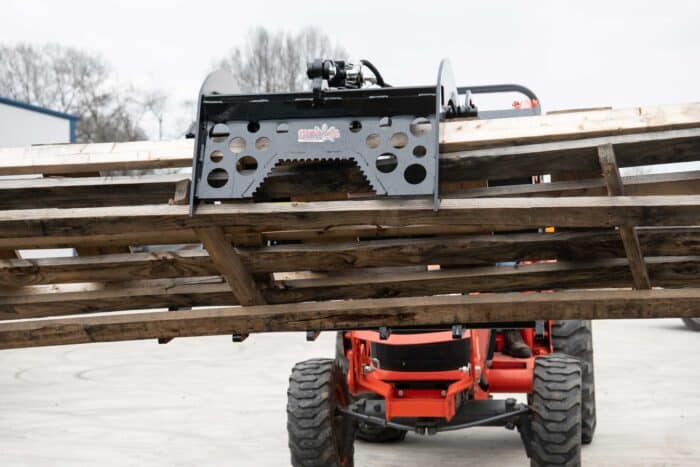
The same goes for other attachments. If you spend half your weekends maintaining a gravel driveway, grading equipment may make more sense than a grapple. If you’re constantly fighting brush with a bucket, a grapple could save you a lot of time. If you regularly handle pallets, forks may end up being one of the most-used tools you own.
Grapples are especially useful for irregular material such as logs, brush, and debris. That’s really the appeal. They solve a specific kind of problem well. The trick is making sure it’s the right problem for you.
Check the Hydraulics Before Delivery Day
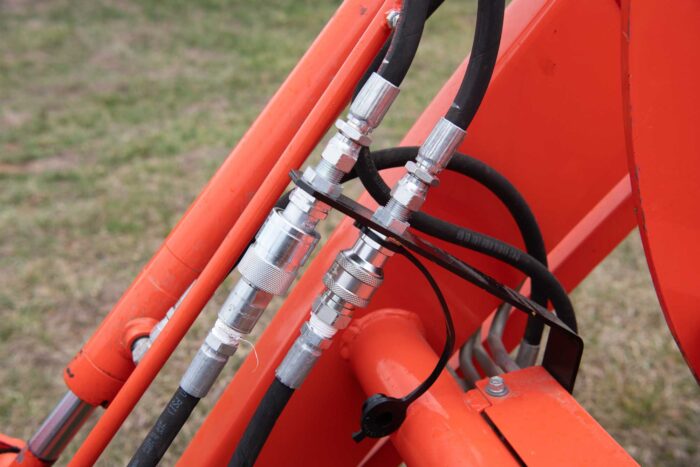
One of the more frustrating ways to learn about tractor hydraulics is to have a brand-new attachment sitting in the driveway that you can’t actually operate. A grapple is a good example. It may connect perfectly to the loader, but the tractor still needs a way to open and close it. That usually means a third-function hydraulic setup. Before ordering, check the mounting interface, hydraulic requirements, couplers, and hose setup. If you’re not sure, ask before the truck shows up. It’s a much cheaper conversation up front.
Lifting It Is Only Half the Job
People naturally want to know, “Will my tractor lift it?”
The next question should be, “What happens once it’s in the air?”
A loader changes a tractor’s center of gravity, and raising a load raises that center of gravity with it. That’s where actual conditions start mattering. A load that feels manageable on flat ground can feel very different on a slope, over uneven terrain, or with the loader raised too high.
Tires matter. Ballast matters. Terrain matters. Load position matters.
The tractor and loader manuals should always win the argument on operating limits and ballast.
Look Around the Property Before You Look Online
One of the best ways to figure out what attachment you need is to stop shopping for a minute and walk around your property.
What job keeps taking too long? What are you doing with the bucket because it’s already on the tractor, even though it’s obviously not the right tool? What project keeps getting pushed off because doing it the way you’re doing it now is a pain?
Those answers usually tell you more than another hour of scrolling through equipment listings.
Two people can own the same tractor and need completely different setups. One may spend most of the year clearing trails and moving brush. Another may maintain a driveway, move firewood, or work around livestock.
The tractor is only half of the equation. The property and the work decide the rest.
Think About the Annoying Little Stuff Too
Specifications are important, but so are the things you’re going to notice six months from now.
Can you see the attachment well from the seat? Are the hoses routed where they won’t get snagged? Are grease points easy to reach? Is it easy to hook up and remove? Can you store it without it becoming another awkward thing to work around?
None of that sounds exciting online, but it matters after you’ve connected the attachment twenty or thirty times.
A miserable tool to use has a funny way of spending a lot of time parked beside the barn.
The Best Attachment Is the One That Makes the Tractor More Useful
The whole point of a compact tractor is versatility. The right attachment makes the machine more useful. The wrong one eats up lift capacity, complicates the job, or sits unused because it never matched the work.
So start with the tractor. Know the loader capacity. Check the hydraulics. Pay attention to attachment weight and construction. Follow the manufacturer’s recommendations for ballast and safe operation.
Then stop looking at specifications for a minute and think about the job you’re actually trying to get done.
The best attachment isn’t automatically the biggest, the heaviest, or the one with the longest list of “heavy duty” features.
It’s the one that fits the tractor, fits the work, and still makes sense after the new-equipment excitement wears off.
Jay Landers is marketing director of Catawba Attachments. Click here for more info.


Comments are closed here.