
Follow These Simple Grade Control Practices and Achieve Better Results
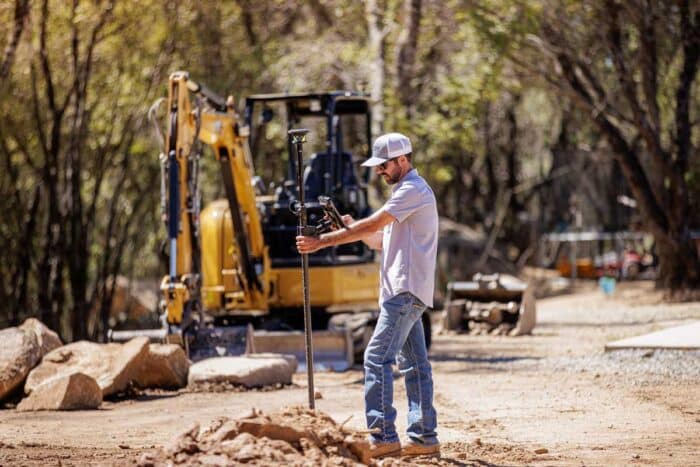
Not long ago, 3D grade control technology was largely reserved for larger excavators working on major infrastructure and commercial construction projects. Today, that’s changed. As systems have become more versatile, affordable and easier to use, grade control has found its way onto midi and compact excavators across a wide range of applications.
Whether the job involves installing septic, utility lines, digging drainage ditches, preparing residential building sites or performing landscape work, contractors are increasingly relying on grade control to improve accuracy, reduce labor costs and prevent costly rework. The technology can help operators hit target grades horizontally and vertically more consistently, but manufacturers are quick to point out that the system itself is only part of the equation. The contractors seeing the greatest success are the ones who combine technology with sound operating practices.
Be Prepared
3D grade control systems (GNSS or LPS) rely on accurate machine geometry and properly functioning sensors. A few minutes spent inspecting sensors, wiring and machine settings before work begins can prevent hours of frustration later in the day. Operators should also verify that the attachment being used matches the information entered into the system. It sounds obvious, but it’s a mistake that still happens in the field. A machine configured for one bucket size while operating another can quickly introduce grading errors that become increasingly noticeable as the project progresses.
Follow the Plan
Planning remains equally important. While grade control provides real-time guidance, it doesn’t replace a clear understanding of project requirements. Contractors should review plans, elevations, utility locations and drainage specifications before starting excavation. The technology helps operators execute the plan — it doesn’t create it.
Drainage projects offer a good example. Maintaining a consistent slope over hundreds of feet can be difficult using traditional methods alone. Grade control simplifies the process considerably, but operators still need to understand the required fall and verify the design information loaded into the machine. If incorrect data is entered, the machine will faithfully guide the operator to the wrong result. That’s one reason many OEMs continue to recommend periodic verification.
Even with advanced technology, experienced operators often check grades manually at key points during a project. Conditions can change. Machines are repositioned. Ground shifts. Spot-checking helps ensure everything remains on track while providing additional confidence that the system is performing as expected.
Take Your Time
Another best practice involves how operators actually run the machine. For example, some newer users assume grade control eliminates the need for finesse. In reality, smooth machine operation often produces the best results. Sudden boom movements, aggressive bucket inputs and rushed finishing passes can make it more difficult to achieve a clean final grade.
Operators who consistently produce quality work typically approach finish grading in stages. Rather than attempting to achieve final grade in one pass, they remove material progressively and make smaller corrections as they approach target elevation. The process may seem slower at first glance, but it often reduces over-excavation and minimizes the need for rework.
Maintain Good Visibility
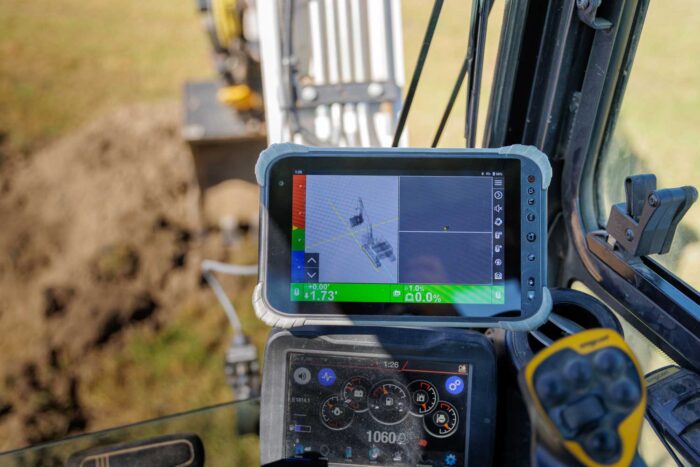
Manufacturers also caution operators against becoming overly focused on the display screen. The information shown on the monitor is valuable, but maintaining awareness of the surrounding work environment remains critical. Trench conditions, nearby personnel, utility markings and changing jobsite activity deserve just as much attention as digital grade information. The most effective operators learn to use the screen as a tool without allowing it to become a distraction.
Make Training a Priority
Training may be the single most overlooked factor in successful grade control adoption. Manufacturers frequently report that contractors achieve the strongest return on investment when operators fully understand both the capabilities and limitations of the technology. A skilled operator who understands the system can often outperform someone with more advanced equipment but less training.
For that reason, many OEMs encourage contractors to take advantage of dealer-led instruction, online training resources and hands-on demonstrations. Investing in operator knowledge often pays dividends long after the machine leaves the dealership.
As grade control technology continues to become more common on excavators, its value extends beyond simply improving accuracy. Contractors are using these systems to reduce rework, improve productivity, shorten project timelines and lessen reliance on traditional staking methods.
The technology itself is impressive. But according to manufacturers, the real advantage comes from combining that technology with proper setup, sound operating practices and experienced operators who understand how to make the most of it. In the end, grade control doesn’t replace skill. It amplifies it.
Joel Frost is the director of business development for compact solution products at Topcon Positioning Systems Inc.


Comments are closed here.