
Discover How Small Articulated Loaders Help Landscapers Do More in Tight Spaces
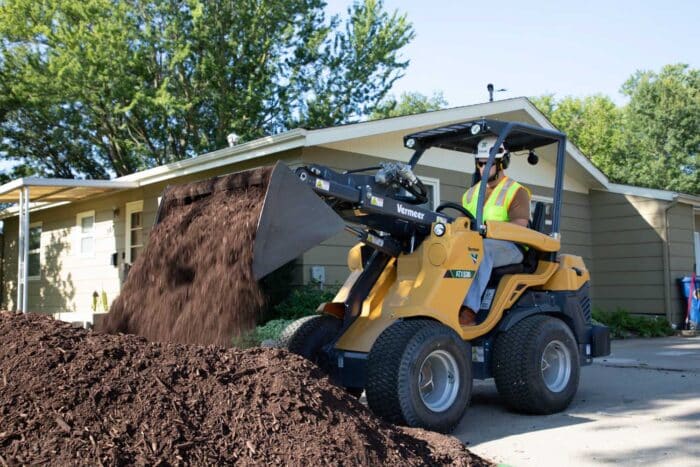
Landscape contractors are being asked to do more work in less space than ever before. Residential renovation projects run through 36-in. backyard gates. Commercial maintenance contracts put crews on finished turf that has to look untouched when the job is done. And with skilled labor still hard to find, every machine on the trailer needs to replace hours of hand work. This combination of pressures helps explain why the small articulated loader (SAL), one of the fastest-growing categories in compact equipment, keeps showing up on landscaping jobsites.
“Landscape crews are winning work in places where a full-size loader was never an option,” says Kegan Strobel, product specialist at Vermeer. “Jobsites keep getting tighter and more varied, and contractors want one machine that can adapt to whatever the day throws at it.”
SALs answer that call with a design that is different from the skid steers and compact track loaders most landscapers grew up running. Understanding those differences, and outfitting the machine with the right attachments, goes a long way toward getting full value from one.
Why Articulation Works on a Landscape Site
A SAL steers from a pivot point in the middle of the machine, so the rear wheels track through the same arc as the front wheels. Combined with four-wheel hydrostatic drive, that articulation helps the loader make tight turns with less skidding action that can tear up grass. For crews working on established lawns, golf courses and high-end residential properties, that can mean less time and fewer resources spent on turf repair before leaving the site.
“One of the first things contractors notice is how much less cleanup they have after the job,” Strobel says. “Crews are far less likely to spend time repairing ruts or re-sodding a lawn, and the machine can fit where they need to work.”
Most SALs also carry a telescopic boom, and it changes how operators approach material handling. Instead of choosing between getting close to an obstacle or reaching over it, the operator can do both.
“Pull up beside the trailer, raise the boom and push the load out over the side,” Strobel says. “Operators who come off a skid steer tell us that reach can change how they set up a jobsite.”
Add in a strong lift-to-weight ratio, faster travel speeds than similarly sized compact loaders and a suspension seat with good sightlines from a higher operator station, and the category makes a strong case for landscape work ranging from hardscape installs to planting, grading and property maintenance.
Sizing the Machine
SALs generally fall into two horsepower classes, and the right choice comes down to where a crew works. Machines in the roughly 25-hp class are sized to fit through many residential backyard gates and are typically light enough to tow behind a standard crew truck without stepping up to a heavier trailer. Models in the 50-plus-hp class offer considerably more lift capacity, faster travel speeds that can approach 16 mph and enclosed cab options with heat and air conditioning that can help keep crews productive year-round.
Auxiliary hydraulic flow matters just as much as horsepower. Contractors planning to run continuously powered attachments like trenchers, power rakes or tillers should match the flow rating of the machine to the attachments they intend to use.
Building Out the Attachment Lineup
Versatility is the reason most landscape contractors buy a SAL, and versatility comes from the attachment plate. A universal mounting plate and quick-connect hydraulics let one machine move through several roles in a single day. A typical landscaping loadout includes:
- Buckets and pallet forks. The everyday workhorses for moving soil, mulch, rock and sod, plus palletized pavers, trees and other nursery stock.
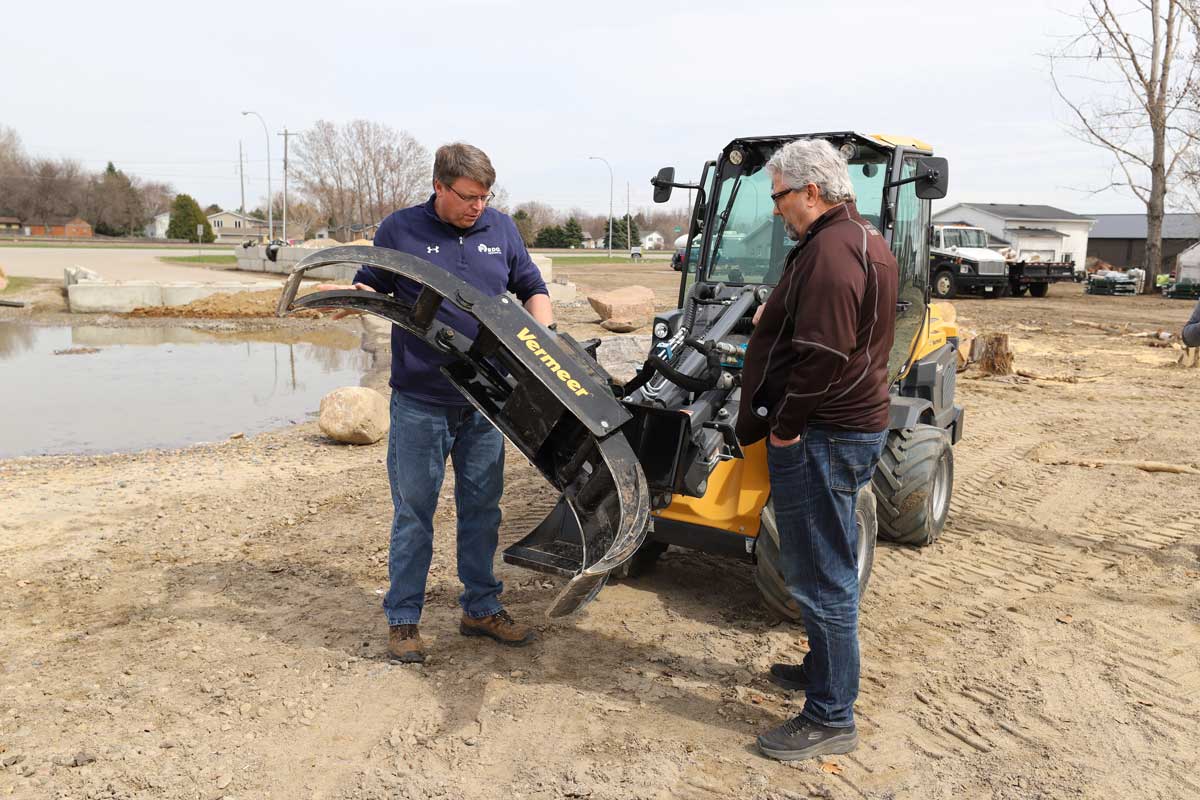
- Grapples. A brush grapple can turn cleanup from a hand-carry job into a machine job, grabbing limbs, brush and demolition debris. Crews doing tree and shrub removal often stage material with the grapple and feed it straight to a chipper.
- Power rakes, rotary tillers and flail mowers. Ground-engaging and maintenance attachments handle seedbed prep, soil conditioning and overgrown-area cleanup on the same carrier that hauled the material in.
- Augers. For planting trees and setting fence posts, deck footings and sign bases.
- Trenchers and vibratory plows. Landscape crews installing irrigation lines, low-voltage lighting or drainage can put utility-style attachments on the loader instead of mobilizing a dedicated machine.
- Snow attachments. Pushers, blades, blowers and sweepers can help keep the machine earning through the winter months — an important consideration for landscape companies that carry snow contracts to hold crews over the off-season.
Best Operating Practices for Landscapers
A few habits separate crews that get the most from a SAL from those that do not. These include:
- Ease into turns. Articulated steering is turf friendly by design, but operators should still make turns as gradual as the site allows to protect soft surfaces and reduce tire wear.
- Throttle down. “A lot of operators run everything wide open,” Strobel says. “Dialing the engine back for finish work can give you more control.”
- Carry loads low. Travel with buckets, forks and grapples close to the ground for stability, then lift and extend the boom only when positioned at the truck, trailer or wall.
- Pick the right tires. Most manufacturers offer multiple tire options. Turf tires spread the machine footprint and can be worth the investment for crews that spend most of their time on finished lawns.
- Stay on top of daily checks. Ten minutes each morning on engine oil, hydraulic fluid, coolant, grease points and tire condition helps protect uptime during the busiest weeks of the season.
Try Before You Buy
Finally, contractors considering the category should spend real seat time in one before committing, whether that is through a rental or an extended dealer demo. “A lap around the dealer lot won’t tell you much,” Strobel says. “Put the machine on your own jobsite for a day. That is when you find out whether it fits the way your crew works.”
For landscape contractors squeezed by tight access, delicate surfaces and labor shortages, a well-outfitted SAL can offer a way to do more work with fewer hands and less risk of leaving ruts on the way out.
Keegan Van Maanen is brand experience lead at Vermeer.


Comments are closed here.