
How Contractors Can Choose the Right Ride-On Trencher Rental
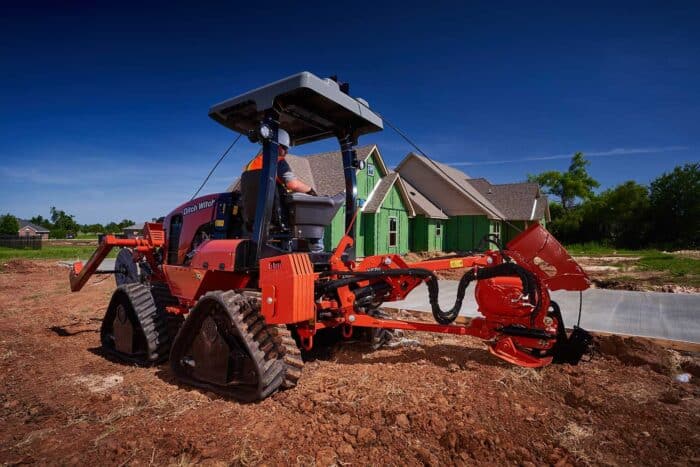
Underground utility, irrigation and fiber installation work rarely happens under perfect conditions. Contractors often deal with shrinking jobsites, changing soil conditions, varying trench depth requirements and tight deadlines — sometimes all on the same project.
That’s one reason ride-on trenchers remain popular rental machines. Their blend of digging power, maneuverability and attachment versatility gives crews flexibility across changing jobsite conditions without requiring multiple dedicated machines.
However, with so many models and attachment options available, selecting the right setup is not always straightforward. Understanding how these machines differ in size, configuration and attachment capability can help contractors match the equipment to the job instead of over- or under-sizing the rental.
Here are five key considerations to keep in mind when renting a ride-on trencher.
Ride-On vs. Walk-Behind: Where Each Fits
Before renting a trencher, it’s important to understand when a ride-on model makes more sense than a walk-behind unit. These two categories of trenchers have key differences in their designs, power and applications. While both machine types perform the same core function, they’re built for very different trenching environments.
Ride-on trenchers are larger machines designed for longer trench runs, deeper digging requirements and more demanding ground conditions. They’re commonly used on utility, fiber and large landscape projects where crews need to maintain production across larger jobsites.
Meanwhile, walk-behind trenchers are compact and highly maneuverable, making them better suited for tighter residential environments or shorter trench runs around sidewalks, fencing and landscaping. The trade-off is lower productivity and reduced digging capability compared to ride-on models.
Knowing the scope and site conditions of the project can help contractors determine whether a ride-on trencher is the right starting point before selecting a specific machine for the job.
Sizing the Machine to the Work
Ride-on trenchers are available in a wide range of sizes and power levels to handle different soil types, digging depths and project requirements. Choosing the right machine starts with understanding the demands of your job.
One of the biggest factors in selecting a ride-on trencher is trench depth. Utility depth requirements can vary depending on the type of installation being done and local regulations. In colder climates, for example, utility lines often need to be installed below the frost line, requiring machines capable of digging deeper trenches.
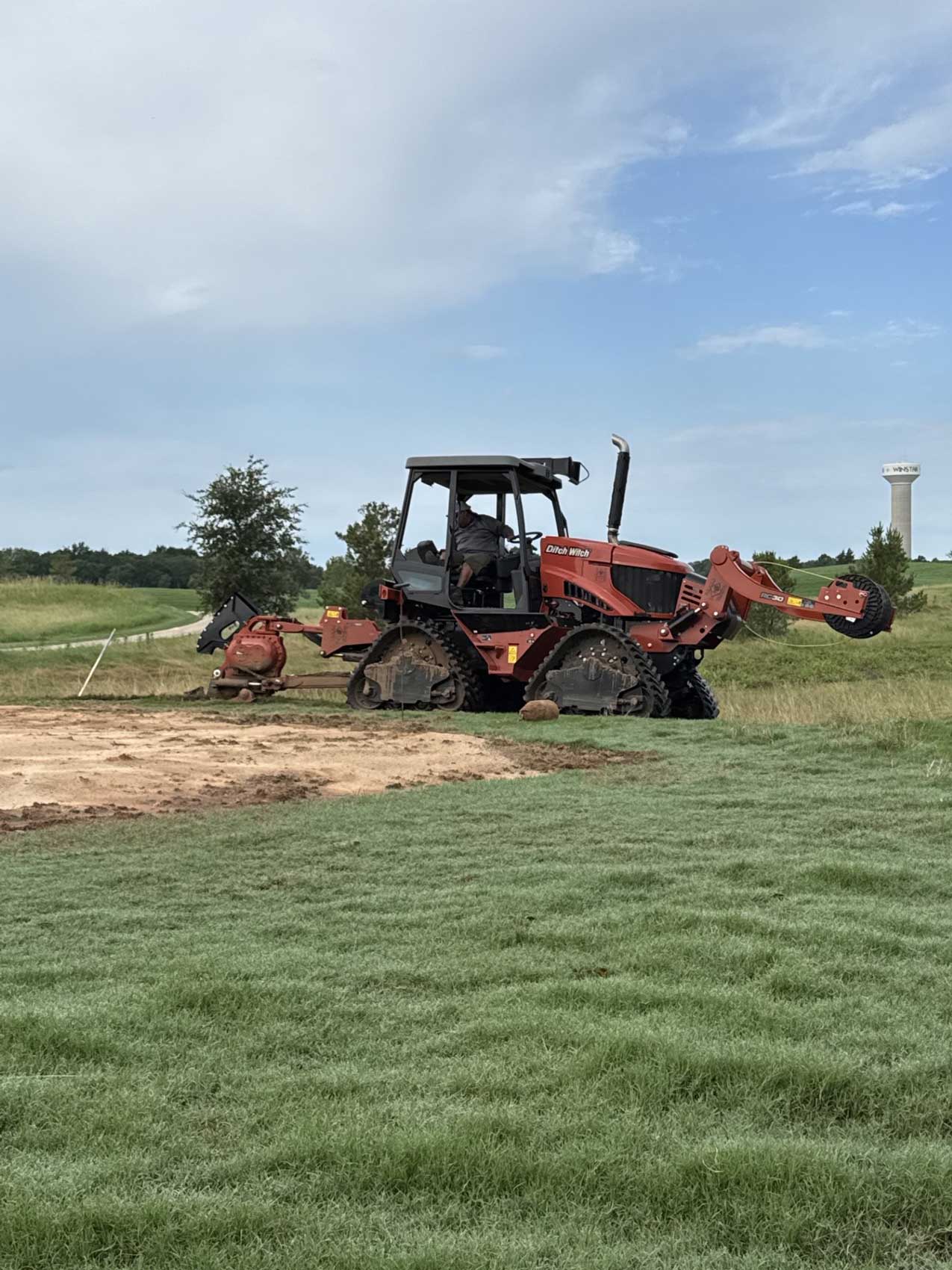
Ground composition can quickly influence which trencher setup works best for the needs of the job. Tracked ride-on trenchers can provide better traction in muddy or soft conditions. Wheeled units are often a better fit for projects that require frequent transport between locations. Contractors working in rocky terrain may also need specialized chain configurations or attachments built for tougher trenching conditions.
One of the most requested ride-on trenchers in many rental fleets is a compact 49-hp unit capable of digging trenches 4 to 5 ft deep. Contractors continue gravitating toward machines in this size class because they balance digging capability, maneuverability and ease of transport without requiring crews to move up to significantly larger equipment.
This combination of versatility and ease of operation continues making these machines attractive rental options. Even new users can quickly learn their color-coded controls, while an ergonomic operator station helps keep operators comfortable for longer tasks. Safety is also built into the machine, with an operator presence system that stops the engine when the operator leaves the seat.
Higher-horsepower ride-on trenchers are also available for more demanding applications, including roadside fiber, water and pipeline projects. These machines are available in both wheeled and tracked configurations and use up to 121-hp engines to dig at depths of up to 8 ft. They’re designed for challenging terrain and longer trench runs, where machine stability, trenching consistency and operator fatigue become bigger factors over long workdays.
Why Simpler Operation Matters
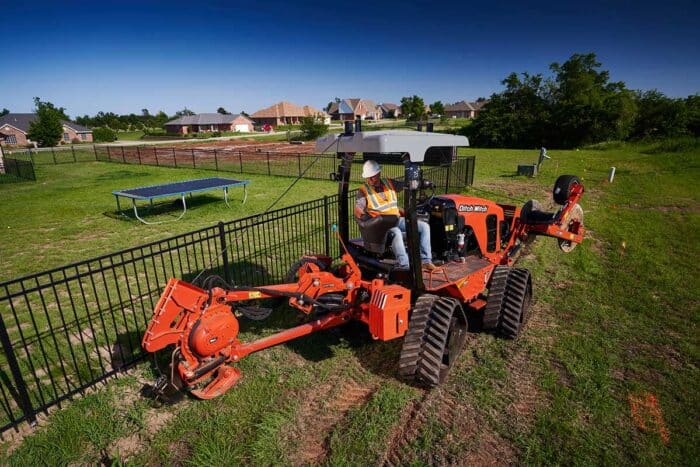
Ride-on trenchers do not require special certifications to rent or operate, but proper training is still important, especially for first-time users. Training helps operators understand safe trenching practices, machine controls and techniques that can improve both efficiency and trench quality.
At the same time, manufacturers have spent years simplifying operation and reducing the learning curve on modern trenchers.
Many rental models now feature simplified or color-coded controls that make operation more intuitive for newer users. More responsive hydraulics and simplified controls also improve trench consistency when site conditions shift throughout the job.
One Machine, Multiple Applications
Attachment versatility is one of the biggest advantages of renting a ride-on trencher.
Instead of hauling multiple dedicated machines to a jobsite, contractors can often complete several phases of work using one power unit and different attachments. That flexibility becomes especially valuable on projects where trenching conditions change frequently across the same site.
A wide variety of attachments can be used with ride-on trenchers. Popular options include:
- Vibratory plow attachments can install cable quickly while minimizing surface disruption and cleanup.
- Backhoe attachments are useful for precise digging around fencing, landscaping and other tight jobsite obstacles.
- Rock saw attachments help crews maintain trenching progress in rocky terrain.
- Micro trencher attachments can cut narrow trenches through asphalt for fiber installation in paved environments.
Today’s Trenchers Are Built Differently
Ride-on trencher designs have evolved over the decades, and the latest models offer even greater operator comfort, increased versatility and simplified operation. Much of that evolution has focused on making machines more intuitive to control, easier to maneuver and less fatiguing during long workdays.
Modern ride-on trenchers feature improved sightlines, updated steering systems and more responsive hydraulics that give operators more control across changing site conditions. Some of the latest models also feature swivel seating systems that enhance operator sightlines while reducing operator strain during longer trench runs.
Design changes have also focused on keeping machines working consistently in difficult conditions while minimizing interruptions on the jobsite. Upgraded air-filtration systems and anti-stall technology also allow trenchers to operate more consistently in difficult digging environments. Enhanced engine performance and higher horsepower ratings now support larger-scale trenching applications than earlier generations could handle.
These upgrades matter for nearly any operator, but they’ve become indispensable as contractors continue managing labor shortages and tighter project schedules. As crews are increasingly expected to do more with fewer people, machines that simplify operation and deliver consistent trenching performance become even more valuable.
Chapman Hancock is the manager of product management at Ditch Witch.


Comments are closed here.