
Take a Look at the Latest Mini Excavators to Hit the Market
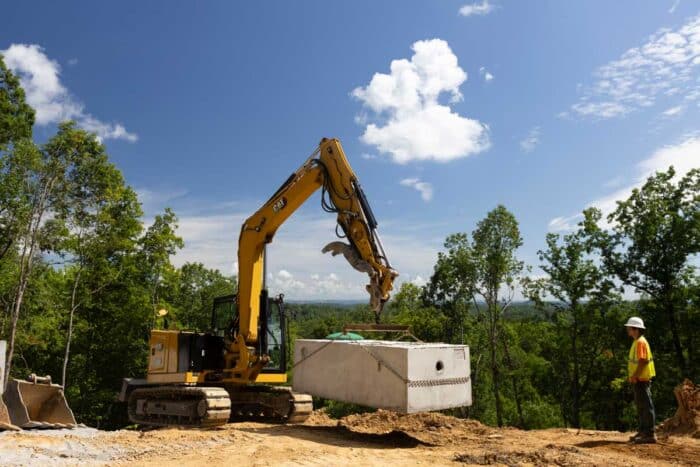
Mini excavators are the perfect blend of power, performance and size. They’re small enough to trailer between jobsites but provide operators with the versatility and precision they need to tackle a wide range of jobs. With that, it’s no surprise the mini excavator market is growing.
“Mini excavators represent a solid chunk of the total construction equipment industry in North America, at just around 60,000 units, trailing only behind compact track loader sales volumes,” says Ryan Anderson, product manager of subcompact equipment at Case Construction Equipment. “The market is constantly evolving and the need for compact and nimble machines is very strong in the U.S.”
To help meet the demand for these machines, manufacturers have been busy releasing new models. Let’s take a look at some of the most recent mini excavators to hit the market.
Volvo Construction Equipment
There’s something for everyone when looking at Volvo Construction Equipment’s mini excavator lineup. The company offers a range of both internal combustion (ICE) and battery-electric units. There are 11 ICE models that range from 16 to 73 hp, with five featuring reduced tail swing (RTS), four conventional and one wheeled. Three of those are the new mini excavators Volvo introduced ahead of CONEXPO-CON/AGG this year — the ECR90, EC65 and EW65. The company also has three electric mini excavators, ranging from 16 to 20 kWh. Darren Ashton, product manager — compact equipment at Volvo, explains that the newest units replace similar-sized models in Volvo’s lineup and offer faster cycle times, increased versatility and better uptime.
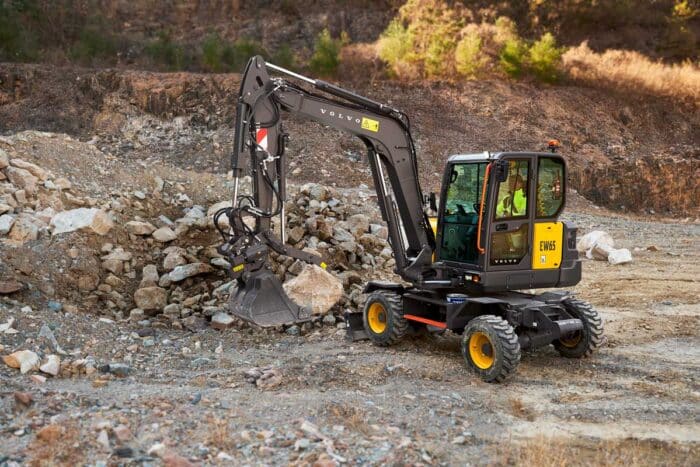
“The ECR90, EC65 and EW65 are built to minimize downtime, make maintenance safer and reduce TCO thanks to things like larger fuel tanks, extended service intervals, wide opening hoods and ground-level access to grouped service points,” he says. “They also include refreshed cab designs for operator comfort, safety and ease of use.”
These new machines were designed to offer plenty of power for a broad range of tasks. For example, the auxiliary flow on the EC65 and EW65 is 100 percent higher than previous models, and on the ECR90, it’s 15 percent higher. The trio is well-suited for tiltrotators too — further boosting versatility and efficiency.
The 9-ton ECR90 is on the heavier end of the compact spectrum but is made to compete with larger models. It’s a short-swing excavator that excels in tighter spaces.
“The ECR90 has 28 percent more engine power, 15 percent more pump torque, 13 percent more bucket force, 11 percent more arm digging force and 7 percent more tractive force, which all improve productivity,” says Ashton. “Similarly, the 7-ton EC65 and EW65 deliver 4 and 6 percent more engine power respectively, along with a 9 percent increase in boom lifting force.”
Caterpillar
Caterpillar first entered the North American mini excavator market in 1994 with a single 8-ton model. Today, the company’s compact line has grown to more than 20 excavators ranging from 1 to 10 tons with a variety of features to meet any task.
“There are over 20 models in the portfolio, including canopy/cab, straight blades/angle blades, compact radius/standard tail, fixed booms/swing booms/variable angle booms,” says Greg Worley, Caterpillar’s market professional for 1- to 10-ton mini hydraulic excavators. “We also have one model with a dedicated auxiliary pump for high-flow attachments. These machines are highly versatile — meeting our customers’ toughest challenges and applications across many different segments.”
Caterpillar’s Next Gen mini excavator lineup has been on the market for nearly 8 years, and the company continues to innovate its machines to accommodate today’s jobsites. For example, Caterpillar has added Cat Indicate, Cat Grade, Laser Catchers, new safety features and model upgrades since the line’s inception. It also offers entry-grade control on its 5- to 10-ton models.
“The Cat Next Gen Mini Excavators are designed to deliver the power, performance, efficiency, durability and serviceability customers look for in a wide range of applications,” says Worley. “With features developed around operator needs and jobsite demands, these machines help customers address everyday challenges with confidence.”
Caterpillar recently announced it has replaced its 307.5 Fixed Boom mini excavator with the 308 CR Fixed Boom model. The machine — which is new to Cat’s 8-ton-class offering — boasts more power and increased hydraulic horsepower, upping efficiency and performance when using hydromechanical work tools. Caterpillar said the 308 CR Fixed Boom’s compact radius design reduces machine overhang by 67 percent compared to the previous model when equipped with the 550-lb counterweight package. Operators can also equip the new 308 CR with the optional 1,100-lb counterweight option which offers a 61 percent machine overhang reduction.
Case Construction Equipment
Case CE’s mini excavator line includes 16 models across the C Series and D Series. This extensive roster includes diesel and electric engines, zero tail swing and conventional designs up to the 6-metric-ton weight class. Since 2022, Case has been phasing its D Series mini excavator models into the market. Anderson explains the D Series models are the latest iteration in the company’s mini excavators and represent some of the best-performing and most well-rounded mini excavators available for customers.
Most recently, the company unveiled three new 3-ton class models — the CX30D, CX34D and CX38D — at CONEXPO-CON/AGG in March. Anderson says these machines are engineered for compact performance and jobsite versatility, as well as offer an ideal balance of power, precision and attachment compatibility.
“The new Case 3-ton mini excavators offer the comfort of an automotive-style cab experience, with ergonomic controls, a suspension seat and all-around visibility for greater jobsite awareness,” he adds. “A compact zero-tail-swing design lets operators work in confined areas, near walls or around hazards with confidence and efficiency. Each new model is also equipped with its own standard features: the CX38D includes hydraulic auxiliary flow control and electronic throttle control with auto idle for smoother, more efficient operation, while the CX30D and CX38D have a top-tier lights package for greater visibility in low light and a long arm for better reach.”
JCB
JCB’s mini excavator lineup covers all the bases with machines capable of handling a wide range of applications — from tight-access residential work to larger utility and infrastructure projects. Contractors can choose from the company’s ultra-compact 18Z-1 all the way up to its 10-ton 100C-2. JC, depending on the size and demands of the jobsite.
The 25Z, JCB’s newest mini excavator, was launched at The ARA Show this year and is positioned in the 2- to 3-ton class. It was designed to deliver the versatility, maneuverability and transportability contractors and rental customers are looking for in compact equipment.
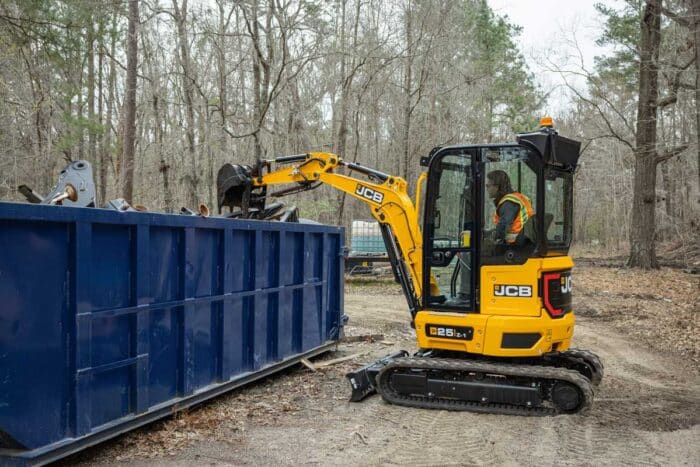
“The 25Z features a zero-tail swing design for working confidently in tight spaces and an operating weight of 5,621 lbs, allowing it to be towed behind a half-ton pickup without requiring specialized hauling equipment,” says Lee Tice, product manager at JCB. “Powered by a 24.7-hp engine, the machine delivers the digging depth and lift performance needed for trenching, loading and general excavation work while maintaining a compact footprint.”
Tice says the 25Z is especially well suited for rental applications because it combines ease of transport, intuitive operation and versatility across a wide range of compact jobsite applications. The machine can be towed behind a half-ton pickup, helping simplify transportation between jobsites without requiring specialized hauling equipment. It also offers a maximum dig depth of 9 ft, 10 in. and a dump height of nearly 10 ft. This gives operators the capability needed for trenching, loading and general excavation work while maintaining a compact footprint.
“Beyond performance, the machine was designed with ease of use in mind,” says Tice. “Intuitive controls, strong visibility and a comfortable operator station help reduce the learning curve and support productivity for operators across a wide range of experience levels.”
Kioti
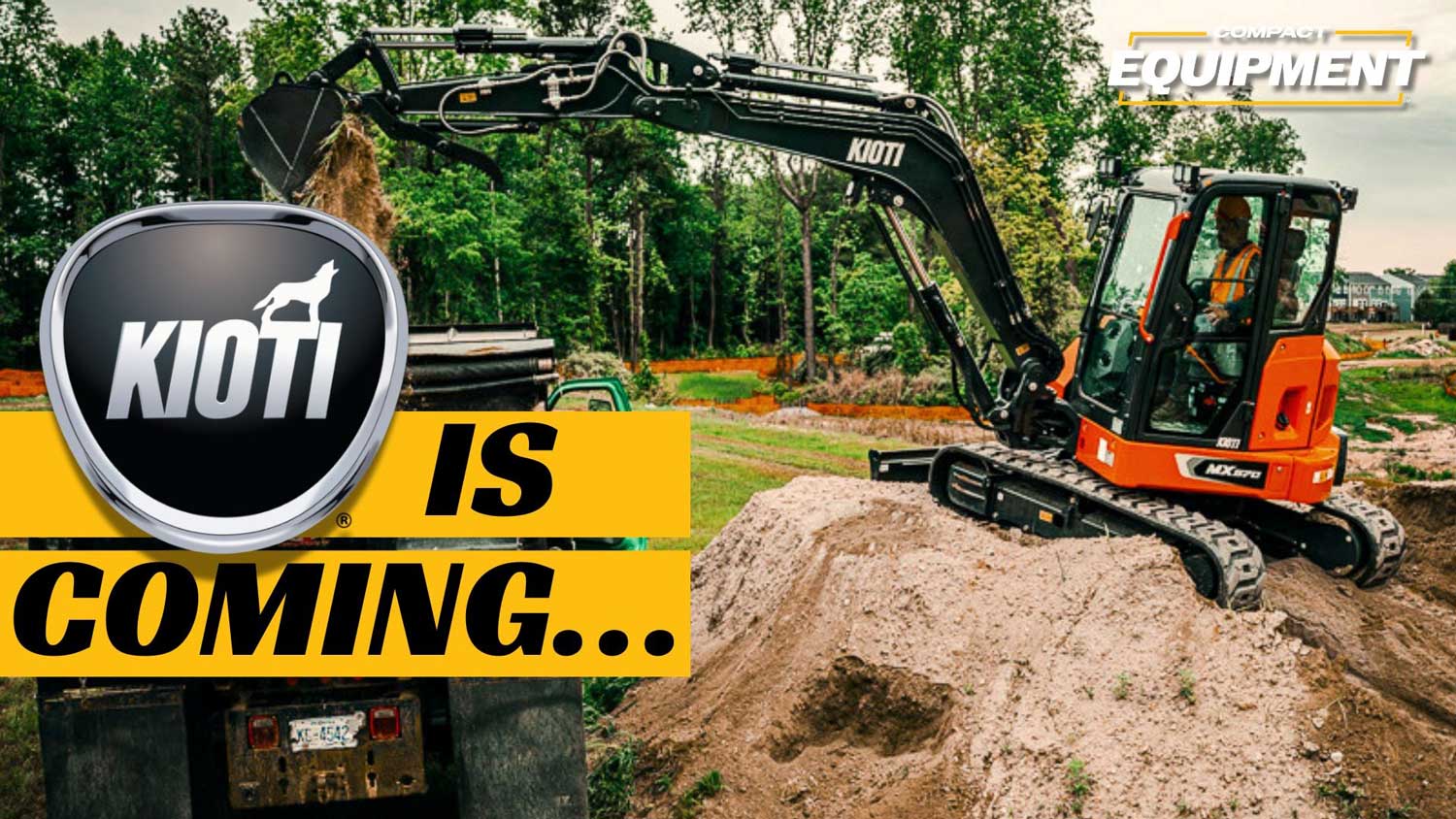
Kioti recently entered the mini excavator market with the launch of the MX Series at CONEXPO-CON/AGG in March. This new line marks significant expansion of Kioti’s compact construction equipment offerings, as well as highlights growing customer demand for versatile compact equipment solutions. The company’s goal was to deliver a ready-for-work solution that reduced the need for aftermarket additions.
“The current MX Series lineup includes the MX350 and MX350 extended arm in the 3.5-ton class, along with the MX570 in the 5.7-ton category,” says Joel Hicks, product line manager at Kioti. “The machines are designed to provide strong digging performance, operator comfort and compatibility with a variety of attachments for construction, landscaping, utility and property maintenance applications.”
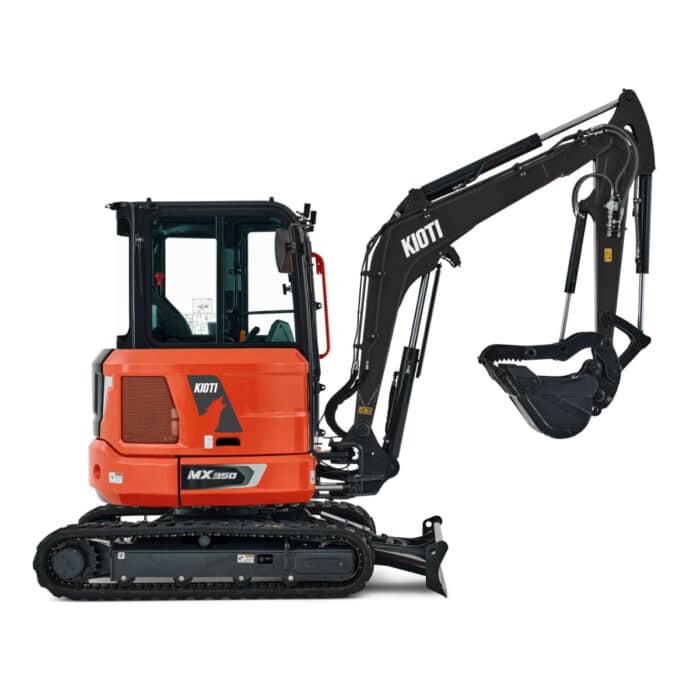
Hicks adds that the MX Series stands out with a factory-equipped, all-in-one package designed for immediate jobsite readiness. Each machine in the lineup boasts standard features such as an angle blade, 24-in. bucket, hydraulic thumb, auxiliary hydraulics and a mechanical quick coupler — reducing the need for aftermarket additions. Other beneficial features include smooth multifunction hydraulics, reinforced structures for durability, intuitive operator controls and simplified service access to help maximize uptime. Kioti’s MX350 also offers a zero-tail swing design for improved efficiency in confined spaces.
“Customers increasingly want compact equipment that delivers versatility, productivity and value from day one,” says Hicks. “Buyers also prioritize machines that minimize downtime and reduce the need for additional upgrades or attachments. The MX Series aligns with those trends by offering a wide range of standard features, durable construction and smooth hydraulic performance in a compact, easy-to-transport package supported by Kioti’s dealer network.”
New Holland Construction
New Holland Construction’s mini excavator evolution began with the introduction of the EC Series in 1999 and spans to its current D Series. The company introduced the D Series — which now consists of nine models — in 2025 as its first fully in-house designed and manufactured line of mini excavators. These machines range from 1.2 to 6 metric tons and offer a bevy of features, including: zero-tail swing designs; standard auxiliary hydraulics; optional long-arm configurations; standard LED work lights and available rear-view cameras; a seven-year myNewHollandConstruction telematics subscription; and much more.
The company’s newest models, the E12D and E19D, were released at this year’s CONEXPO-CON/AGG. The E12D is New Holland’s smallest mini excavator, weighing approximately 2,932 lbs.
“We designed this machine with a strong emphasis on easy servicing, intuitive controls and simple transportability,” says Dan Kakareka, product marketing manager for New Holland Construction. “Built for tight and confined jobsites, the E12D features zero tail swing, making it ideal for working close to structures without rear overhang concerns. It also offers retractable tracks ranging from 33 to 51 in., along with foldable dozer blade extensions, allowing operators to easily pass through narrow gates and maneuver in restricted spaces.”
Kakareka points out the machine’s operator station, which is designed for straightforward access and usability. It features an open canopy layout, LED work lights and an ISO/SAE pattern selector for joystick control customization. The E12D is powered by an 11.8-hp Kubota diesel engine that delivers reliable performance in a compact footprint. It’s particularly suited for residential, landscaping and light construction applications.
New Holland’s E19D weighs in around 4,145 lbs and delivers added power for tougher applications. Kakareka says the unit features a hydraulic variable-width undercarriage that expands from 39 to 51 in., as well as a foldable dozer blade. Its ergonomic operator station, built with smooth hydraulic controls, enhances comfort and ease of use.


Comments are closed here.