
How Hybridization and Electrification Efforts Impact Compact Equipment
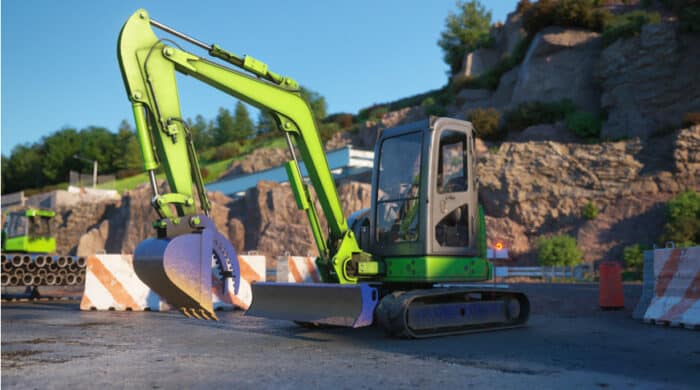
The transition to electrification in construction equipment is a slow and steady process but remains firm in its approach. Mini excavators, compact track loaders and other smaller form factor machines are leading the way, driven largely by a demand for low-emission, low-noise machines capable of operating in urban and enclosed environments. In many aspects, these segments are benefiting from technologies and design approaches that have proven themselves in other environments where electrification is more refined.
However, electrification in construction equipment is not a simple matter of replacing parts with batteries and motors. It is a broader shift that affects how these machines are designed, integrated, and controlled. As OEMs push forward, one area that is seeing particular success is braking – not only as a safety feature, but as a key contributor to overall system performance and efficiency.
Electrification Beyond the Powertrain
For many manufacturers, the most straightforward path to electrification has been aimed at replacing the internal combustion engine with an electric motor while retaining much of the hydraulic infrastructure. This approach reduces complexity and allows these machines to maintain familiarity with its users.
However, this approach also introduces a trade-off. Hydraulic systems have proved to be inherently inefficient when paired with electric power sources. Energy losses have been observed to be between 30 and 50 percent as power gets converted between electrical, mechanical, and fluid forms. And in battery-powered machines that have limited amounts of energy, these inefficiencies become much more significant.
As a result, there is a growing shift toward adopting more direct electric-to-electric architecture. This evolution is driving changes across many subsystems and braking is a notable example.
Legacy Braking Systems in an Electrified Context
In conventional compact heavy equipment, braking is usually integrated into the drivetrain through a combination of drive systems, gearing, and spring-applied-hydraulically released wet brakes. These systems are well researched and understood, making them highly durable and capable of delivering the required torque in repeated and demanding applications.
However, when carried over into electrified machines, they introduce several challenges. Hydraulic actuation adds complexity and inefficiencies, and wet brake systems generate continuous drag as friction discs rotate in oil. When combined, these factors reduce overall system efficiency and place high demands on the battery.
There have been many attempts to replace these systems with standalone electric brakes, but they have not always delivered a clean solution. Many traditional electric brake designs were not developed with compact equipment in mind, making it difficult to integrate them, effectively without reworking the surrounding drivetrain, adding difficulty to the design process.
This highlighted a broader issue when adopting electrification: it isn’t just about upgrading individual components but ensuring that the components are aligned with the demands of the system itself.
Enabling a New Approach with Integrated Electric Braking
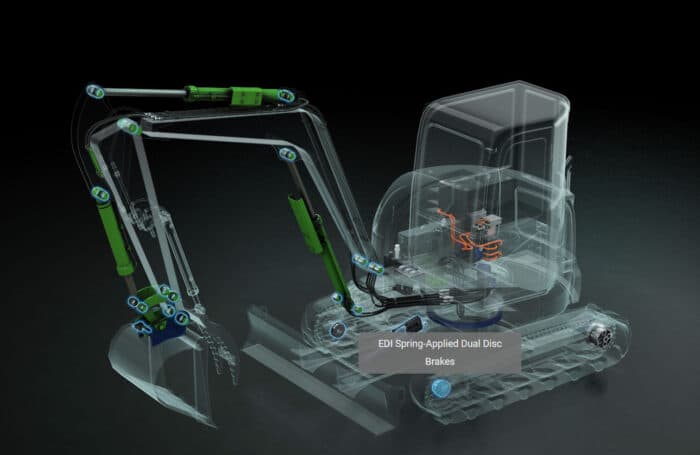
To address these challenges, braking systems are evolving to better reflect the needs of electrified machinery. Integrated electric braking solutions, such as those found in the EDI range, are designed specifically with this in mind.
Rather than functioning as a separate, bolt-on component, these systems are designed to integrate directly within the motor and gearbox assembly. This design draws on the familiar layout of traditional hydraulic brakes, with a form factor that closely mirrors the geometry that OEMs are accustomed to working with. This includes an electromagnetic mechanism that replicates the role of a hydraulic piston, friction pack, and spring assembly that all occupy a similar footprint to legacy designs.
By aligning closely with existing drivetrain configurations, these integrated electric braking systems can be implemented with minimal disruption to overall machine design. OEMs can transition to electrified components without needing a complete redesign of the braking system or its surrounding components.
Through this, braking becomes an enabling technology – helping bridge the gap between established and familiar mechanical systems and emerging electric platforms.
Improving Efficiency and Machine Performance
Beyond simply adapting for the future, the shift to electric braking also delivers meaningful performance benefits. By eliminating hydraulic actuation, these brakes remove a major source of energy loss, allowing machines to operate more efficiently within the constraints of the battery itself.
Direct electric-to-electric actuation reduces the number of energy conversion steps required, improving overall system efficiency and helping to extend operating time between charges. The absence of traditional wet brake drag also further enhances this effect, as there are no friction discs continuously grinding and rotating in fluid.
At the same time, these integrated electric braking systems are capable of delivering torque performance comparable to these traditional wet brake systems, ensuring that they meet the demands of real-world applications. Additionally, faster actuation response also translates to improved controllability, particularly in scenarios where precise braking behavior is required.
All of these gains reinforce an important notion that electrification is most effective when supporting systems are optimized alongside the powertrain, rather than simply adapted from legacy designs.
Supporting the Next Phase of Electrification
For OEMs, advancing electrification means being faced with complex challenges. Electric machines often carry a significant upfront cost premium making it difficult to justify adoption based on price and performance alone. Regulatory pressure and financial incentives continue to play an important role, however, shifts in policy have influenced the pace of adoption in recent years.
It’s within these environments that technologies that reduce development risk and simplify integration processes are particularly valuable. Solutions that align with existing design approaches, while improving efficiency and reliability, can help manufacturers more forward without incurring excessive redesign costs.
A Practical Path Forward
Electrification in compact construction equipment will continue to evolve as advancements are made. And while these advancements in technologies remain important, equal attention must be given to the systems that support their integration.
Braking is only one such system. As integrated electric solutions replace legacy hydraulic design, they offer a way to improve efficiency, simplify machine architecture, and reduce the barriers to adoption.
By focusing on practical, integration-ready solutions, manufacturers can move beyond simply adapting existing designs and begin to realize the full potential of electrified compact equipment.
Jon Volk is global product manager, electrification at Regal Rexnord.


Comments are closed here.