
Must-Have Attachments for Skid Steers and Compact Track Loaders in Utility Construction
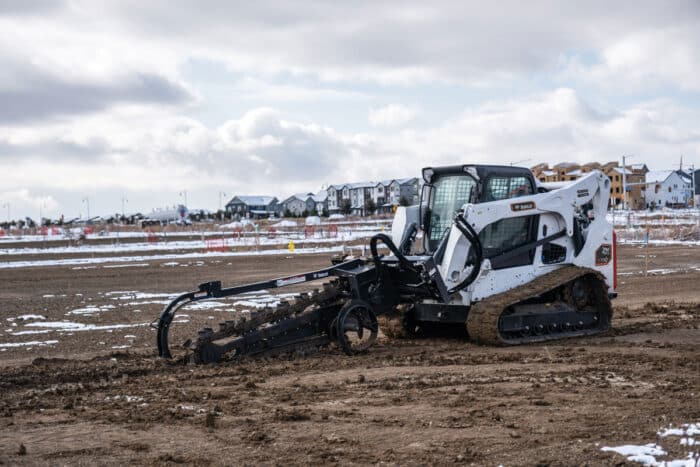
Skid steers and compact track loaders are ideal machine choices for those working in utility construction. Their compact size, maneuverability and attachment versatility allows crews to tackle a wide range of tasks with a single machine.
“Their compact footprint makes it easy to work efficiently in tight, congested urban jobsites without sacrificing access or productivity,” says Rob Reister, product specialist sr. — attachments at Bobcat. “Modern machines also deliver improved operator comfort and precise controls, helping crews work safely and stay productive over long days.”
So, what attachments help these loaders excel in utility construction? Let’s find out…
Trencher
Reister kicked off his list with a trencher. Why? Because on a utility jobsite, trenching is an absolute necessity. “Power, water, communications, irrigation and drainage all depend on clean, consistent trenches,” he says. “A loader-mounted trencher delivers that capability while staying compact and maneuverable — making it ideal for tight right-of-ways where space, traffic and obstacles are constant challenges.”
Reister says to always match the trencher to your typical trench depth and soil conditions. It’s important to confirm the carrier’s hydraulic flow and make sure it supports consistent performance. Features like side-shift capability and multiple chain and tooth options are essential to handle varying ground conditions. As for usage, Reister recommends using side-shift when working near structures, fences or road edges. This keeps the loader in a safe position while maintaining straight trench alignment.
Auger
Next up is an auger. Since utility construction often requires precise holes for poles, posts, signs and site fixtures, an auger is a solid choice for transforming a compact loader into a fast, repeatable drilling solution. An auger-loader combo keeps crews moving without relying on manual digging or additional equipment — a bonus when the roster is light or space is restricted.
When looking to buy this attachment, Reister suggests selecting auger drives and bit options based on your most common hole diameters and soil conditions. This ensures the attachment is properly matched to the carrier’s hydraulic capabilities. It’s important to pre-mark hole locations and drill in sequence to minimize repositioning time and keep crews ahead of setting and backfill operations. Use available depth indicators or technology features to maintain consistent hole depth across the job.
Hydraulic Breaker
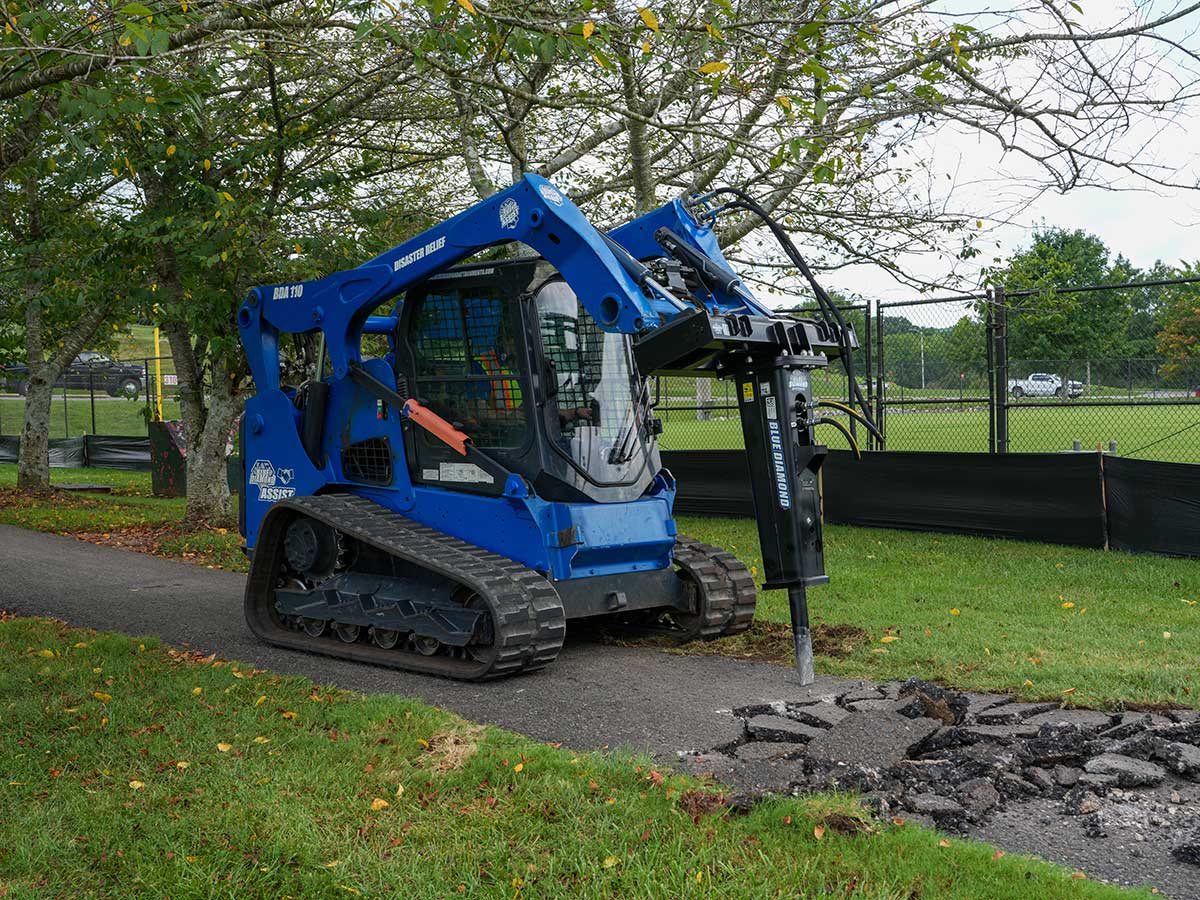
“Utility work rarely happens in ideal conditions,” says Reister. “Concrete and asphalt are often in the way of the work below.” With that, he says a hydraulic breaker is a must-have for this application to stay productive. A breaker allows a skid steer or CTL to handle demolition, tie-ins and surface removal without bringing in another machine.
Users should size the breaker for the materials they plan to encounter most often and verify hydraulic compatibility to maintain consistent performance across their fleet. Reister says to choose the right bit for the task. He adds, “Use a pointed or moil bit for general breaking and a flat or chisel bit for cutting or edge work when opening trenches in paved surfaces.”
Pallet Forks
Material handling is another job utility construction crews encounter daily. To support them, a set of pallet forks is essential. “Crews need to move pipe, conduit, vaults, pallets of fittings and other materials efficiently,” says Reister. “Pallet forks turn a compact loader into a versatile material handler that reduces manual labor and keeps crews productive from delivery through installation.”
Reister says to choose fork length and capacity based on your typical load weights and material sizes. Visibility and durability should also be considered for repeated jobsite use. When using forks, crews should stage materials along the trench route in the order they will be installed. This way workers can keep the trench fed without unnecessary handling or delays.
Angle Broom
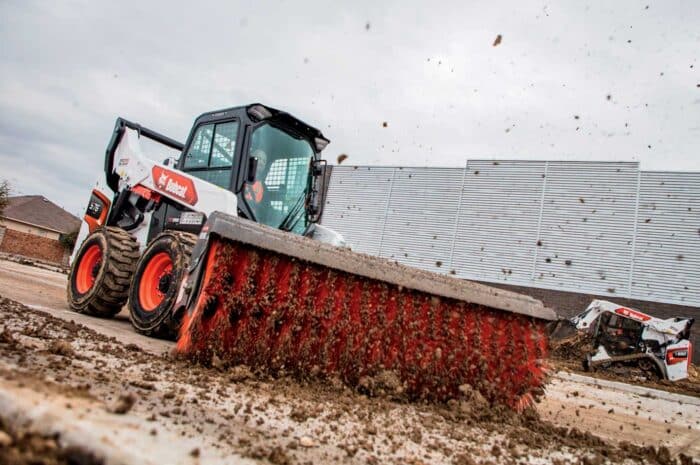
Construction can get messy, so cleanup is a necessary part of the job. Reister says an angle broom is great for handling cleanup after backfill and helps prepare surfaces for patching or finishing.
A buyer should consider broom width and edge cleaning needs when selecting a model. Reverse bristle rotation is a feature that’s especially useful for working along curbs, corners and other obstacles. Reister provides this usage tip: “After backfill and before final surface work, sweep debris into windrows or piles for easy collection with a bucket or sweeper bucket. This helps reduce contamination and keeps the work area clear for crews and traffic.”


Comments are closed here.