
Breaking Down the Right Mini Excavator Attachments for Demolition Jobs
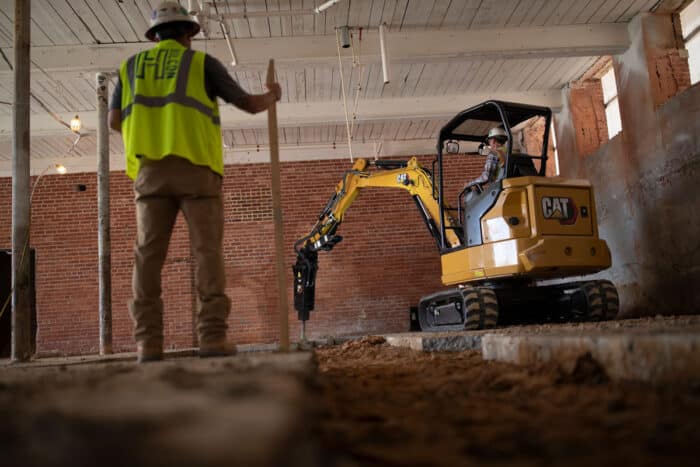
Sometimes a crew’s job doesn’t involve building, but rather tearing something apart. In times when a project calls for demolition (such as breaking out driveways, sidewalks and patios), a mini excavator paired with the right attachment is just what the crew ordered. So, what attachments are those? We tasked Micayla Thompson, a sales support specialist at Caterpillar, to pick her go-to attachments for a mini excavator tackling demolition work. Here’s what she had to say…
Hammer
It’s no surprise that a hammer topped the list. With the ability to quickly and safely break concrete, foundations, masonry and hard ground, a hammer on a mini excavator is one of the most valuable attachments you can have on a demolition site. Not only does it speed up demolition, a hammer also helps save wear on other attachments.
When operating a hammer, Thompson says the operator must use hammer paste regularly to ensure optimal performance and protect the bushings from wear. She adds, “If the material isn’t breaking within 10 to 15 seconds, reposition so the hammer does not overheat the tool and damage bushings.”
Demolition and Sorting Grapples
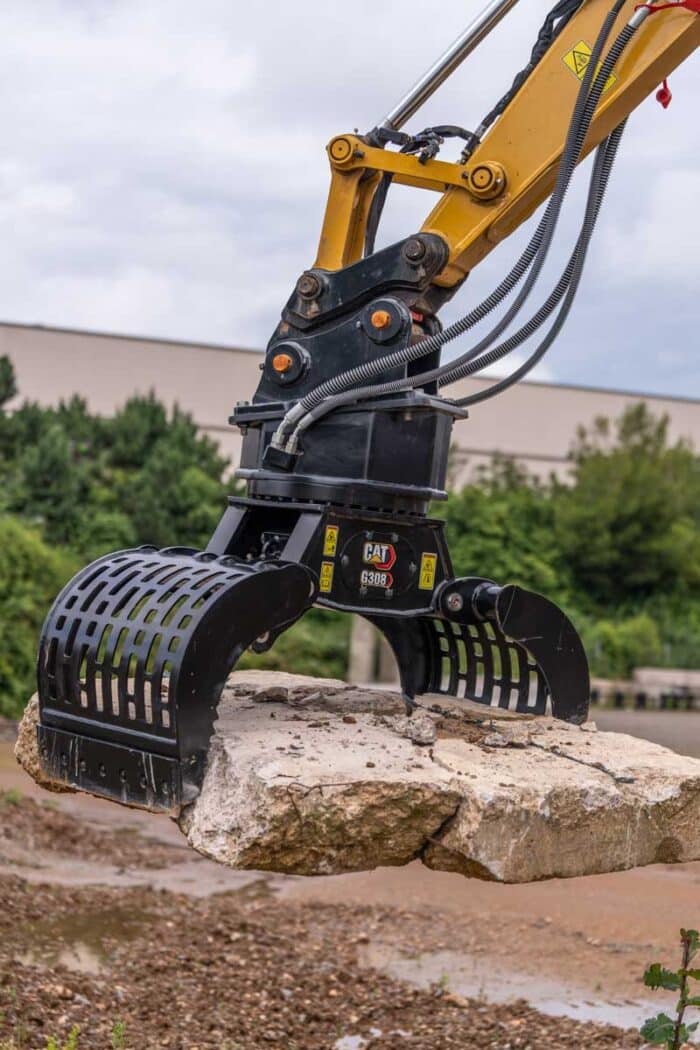
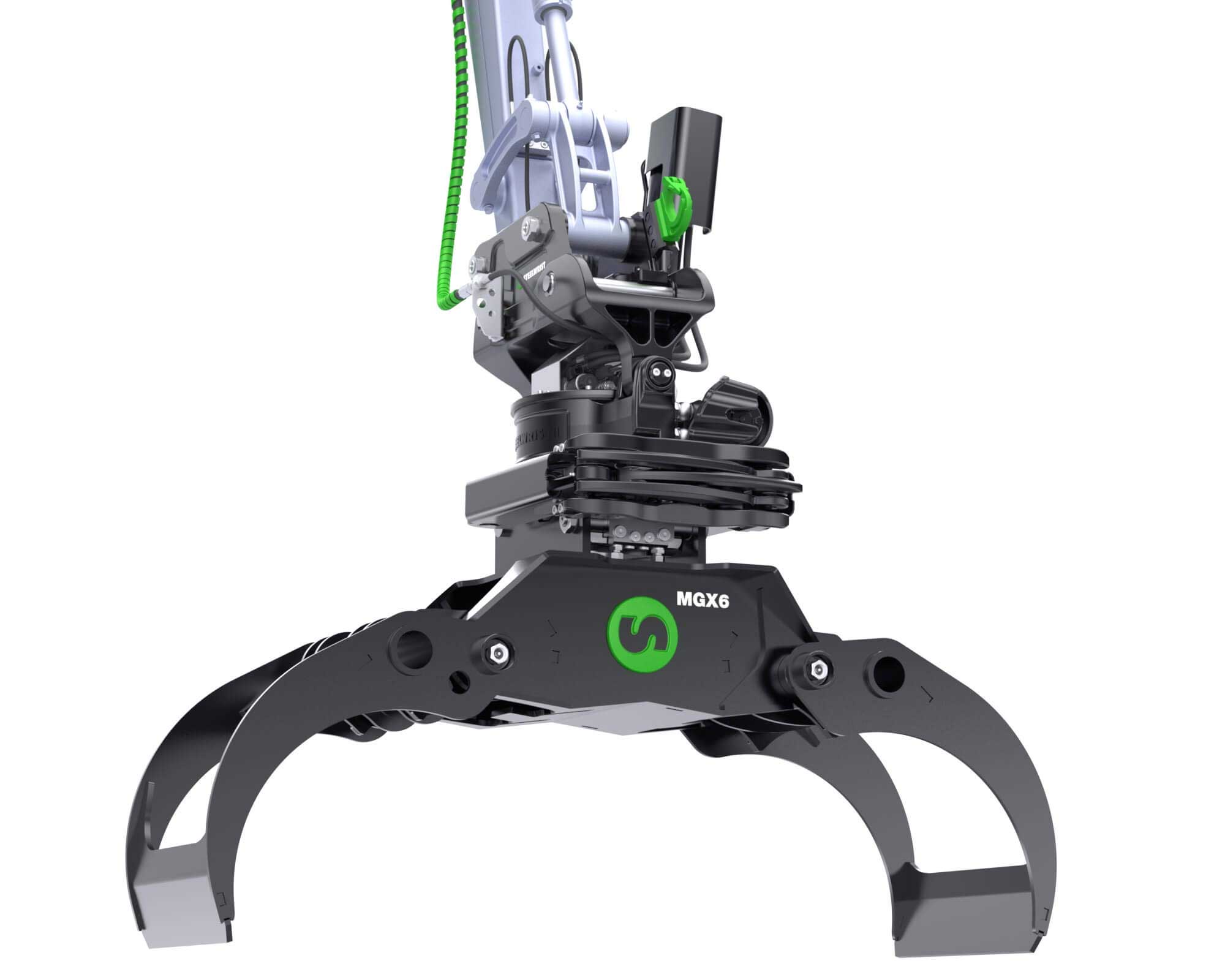
Demolition causes a lot of debris. Luckily, there’s an attachment for handling it. Thompson explains that demolition and sorting grapples are designed to pick up, rotate and set down debris from demolition sites. Available on Cat 306-310 mini excavators, the grapples feature side plates with perforations so the operator can see what they are picking up, no matter how the attachment is oriented. Their slim design provides easier maneuvering inside buildings, containers and confined spaces.
Scrap Shear
When work calls for cutting and processing metal, a scrap shear is an ideal attachment for any demolition site. Thompson says a scrap shear is great for cutting steel beams, pipes, rebar and other metal debris into smaller, more manageable pieces.
“This makes cleanup faster, safer and reduces the need for torch cutting,” she says. “The scrap shear runs smoothly and safely while keeping the excavator stable; cutting with the strongest part of the jaws and letting the shear — not the excavator — do the work.”
When using a scrap shear, Thompson always recommends avoiding twisting or prying metal, watching for falling or springing debris and maintaining good visibility to the material you are processing.
Ripper
Rippers lend a hand on demolition sites by breaking up and loosening tough materials. Thompson says it’s a versatile attachment that tears up concrete and asphalt, rips through compacted or frozen ground, exposes buried items such as pipes or rebar, and helps pull out stubborn debris.
“It’s a prying tool that makes slabs, foundations and hard soil easier to remove,” she explains. “The ripper can be paired with a hydraulic thumb on a mini excavator to grab debris that was ripped out. Together, these attachments give you the ability to break, pull, lift and move material efficiently without changing attachments.”
Contractor’s Grapple
In demolition, you can never have enough grapples — there’s always something to move or clean up. Thompson highlights the Cat Contractor’s Grapple. It’s a heavy-duty hydraulic claw that helps a mini excavator grab, sort, move and load demolition debris with much better control than a bucket and thumb.
“On a demo site, it makes cleanup faster, improves material sorting, handles awkward items safely and allows light tearing down work in tight spaces,” she says. “It basically turns your mini excavator into a high-efficiency debris handling machine.”


Comments are closed here.