
Sound Safety Considerations for Tow-Behind Compressors
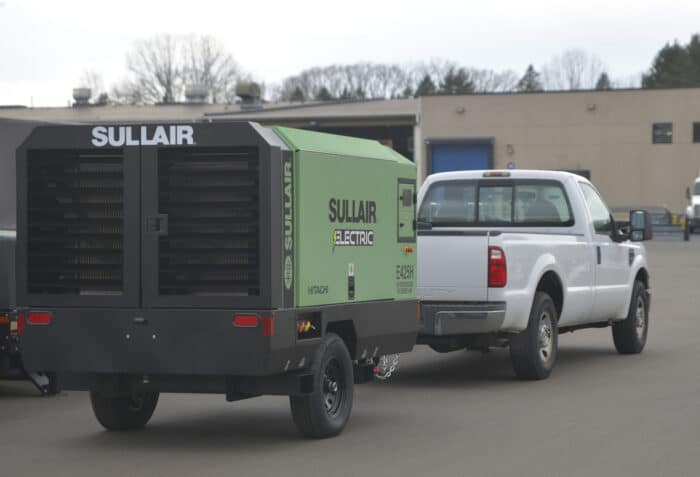
Loud noise is nothing new on construction sites, manufacturing plants, laboratories and agriculture operations. While noise pollution may feel like it’s part of the job, prolonged exposure can cause permanent hearing loss, which often can’t be corrected with medical procedures or hearing devices. Beyond hearing, it can also impact overall health, including stress, fatigue and cardiovascular effects.
Noise damage can’t be reversed, but it can be prevented. This makes it critical to manage noise levels and choose an air compressor designed with the worker and customer hearing safety in mind.
Understanding Safe Noise Levels
Protecting yourself and other workers begins with knowing how loud is too loud. Beyond clear communication, being able to hear alarms, instructions and subtle environmental cues can prevent accidents and improve efficiency.
The Occupational Safety and Health Administration (OSHA) required permissible exposure limit (PEL) for noise exposure is 90 dBA for an 8-hour time-weighted average (TWA). The standard uses a 5-dBA exchange rate — meaning when a noise level is increased by 5 dBA, the exposure time is cut in half.
In addition, OSHA requires employers to implement a Hearing Conservation Program (HCP) whenever workers’ noise exposures equal or exceed an 8-hour TWA sound level of 85 dBA in general industry also known as the action level (AL), or when levels exceed 90 dBA in construction.
An HCP requires an employer to:
- Develop a noise-monitoring program
- Notify employees of hazardous noise levels
- Allow employees the ability to observe noise monitoring
- Maintain an audiometric testing program, including a baseline audiogram
- Provide hearing protectors
- Develop a training program
- Provide access to information and training materials
- Maintain accurate records
EPA Standards for Portable Compressors
In addition to OSHA guidance, portable compressors are subject to federal noise-emissions standards established by the Environmental Protection Agency (EPA). Portable air compressors rated with flows less than 75 CFM and pressures rated less than 50 psi are excluded, however. While many contractors may be more familiar with OSHA rules, fewer may be aware of EPA standards.
EPA compliance is determined by a pass or fail sound test that must follow specific requirements for testing location, equipment and operating conditions. For example, the compressor must be tested on an open site above a hard reflective plane, such as sealed concrete or asphalt. The microphone must be positioned more than 10 meters (about 33 ft) from buildings, signboards, hillsides or other reflective surfaces that could influence test results.
This must be considered during design and development stages, because the entire air compressor package, including air inlets, air outlets, isolators and sound-attenuating materials affect whether the test is passed.
Although federal noise control activities shifted from the EPA to state and local governments in the 1980s, the EPA’s noise-emission regulations remain in effect today. Meeting them serves as a valuable best-practice benchmark. For contractors and fleet managers, meeting this standard helps reduce liability, better navigate community or local noise ordinances and maintain safer jobsites.
Engineering Behind Noise Reduction
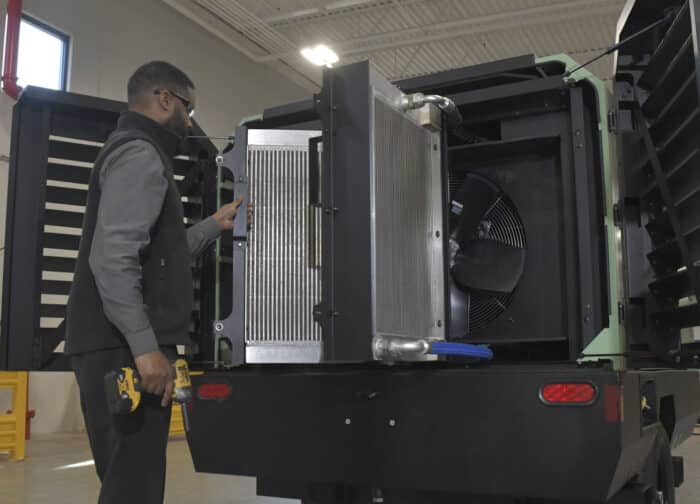
There are multiple components and factors to consider for reducing noise in tow-behind air compressors. While many elements contribute to overall sound levels, the majority of compressor noise comes from cooling airflow. Managing airflow efficiently and meeting sound requirements, without compromising cooling performance, is where smart engineering makes the biggest difference.
One of the most important design aspects for this is air inlets and air outlets. Openings too large can let more sound escape, but openings too small can restrict airflow and reduce cooling capacity. The challenge is balancing sound control with the airflow required to maintain optimal operating temperatures.
Another factor is vibration isolation. Compressors use vibration isolators for major components such as the motor, air end, separator tank and coolers. These isolators help prevent sound and frequency from being transmitted throughout the structure. If the structure’s natural frequency matches the vibration frequency, then noise will be amplified and sound louder.
Sound attenuating materials, such as foam, may also be added to the compressor canopy to help absorb noise before it exits the package. High-density polyurethane foam is ideal, as it provides better sound absorption when compared to other options like thin sheets. Louvers, or the slat-like openings on the canopy, are also designed to allow air in and not let sound out.
CFD (Computational Fluid Dynamics) analysis is another tool utilized during the development process. Used to help identify and reduce sound, CFD analysis is a computer-based method that simulates how fluid (i.e. air) moves through and interacts with components inside the compressor. This includes how airflow affects pressure, temperature, velocity and noise. CFD analysis can also help pinpoint turbulence and noise generating airflow so engineers can make informed design decisions aimed at reducing noise early in the development process.
Beyond installations, a common misconception in the field is opening compressor doors improves cooling, similar to opening a car door on a hot day. In practice, opening the enclosure disrupts the engineered airflow path, which can reduce cooling efficiency and increase sound levels.
Overall Safety with Noise Reduction
Innovations in sound mitigation and safety guidelines have steadily improved, helping tow-behind compressor operators work more safely, effectively and comfortably. Even with quieter advancements and more options like electric portable compressors, all portable units — diesel or electric — produce levels of noise that can affect hearing. Combined with equipment the air compressors are powering on active jobsites, each piece makes a larger and noisier ensemble that must be managed responsibly.
Using proper hearing protection remains essential for every jobsite. Electric compressors provide operational advantages in certain operations, such as maneuverable backup air for indoor use, but they still require the same practices as any portable compressor. Personal protective equipment combined with training and awareness programs also reinforces the importance of noise precautions and proper equipment use, helping crews recognize potential hazards and respond appropriately in high-noise environments.
From a manufacturing perspective, safety begins with how the unit is engineered, built and maintained. Proper maintenance and use of OEM parts help ensure compressors run as intended, minimizing unnecessary noise caused by worn components, vibration or airflow disruptions.
When sound-dampening engineering is paired with adherence to regulatory requirements, crews are better equipped to manage noise exposure and reduce risk. Prioritizing these elements reinforces noise control as a critical part of overall jobsite safety, supporting long-term hearing health, reliable equipment performance and more productive work environments.
Jerel Cole is a global portable product manager at Hitachi Global Air Power.


Comments are closed here.