
From Surface Prep to Structural Repair: How to Use Air Power for Complete Concrete Rehabilitation
Bobcat portable air compressors can support multiple stages of concrete rehabilitation, from removing deteriorated material to preparing the remaining surface for repair.
Concrete rehabilitation is the process of removing deteriorated material, preparing the remaining substrate and installing a repair that extends the structure’s service life.
Projects can include bridge decks, sidewalks, parking structures, roadways, utility trenches and industrial concrete surfaces. While every job is different, many follow a similar sequence: remove damaged material, prepare the existing surface and install the repair. Bobcat portable air compressors can power equipment during the first two phases, providing versatile air power throughout the project.
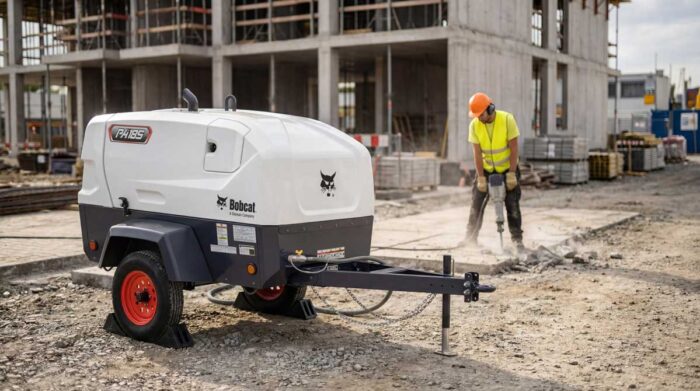
How Are Portable Air Compressors Used in Concrete Rehabilitation?
Breaking, chipping and removal are common rehabilitation tasks powered by portable air compressors. Pneumatic breakers and chippers provide consistent power for demanding removal work, while other air-powered equipment can support cleaning, resurfacing and surface preparation.
With proper planning, one compressor may serve several applications as the project progresses. Portable air can become a central part of the equipment plan rather than a resource reserved for demolition.
Which Bobcat Portable Air Compressor Is Best for Concrete Rehabilitation?
The right compressor depends on the pneumatic tools being used, their combined airflow and pressure requirements, and whether the application requires clean, dry air.
Bobcat product options for concrete rehabilitation span multiple airflow and pressure classes. Examples include:
- PA185: Delivers 185 cfm at 100 psi and is well suited for handheld pneumatic tools such as breakers, chippers and hammers commonly used for concrete removal and repair.
- PA250V: Uses the FlexAir® system to provide adjustable output from 250 cfm at 100 psi to 185 cfm at 175 psi, helping contractors adapt to different tools and project phases with a single machine.
- PA425V: A strong option when crews need additional air capacity for applications such as resurfacing, blasting or operating multiple tools. The 400-cfm class bridges the gap between handheld-tool applications and larger specialty work.
- IQ System-equipped compressors: For specialized surface-preparation applications that require cleaner, drier air, select Bobcat compressors can be equipped with the patented IQ System to help reduce moisture and contaminants in the air stream.
Contractors should evaluate the entire project, not just one tool or phase. Tool manufacturers’ specifications should guide compressor selection.
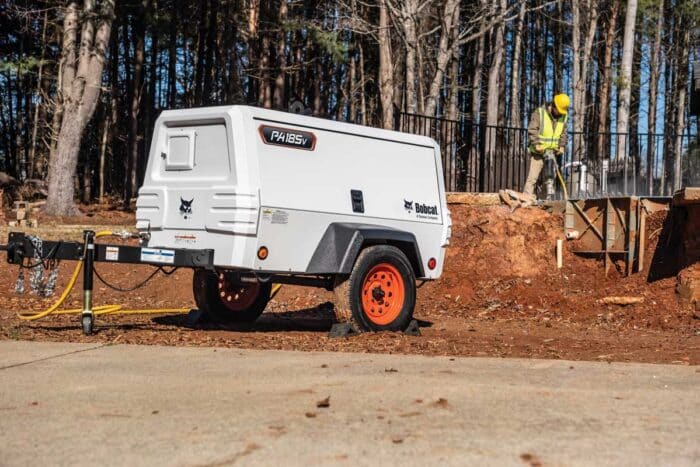
How Do CFM and PSI Affect Pneumatic Tool Performance?
Airflow, measured in cubic feet per minute, or CFM, and pressure, measured in pounds per square inch, or PSI, are both essential to pneumatic tool performance.
An undersized compressor can limit performance, slow productivity and interrupt work. An oversized unit may add unnecessary operating costs. Crews should review each tool’s requirements, calculate the combined demand of equipment operating simultaneously and select a compressor that can maintain the necessary output.
For projects with changing air requirements, the Bobcat PA250V allows operators to adjust airflow and pressure within its operating range. This flexibility can help crews match compressor output to the application without changing machines.
What Causes Pressure Loss in a Portable Air System?
Long hose runs, elbows, fittings and multiple connections can reduce the air available at the tool. The compressor may provide adequate output, but restrictions within the air-delivery system can still affect tool performance.
Thoughtful hose routing can help minimize pressure loss. Crews should also inspect hoses, fittings and connections routinely to identify damage, leaks or restrictions.
Why Is Clean, Dry Air Important for Surface Preparation?
A durable concrete repair begins with a sound, properly prepared substrate. Compressed air can support cleaning and preparation after damaged material is removed, but some applications require greater control over air quality.
Abrasive blasting and coating preparation may require clean, dry air to reduce the risk of introducing moisture, oil or particulates to the surface. For specialized applications, select Bobcat compressors are available with an optional IQ System that delivers cleaner, drier air.
When using compressed air for cleaning, crews should follow applicable safety requirements, use appropriate chip guarding and personal protective equipment, and follow the equipment manufacturer’s instructions.
Leaving deteriorated material behind or inadequately preparing the substrate can compromise repair quality and longevity. The substrate’s condition, repair material and jobsite environment should all inform the preparation method.
Can One Bobcat Air Compressor Support Multiple Project Phases?
One properly selected Bobcat portable air compressor may support several tools and applications as concrete rehabilitation progresses from removal to surface preparation. Models with variable or dual-pressure capabilities provide additional flexibility when airflow and pressure needs change.
Successful concrete rehabilitation still depends on the fundamentals: removing damaged material, preparing a sound substrate and matching the repair approach, equipment and materials to the application. The right portable air compressor helps keep those critical phases moving efficiently.
Sponsored by:



Comments are closed here.