
How the Operator Interface Shapes Skid Steer and Track Loader Performance
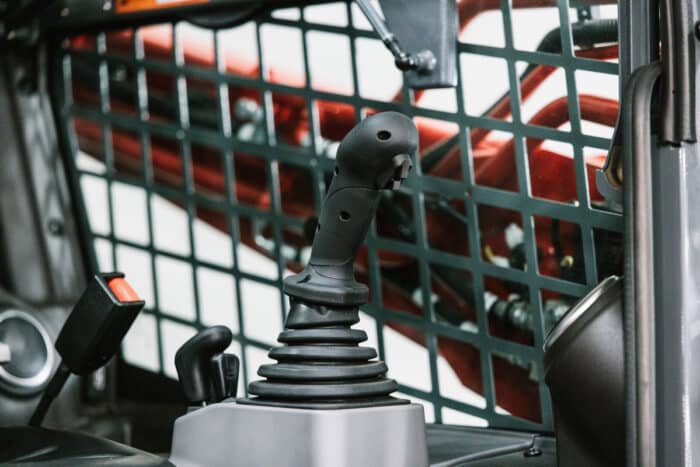
There was a time when mastering a skid steer meant developing a complicated dance between hands, feet and hydraulics. Throttle here. Pedals there. Oh crap, the bucket’s doing something unexpected because your heel twitched at the wrong moment. For many operators, that chaos wasn’t a flaw — it was a badge of honor. Fast forward to today’s skid steers and compact track loaders, and the conversation around controls has changed completely.
“John Deere prioritizes operator comfort and experience when designing our control systems,” explains Gregg Zupancic, product marketing manager, John Deere. “We focus on intuitive control layouts and the operator’s ease of use, which help us deliver optimal precision, responsiveness and integration within the machine’s technology features. Our goal is to reduce operator fatigue and maximize productivity with ergonomic design and easy-to-use controls, no matter the jobsite.”
Today, ergonomics matter. Fatigue matters. Training time matters. And increasingly, software matters just as much as steel and oil. Control systems have evolved from purely mechanical linkages to sophisticated electrohydraulic platforms capable of automation, operator profiles and attachment intelligence. There are a few choices in the market today, so let’s understand how each control system works on skid steers and compact track loaders.
The Original Setup: Hand-and-Foot Controls
Hand-and-foot controls defined early skid steer operation. Separate levers controlled lift and tilt while foot pedals handled travel or auxiliary functions, depending on configuration. Everything was mechanical or hydraulically direct. There was no software buffer between the operator and the machine. Mechanical or hydraulic linkages connect levers and pedals directly to valves. Operator input physically moves components that control flow and direction. Veteran operators appreciate the direct feel. Feedback is immediate. Movements feel predictable once mastered. Some still argue this setup provides unmatched connection to the machine, but very few still argue this. Learning curves are steep. Fatigue sets in faster. Precision suffers in fine grading or long shifts. And adding modern assist features is difficult without transitioning to electronic control layers. Today, hand-and-foot controls remain available from some manufacturers primarily due to price sensitivity or operator preference. But they’re increasingly the exception, not the rule.
“The industry has primarily transitioned to EH controls that can easily switch between ISO and H-Pattern,” explains Dylan Freeman, product manager at Takeuchi-US. “The second most common control configuration is hydraulic pilot controls. These can include a valve to switch between ISO and H patterns. Hand and foot controls are not as common as they once were and are not frequently seen in newer machines.”
Servo Controls: Assisted, Not Automated
Servo controls were the industry’s first meaningful step toward reducing operator fatigue. These systems use mechanical or hydraulic assistance to amplify operator input, lowering control effort while maintaining a direct, proportional feel. Instead of fighting hydraulic resistance, the operator guides the machine while the servo applies the force. This makes servo controls especially effective on larger skid steers and compact track loaders handling heavier loads. However, servo systems lack the customization, pattern switching and automation capabilities of modern electrohydraulic controls. A brand like Case still provides servo-assisted mechanical controls to help reduce fatigue.
Pilot Controls: Hydraulic Precision Without Electronics
Pilot controls represented a major leap forward. Instead of muscling valves directly, the operator uses joysticks that send low-pressure hydraulic signals to control main valves. Effort drops dramatically. Precision is superior. Small pilot valves controlled by joysticks regulate hydraulic pressure that actuates the main control valves. Pilot systems feel smooth and predictable. Response is proportional without relying on software tuning. Many operators describe pilot controls as intuitive and confidence-building, especially for grading or material placement.
“Takeuchi is known for its precision pilot controls and still offers pilot controls on all models excluding our newest track loader, the TL11R3 [which has EH],” says Freeman. “Precision is key. We want the operator to always be in full control of the machine. Takeuchi track loaders have some of the lightest joystick spring rates in the industry. This light spring rate allows for very accurate and precise movements. Applications such as fine grading demand such precision.”
Alas, customization is limited compared to EH systems. Automation features require additional hardware. Pattern switching is possible but not as flexible. Integration with grade control is possible, but not as easy. Pilot controls strike a balance.
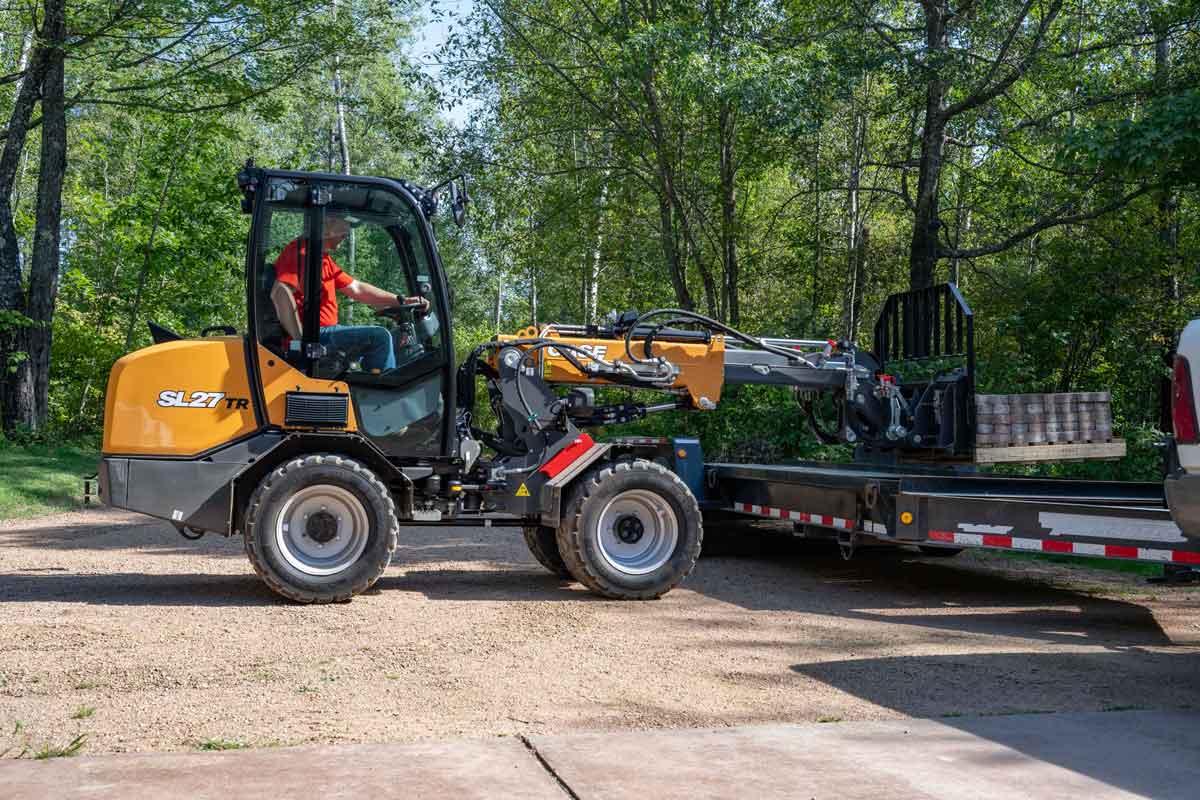
“The system provides an accurate proportional machine response to the joystick’s movement without the need to adjust sensitivity, response rate or speed in the software while still being able to offer some advanced features like creep control.,” explains Nathan Ryan, product manager at Manitou. “Unlike other pilot joystick systems, Manitou’s patented joystick system moves with the operator seat, so the controls move with the seat and operator rather than remaining stationary while the seat absorbs bumps.”
Electrohydraulic (EH) Controls: Software Takes the Wheel
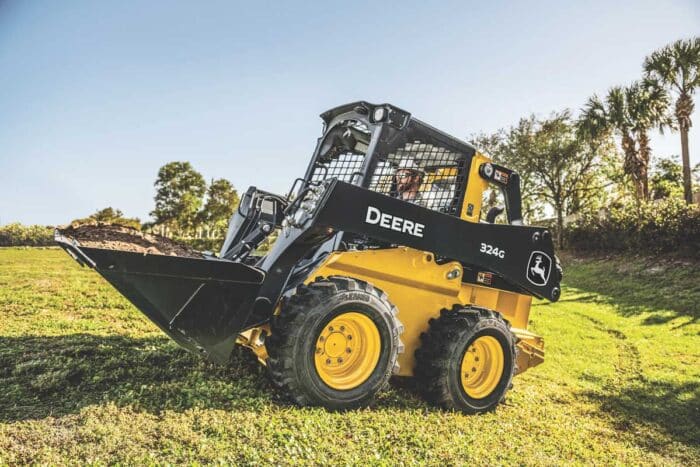
Today, electrohydraulic controls are the most popular option and sometimes the only option from certain brands. Here, joysticks send electronic signals to a controller, which commands hydraulic valves through software logic. Joystick inputs are converted into electronic signals. A control unit interprets those signals and modulates hydraulic flow accordingly. EH systems unlock flexibility. Control patterns can switch instantly between ISO and H-pattern, but that’s not all.
“John Deere EH controls offer adjustable speed and sensitivity settings for all functions of the machine,” says Zupancic. “Examples include boom and bucket speed settings, transmission response rates, creep modes to match attachment performance speeds, return-to-dig, return-to-carry and boom/bucket height memory settings for repetitive tasks. All John Deere machines offer the ability to store operator profiles and preferences for quick setup and consistent performance using specific operator pins.”
EH controls offer lower effort, reduced fatigue, faster training and consistent behavior across machines. EH controls let new operators dial down responsiveness while learning and let experienced operators fine-tune machines for speed or precision. The automation and tech add-ons are amazing, but many operators still miss the hydraulic feel of pilot controls.
“Pilot systems offer better operating attributes, and the technology that comes with EH controls brings with it a higher price,” notes Ryan. “But the market demand for those technologies, like return-to-dig, switchable patterns, is what is actually driving controls towards EH styles in the market.”
EH Is the Gateway to Automation
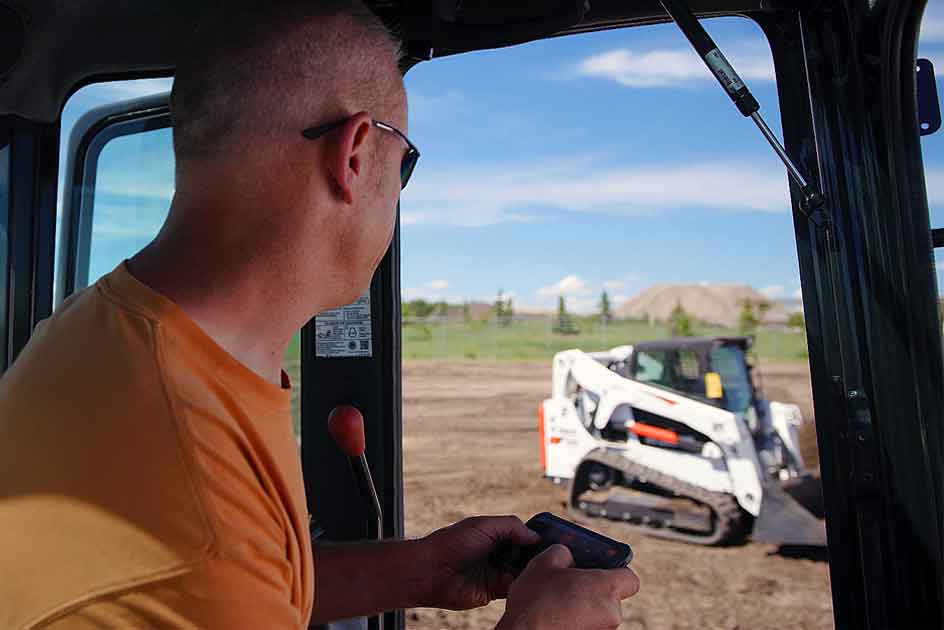
The future? “Autonomous and remote operation will drive the control requirements in the future,” says Ryan. “EH systems are poised to address these market needs because they can quickly change the software to modify the input from the controls and the output to the loader. As these features increase in market demand, we’ll see further deviation from manual, pilot and servo controls to EH systems.”


Comments are closed here.