Inside Takeuchi’s TL6R: Why the Smallest CTLs Are Becoming Big Jobsite Players
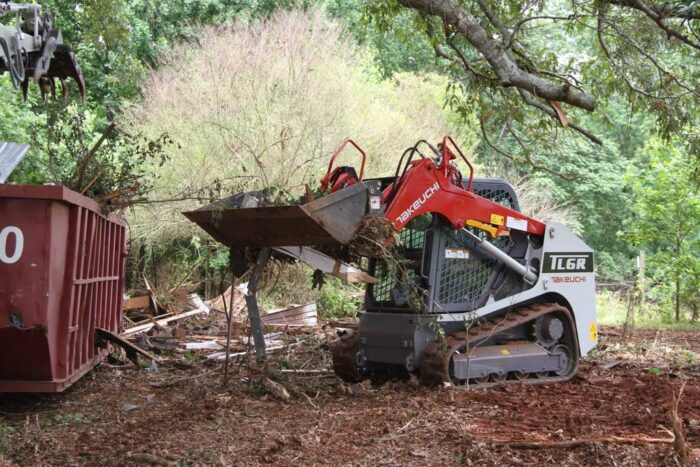
Takeuchi’s smallest compact track loader may be the brand’s most compact machine, but the TL6R continues to punch above its weight in digging, grading and tight-space maneuvering. To understand how this small-frame CTL fits into today’s fast-evolving track loader market — one that’s expanding upward into high-horsepower brutes and downward into ultra-nimble subcompacts — Compact Equipment sat down with Dylan Freeman, product manager at Takeuchi-US. Freeman breaks down the TL6R’s specs, capabilities, attachments and ideal applications, while also offering big-picture insight into where small CTLs work best, how they’re evolving and what buyers often overlook when choosing a compact loader.
CE: Hey Dylan, first off big ole thanks for talking to us today. Takeuchi is one of our favorite brands, and we appreciate your time and insights. First, let’s start off by summarizing your smallest compact track loader offered today.
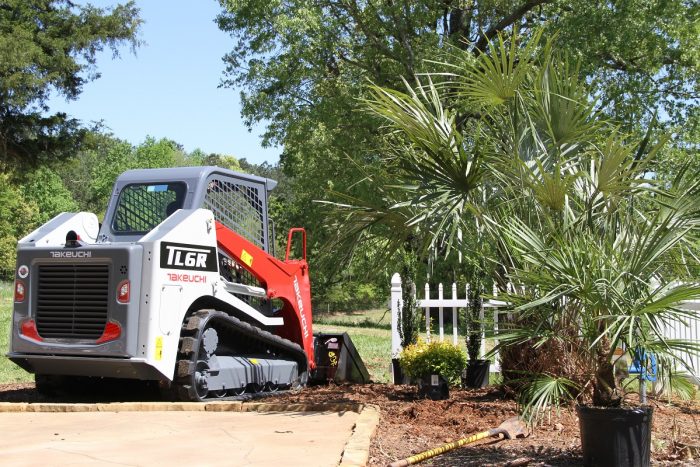
Freeman: Our Takeuchi TL6R offers a great balance of power and performance in a compact package. It’s a radial-lift machine powered by a 65-hp engine that meets Tier 4 Final emissions standards, and it weighs 7,485 lbs in its canopy version and 7,780 lbs in its cab version. The TL6R provides 5,930 lbs of bucket breakout force and 8,650 lbs of traction force, making it more than capable for digging, grading and maneuvering around the jobsite. Its compact size — 6 ft, 5.8 in. in height and just over 5 ft in width — makes it an excellent choice for tight spaces or sites with height restrictions.
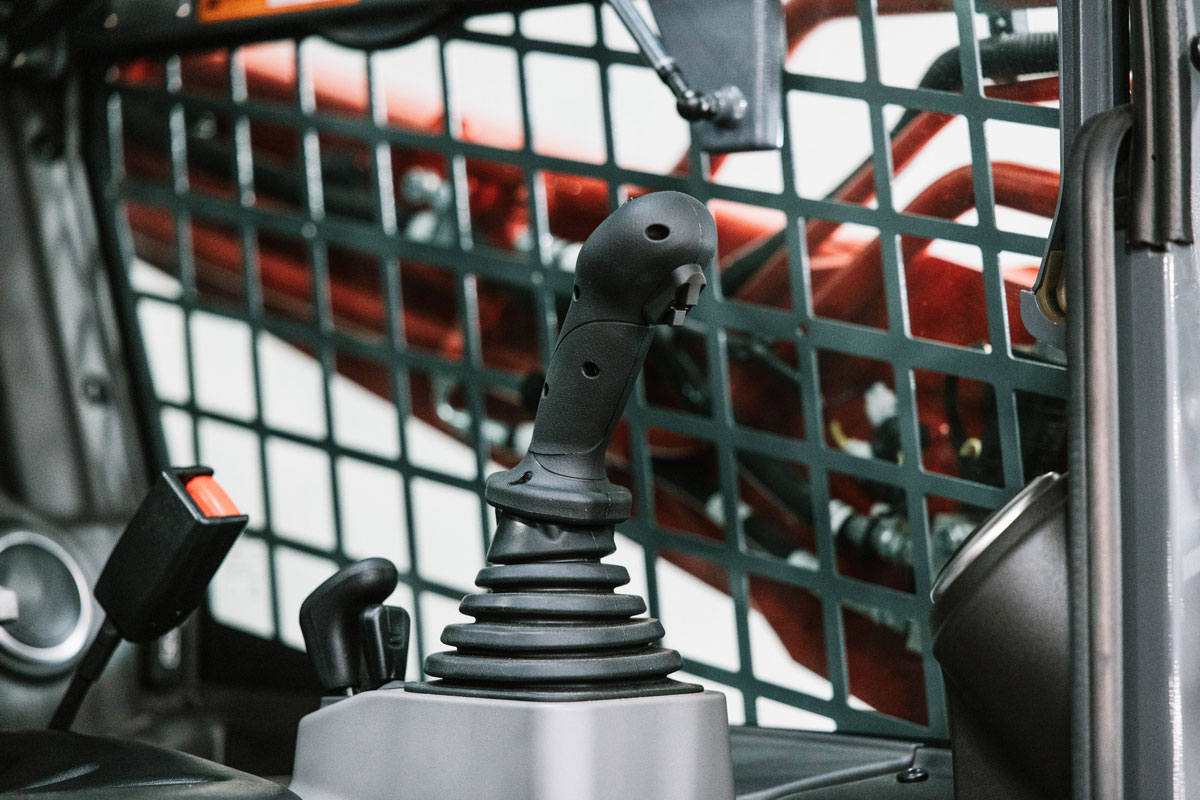
The operator’s area is designed for ease of use, with rocker switches and a color multi-informational display located overhead for quick access. The pilot controls offer smooth, low-effort operation, reducing fatigue during long hours. For safety, it comes with a rearview camera and a wide-angle rearview mirror, which help improve visibility and provide peace of mind. Our Takeuchi Fleet Management System (TFM) is also included, allowing for remote monitoring of the machine’s health, service needs, location and operating hours, helping reduce downtime and control costs.
What are the advantages of a smaller compact track loader vs. a bigger unit? Cheaper price? Easier to transport? Fits into more spaces? What are some disadvantages? Capacity? Lift height? What else?
I wouldn’t necessarily say that smaller CTLs have advantages or disadvantages over larger models — they’re just used in different situations. So, if you’re looking for a CTL that can fit in a very confined space and that’s easy to transport, a smaller CTL would fill the bill. On the other hand, if you need a CTL that’s more powerful or can use higher-flow attachments, you’ll have to go bigger.
In general, here are the attributes commonly associated with smaller CTLs:
- Less expensive: Smaller CTLs typically have a lower upfront cost, making them a more budget-friendly option for some contractors
- Easier to transport: The compact design of smaller machines allows them to be easily transported on standard trailers, minimizing transportation costs and making them more convenient for small jobsites. And, you typically would not need a CDL to transport the machine, which can be a big benefit.
- Ability to access smaller jobsites: Smaller CTLs can fit into tight, confined spaces, which larger machines can’t, like urban or residential areas with restricted access.
- Fuel efficiency: Because their engines are also smaller, smaller CTLs generally offer better fuel efficiency for lower operational costs during lighter-duty tasks.
- Visibility: With a lower profile and compact design, visibility from the operator’s seat is generally excellent.
- Less capacity: Smaller CTLs have a lower ROC which limits their ability to handle heavy loads compared to larger models with higher capacities.
- Lower lift height: Smaller machines typically have lower lift heights, which can be a disadvantage when lifting or loading materials at higher levels, especially on tasks like stacking or loading trucks. However, some smaller machines may have a vertical-lift configuration a higher lift height, so it’s essential to know the specific configuration of the loader you’re working with.
- Less Power: Smaller CTLs generally have smaller engines with less horsepower which may not be suitable for high-demand applications requiring heavy digging or tackling tough terrains.
- Limited Versatility: Smaller CTLs may lack the hydraulic flow or attachments compatibility of larger machines, reducing their ability to take on certain tasks.
What are Takeuchi’s major product differentiators? What makes your small track loader unique and better than everyone else’s?
The 6 ft, 5.8-in. height of the TL6R is intentional. We designed the machine to be able to gain access under covered areas, like chicken houses or other small structures. This model is also our only track loader without a roll-up door. The hinge is much more substantial compared to other competitors swing out doors. With the small foot print this unit delivers a big punch with the 65-hp engine giving the TL6R a superior power-to-weight ratio.
Where do these super small CTLs end up working? What types of applications are popular for the smallest subcompact track loaders?
Smaller CTLs are great for landscaping projects like stump removal, fence installation or installing a retaining wall. They can also be used to trench for irrigation systems or landscape lighting. Landscape professionals can benefit greatly from these smaller CTLs for all those applications, particularly those who do much of their work in backyards or other fenced areas. Their low ground pressure also makes them ideal for work on soft surfaces, and they offer greater comfort than some of the other stand-on or walk-behind machines that could be used in these applications.
What is the auxiliary flow to attachments? Both flow and pressure? Is high flow available? What types of attachments do contractors often gravitate towards with these smaller units?
The Takeuchi TL6R comes with a standard auxiliary hydraulic flow of 17.8 gallons per minute [gpm] at 2,988 psi, which is suitable for a wide variety of attachments. We do not have a high-flow option.
How many small compact track loaders are sold each year? Is this a niche product? What percentage of sales goes to these super small CTLs?
From the data I’ve seen recently, approximately 90,000 CTLs are sold in the U.S. annually. I don’t have access to data about how many of those CTLs are the smallest models, but at Takeuchi, it’s currently a smaller segment in comparison to larger CTLs. But we see this segment rapidly expanding, with the emphasis being owner/operator landscapers who are looking for an affordable machine to boost productivity that will also fit on small trailers and tight jobsites.
What operational tips can you share when using smaller compact track loaders? Should contractors approach using these smaller track loaders differently? Are they easier to operate? Harder? What’s visibility like?

When using smaller compact track loaders, there are a few key operational tips to keep in mind. First, while smaller CTLs like our TL6R are generally easy to operate, they do require a bit more attention when navigating tight spaces. Their compact size gives them great maneuverability, but operators still need to be mindful of their movements to avoid potential obstacles or uneven ground that could affect stability. Even though these CTLs are smaller, they still require good spatial awareness to make the most of their capabilities.
One thing many operators appreciate with smaller CTLs is that they tend to have low-effort pilot controls, which reduce fatigue during long workdays. While they’re easy to operate, the precision of the controls is still key to getting the most out of the machine. Smaller track loaders are nimble, but operators should remember they may not have the same power as larger units, so they might need to adjust their techniques when lifting heavier loads or pushing through tougher terrain.
Because smaller CTLs have a lower profile and more compact design, visibility from the operator’s seat is good. In models like the TL6R, the controls are intuitively positioned, and the machine’s design helps reduce blind spots, which is particularly helpful in tight or crowded jobsites. Plus, features like a rearview camera and wide-angle mirrors can further enhance safety and visibility when working around other equipment or obstacles.
Overall, these machines are designed to be intuitive and efficient, but just like any piece of equipment, getting the best results comes down to knowing how to operate them with the right techniques for the job at hand. They may be easier to handle in many ways, but operators should still be strategic in how they use them, especially when working with attachments or in restricted spaces.
What advice would you give a contractor looking to buy or rent a smaller compact track loader?
When considering a smaller CTL, contractors often focus on the initial cost but may overlook the long-term operating expenses, particularly fuel consumption. Smaller machines tend to be much more fuel efficient, and over time, this can result in significant savings. While the upfront price might be lower for a smaller machine, the ongoing cost of fuel can be a hidden factor that affects the overall budget, especially for contractors who are using the machine for long hours or across multiple jobsites. It’s important to factor in how much you’ll be using the machine and how that impacts fuel consumption to get a clearer picture of its total cost of ownership.
Another often-overlooked consideration is the machine’s potential resale value. Many contractors focus solely on what the machine will cost upfront and how it will perform in the short term, but smaller CTLs, like the TL6R, tend to hold their value well, especially if they’re properly maintained. If you plan to upgrade or rotate your equipment every few years, the resale value could provide a nice return on your initial investment. It’s worth considering this aspect because it can provide flexibility in your equipment strategy and help offset the purchase cost over time.
What trends do you see in the compact track loader market overall? Are buyers gravitating toward certain sizes or technologies? Are there certain regions where sales are increasing or decreasing? What interesting evolutions do you see in the market and the near future?
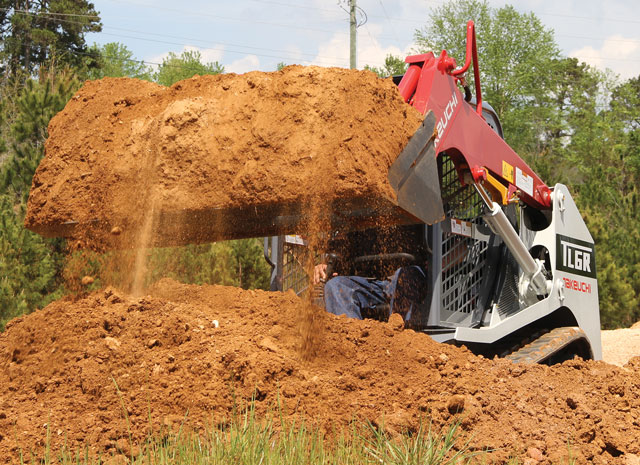
The CTL market continues to expand in both directions — they’re getting both smaller and smaller and larger and larger. It’s just such a versatile piece of machinery with a variety of attachments that can do almost any job. Finding the right size for the application and jobsite terrain is why we continue to see more models in newer sizes. The appropriate size is always dependent on application and environment.
Keith Gribbins is publisher of Compact Equipment.
Let’s take a look at the smallest mini excavators on the market.