Video: Vermeer Expands Its Mini Loader Lineup with Four New ML-Series Models
Compact, stand-on loaders continue to gain traction across landscaping, tree care and residential jobsites. In the latest episode of Machine Heads, host Wayne Grayson breaks down Vermeer’s new ML-Series mini loaders — the ML80, ML100, ML130 and ML150 — and explains how this lineup reshapes the 1,000-lb class. Grayson spends nearly 18 minutes walking through specs, lift paths, attachment performance and real-world workflow differences.
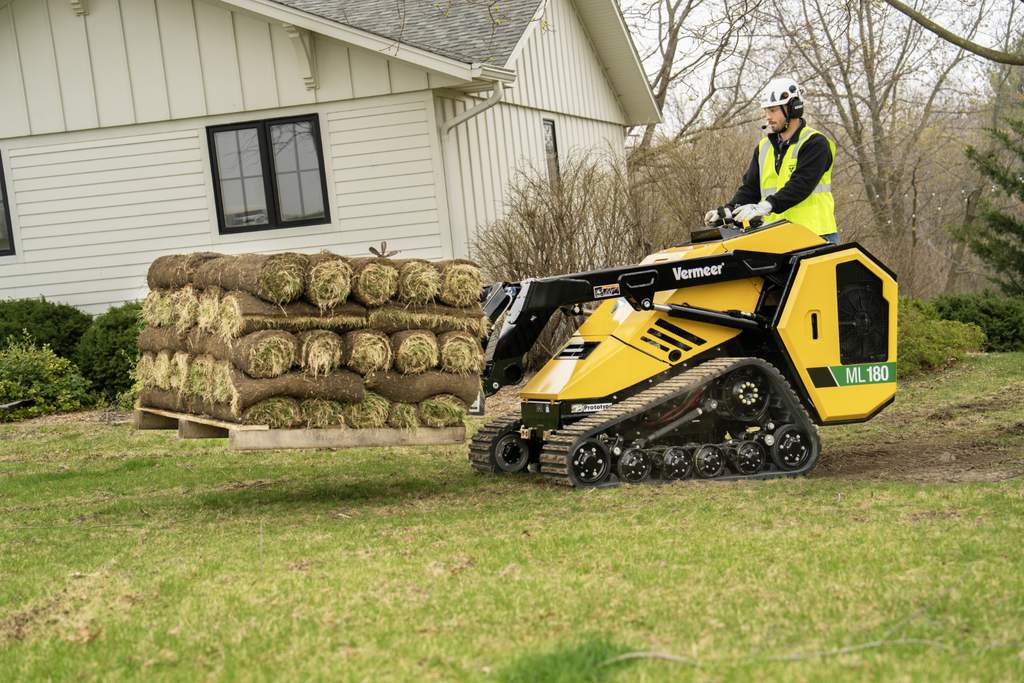
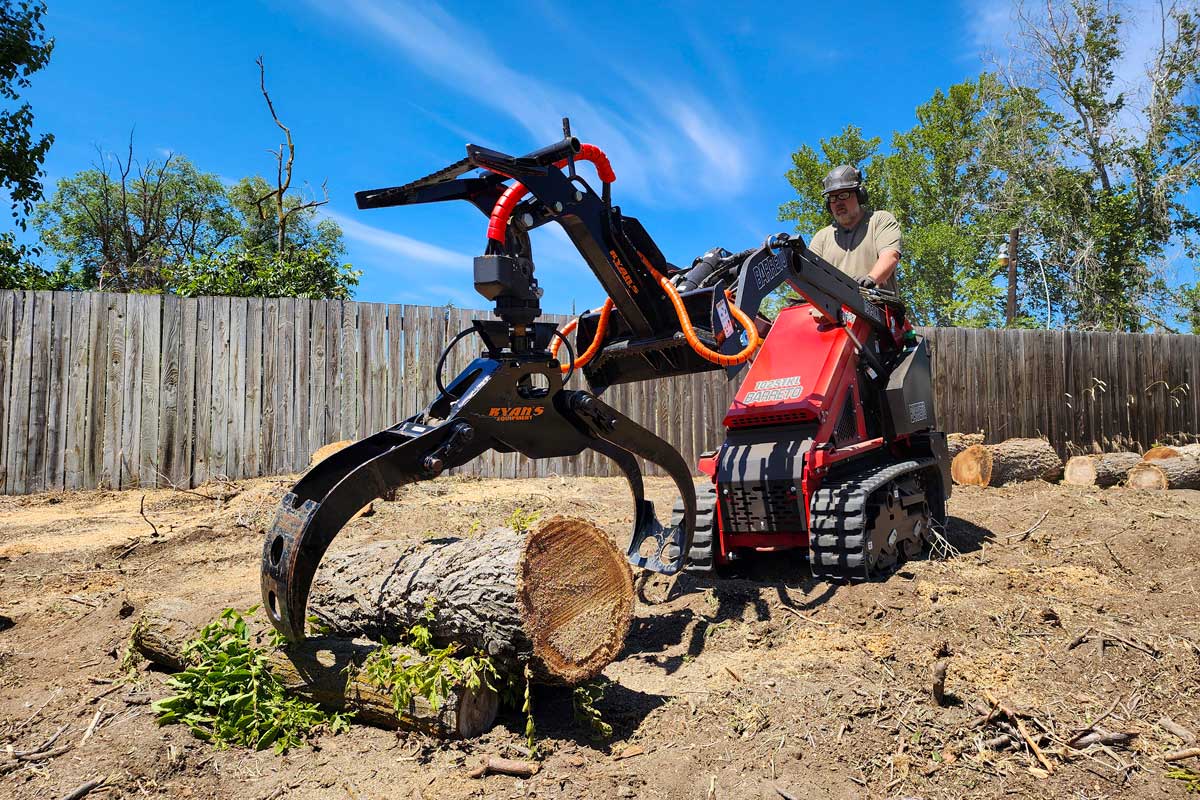
Mini loaders (often called compact utility loaders, mini skid steers or mini track loaders) fill the gap between manual labor and full-size skid steers and CTLs. Crews favor them for tight access, low ground disturbance and quick on-off operation. Grayson notes that these units excel when crews need to move material through gates, manage turf protection or replace wheelbarrow-heavy tasks. Standing at the rear of the machine gives operators a clear view of the attachment, which helps with forks, grapples and trenchers in cluttered or residential spaces.
What’s New on Vermeer’s ML-Series
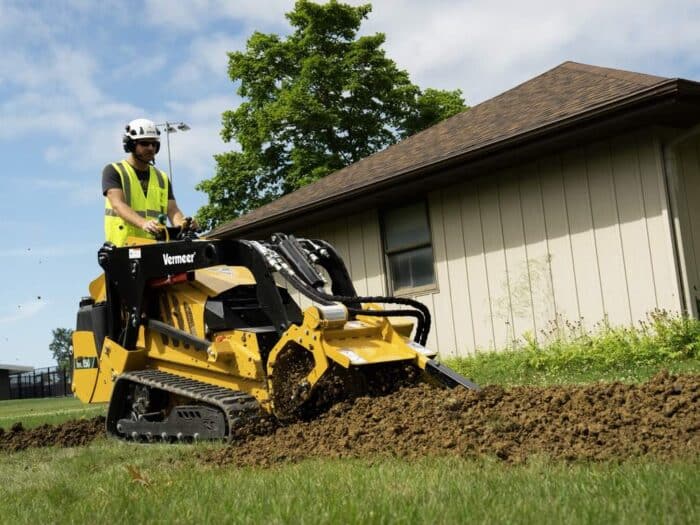
Vermeer built the ML-Series as a next-generation update to the S-Series and CTX-Series. Grayson focuses on a few core changes that span all four loaders:
- Higher rated operating capacities from 780 to 1,530 lbs
- Updated hydraulic plumbing and filtration designed for real jobsite conditions
- Standard telematics through VermeerOne
The lineup targets contractors moving into the 25-hp, 1,000-lb class, but the upper end delivers serious lift for tree care and material handling.
Radial Vs Vertical Lift
Vermeer now divides the ML-Series by lift path:
- Radial lift: ML80 and ML100
- Vertical lift: ML130 and ML150
Radial models lean toward ground work. They stay compact, keep the load close and maneuver well during grading or trenching. Vertical-lift models provide higher hinge pin heights and stronger reach when loading trailers or placing heavy material. Tree care and landscape crews that handle logs, sod or block will gravitate toward the ML130 and ML150.
ML80 and ML100: Compact, Gate-Friendly Options
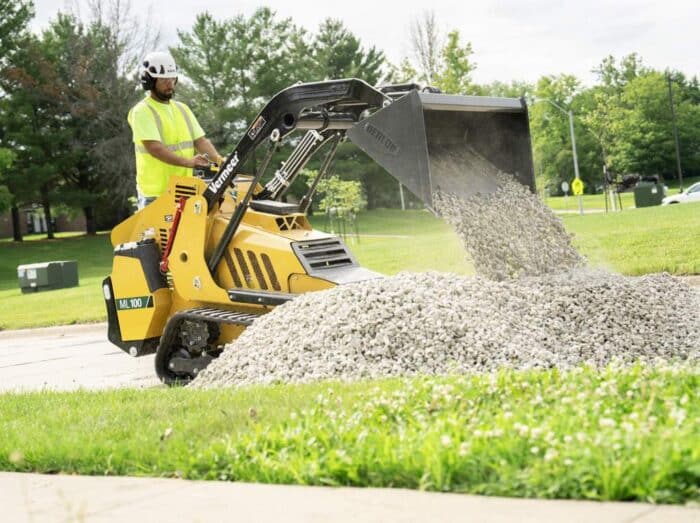
The ML80 anchors the series with a 780-lb ROC, a 24.7-hp diesel and optional narrow tracks for 36-in. gate access. Grayson positions it for rental fleets and first-time buyers who want more capability without jumping to larger machines. The ML100 steps up to a turbocharged 24.7-hp engine and a 950-lb ROC. Grayson spends time on the turbo advantage, calling out stronger performance when counter-rotating in piles or running attachments under load. Both radial models share similar auxiliary flow and target high-volume residential work.
ML130 and ML150: More Lift, More Flow
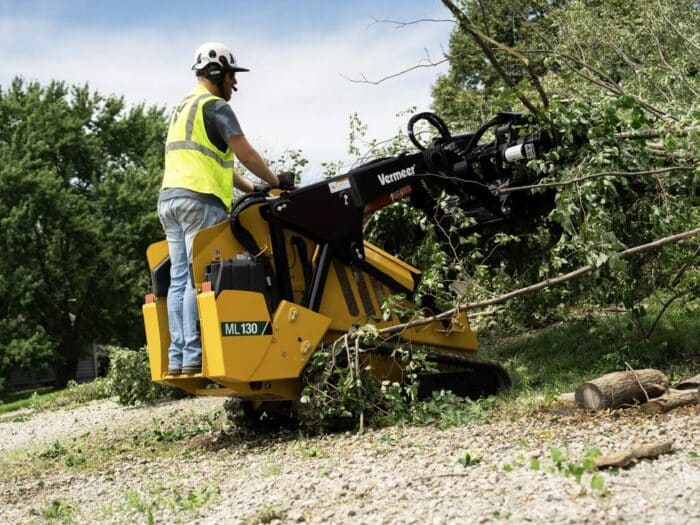
The ML130 introduces a vertical-lift path, a 40-hp engine and a 1,270 lb ROC. Its 16.8-gpm high-flow circuit supports heavier trenchers, bigger augers and hydraulic tools that bog down smaller loaders. There’s also a significant jump in hinge pin height, which helps when loading chip trucks or taller trailers. The ML150 tops the line at 1,530 lbs of ROC with the same engine and flow as the ML130. It weighs more but maintains a similar footprint. The ML150 is the choice for crews that consistently max out machines in the 1,200- to 1,300-lb class or want fewer trips when moving logs or pallets.
Tracks, Access and Job Fit
Track width plays a major role in loader selection. The ML80 and ML100 offer narrow or wide configurations. The ML130 and ML150 come only in wide-track form, signaling their focus on larger properties and commercial jobsites. We encourage contractors to evaluate gate access versus flotation needs before choosing a model.
Grayson closes by urging viewers to demo the machines back-to-back. Start with the ML100, move down to the ML80, then step into the ML130 and ML150 to see whether the extra lift and flow justify the jump. The ML-Series gives contractors a full spread of stand-on loader options with clear workflows in mind. For more compact equipment videos and analysis, visit our YouTube page by clicking this link.
Keith Gribbins is publisher of Compact Equipment.
Let’s take a look at six brands of mini skid steers or compact tool carriers.