
New Protocol Is the Latest Advance in Interoperability
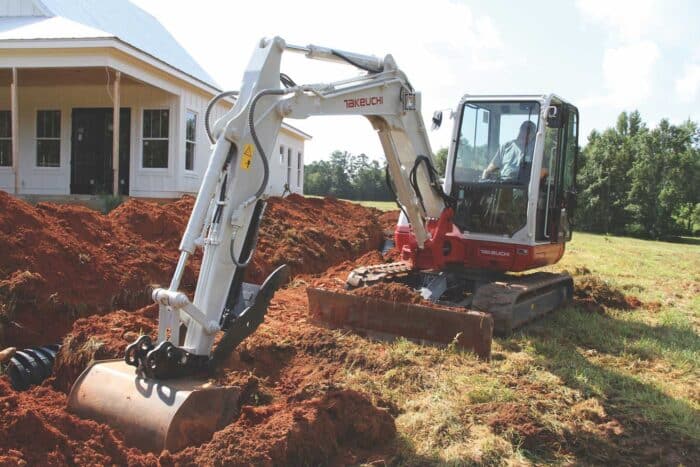
“Where are you from?” “How are you doing today?” “What’s your area of expertise?” The necessary banter of business social engagement is a good model for what’s going on with equipment and jobsite information. As of this year, everyone can talk with everyone else and do it in an orderly fashion that ensures everyone gets heard. It is a prerequisite if everyone is going to work together in achieving a common goal, which is one way of defining “interoperability.”
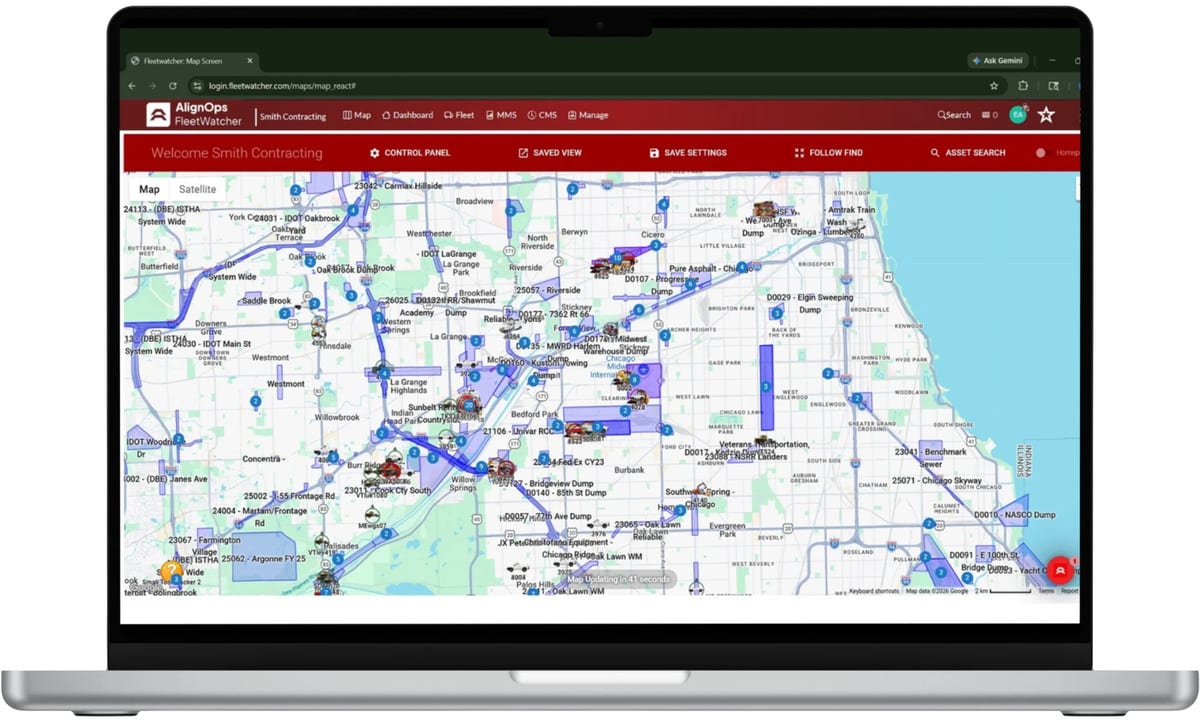
ISO 15143-4 is the latest iteration in the development of ISO 15143, which provides a framework for electronic communication. It is the cornerstone of interoperability, the capacity for things to communicate and work together. In general terms, ISO 15143-1 covered basic system architecture, -2 standardized a data dictionary so the same piece of information was called by the same name regardless of its point of origin and -3 provided unified telematics. The -4 version has architecture to provide shared information regarding 3D site data. To fully appreciate the complexity of the task, a bit of history is in order.
Electronics were present on engines decades ago, but the wide development came in the late 1990s and early 2000s. Much of this was driven by increasingly stringent off-highway diesel emissions regulations and the need for sophisticated injection mapping to stay within the legal limits. This can be six or more tiny pulses, delivering as little as 0.1 mg of fuel each, all in the 1 to 2 milliseconds of an entire combustion cycle. Mechanical injectors had reached their limit, and electronic injectors were developed to meet the need.
These electronic engines were soon paired with electronic transmissions, which provided more accurate shift points and other features. Electric-over-hydraulic (EH) joysticks replaced pilot controls on many machines. So that the engines, transmission and other components could communicate, CANbus systems were developed. CANbus will also retain data about operations but retrieving that information requires some physical connection, such as an in-cab monitor or a laptop with a cable connection. CANbus information is limited in that it remains local to the machine. So, ISO 15143-1 was developed to retrieve and share information. It defined what information was gathered, how it was packaged and how it was transmitted over the internet.
J1939 is Here to Stay… but it has Two New Friends
CANbus relies on the SAE J1939 standard. Development of J1939 as a common, heavy-duty communication protocol began in 1985; it was initially released in 1994 and was broadly adopted in the early 2000s. Two newer players are on the field, and each plays a unique position.
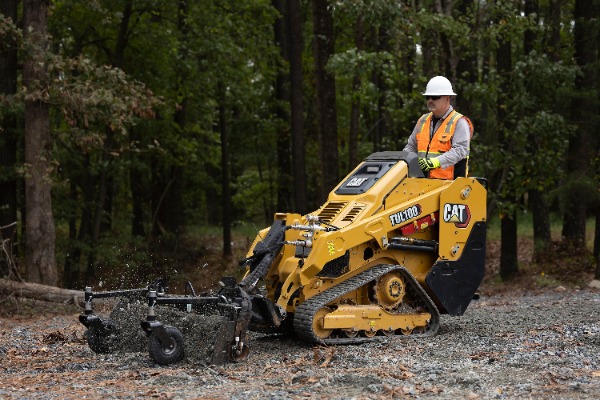
In some ways ISOBUS is a derivative of SAE J1939 and uses much of the same information as the CANbus, delivered on the same wiring and using the same packets of information. Its designation is ISO 11783. But while CANbus is helping various systems on the machine work together, ISOBUS ensures that the operation of complex attachments is integrated into the overall performance of the host machine and the attachment. ISOBUS was popularized in agricultural applications but its fluency in matching attachments with host machines is making it increasingly popular with construction equipment OEMs. The other relative newcomer is “automotive ethernet” and it is all the buzz, mainly because it is up to 20,000 times faster than J1939 (up to 10 Gbps compared to J1939’s limit of 500 Kbps).
J1939 will remain in place for machine operations such as engine and hydraulic commands, while ISOBUS matches complex attachments to host machines and automotive ethernet handles 3D systems, LiDAR and other high-demand, speed-sensitive systems.
Collaboration
The concept and implementation of interoperability took a lot of work from several organizations. The Association of Equipment Management Professionals (AEMP) noted that the proliferation of proprietary communication architecture was a burden for equipment managers; they introduced the first telematics standard, AEMP 1.0, in 2010. The Association of Equipment Manufacturers (AEM) helped its OEM members evolve standards and protocols for the safe and secure sharing of data from equipment. ISO formalized standards in the series of ISO 15143 publications.
Most ISO standards are reviewed every five years and updated as needed. But in the fast-moving world of construction technology, five years is too long so a maintenance agency (MA) has been put in charge of checking the need for updates more frequently. That agency is the Japanese Construction Machinery and Construction Association (JCMA). It’s responsible for keeping the ISO 15143 series current.
Why delegate that responsibility to a Japanese organization? Partly to avoid the suggestion of influence of conflict with U.S. agencies AEMP and AEM. Not that influence or conflict would be a problem, but people talk and the mere suggestion of impropriety could diminish the stature of the MA.
The choice was also supported by the number of Japanese equipment manufacturers noted for their use of technology. These include Hitachi, Komatsu, Kubota, Takeuchi and Yanmar.
What’s it all Mean for Compact Equipment?
With ISO 15143-4, construction communication protocol is more highly evolved than ever. So, are owners of compact equipment rushing out to acquire new machines to make the most of this technological wizardry?
No. Top-tier civil contractors and large-scale infrastructure projects, such as highway builds, are seeing high adoption rates. In other segments adoption is slower. Setup can be tedious and finicky, especially among mixed fleets and even worse when mixed GNSS systems (like Leica, Topcon and Trimble) are involved. Project file transfer via thumb drive is adequate. Even viewed as total communication package and not by 15143-4 alone, the technology isn’t sufficiently compelling to warrant early replacement of existing machines. And while some owners are driven to have the latest and greatest equipment and technology, the vast majority will pay as much as is necessary to get the desired results and not a nickel more.
That said, ISO 15143-4 facilitates another level of performance for those who desire it, and those numbers are growing as compact equipment gets ever larger and more capable. The biggest skid steer loaders of 30 years ago typically had 40 to 60 hp. Today’s biggest models have double that. 3D machine control might not have made much sense on a 50-hp loader, but it starts to make a lot of sense on a loader with 110 or more hp that’s doing precision earthwork regularly.
Besides, there’s a psychological difference between not having a feature because you don’t want it and not having that feature because you can’t get it.
And for what it’s worth, at least one study says that industry-wide, some two-thirds of all respondents used neither 2D nor 3D technology in their construction business. It’s not like owners of compact equipment are the last holdouts.
Let’s go back to those three questions for a moment. “Where are you from?” is equivalent to make and model. “How are you doing today?” is telematics. “What’s your area of expertise?” is the host machine getting acquainted with the rock star attachment. ISO 15143-4 gives everyone in the discussion a shared view of the landscape of success, the finished profile, so they can work together to achieve it.



Comments are closed here.