
Video: Why Demand Is Rising for Compact Crawler Carriers
Welcome back to the Machine Heads video series! In this video, we’re tackling compact crawler carriers and why demand is rising for these niche machines.
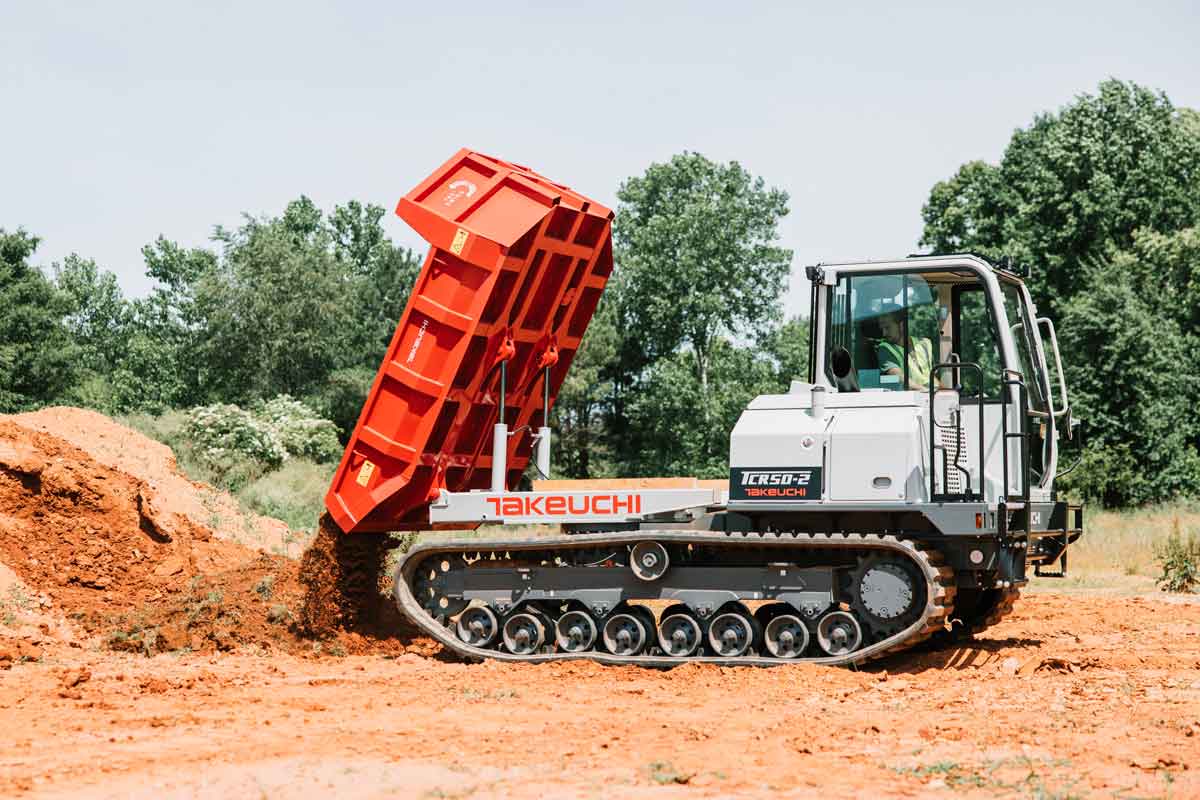
These material handlers are basically big dump beds on large rubber track undercarriages. They can carry a lot of weight while disturbing very little thanks to their low ground pressures. And they’ve been around for years, though for much of that time they’ve been considered niche or speciality equipment.
But demand for these machines, specifically the smaller models that we’re going to be talking about today, is growing here in the U.S.
So, what’s driving this surge in interest, what makes these machines so useful, what applications are they best suited for, and how should you approach specing one out if you’re thinking about adding one to your fleet? Let’s dig in.
Why Is Demand Rising?
So why are we seeing more demand for these machines now? There are several factors at play.
First, jobsites are getting more crowded, more constrained and more specialized. Urban and residential construction sites are tighter than ever. Environmental regulations are stricter.
Second, awareness is spreading. As more contractors see these machines working on neighboring sites or rent one for a challenging project, they realize the productivity gains possible — specifically being able to move three to four loader buckets worth of material in a single trip.
Third, the machines themselves have evolved. These newer compact models are more affordable and accessible than ever. The barrier to entry has come down significantly.
Key Applications and Use Cases
Because of the above factors, these are the primary applications and use cases for compact crawler carriers today:
- Tight Urban and Residential Construction
- Soft Ground and Wetland Work
- Pipeline work, utility corridor construction, environmental restoration projects
- Steep Terrain and Slope Work
- Landscaping projects, terracing, hillside development
- Golf Course and Grounds Maintenance
- Utility and Powerline Work
What’s Available on the Market Today?
Let’s look at what’s available in the compact crawler carrier category. We’ll focus on three manufacturers that offer compact models or those that are intended for tight spaces: Takeuchi, Terramac, and Yanmar.
In this video, we dive into these specific models:
- Takeuchi TCR50-2
- Yanmar C30R-3 and C50R-5
- Terramac RT6 and RT7R
Key Features to Understand
So now that we’ve taken a look at what’s available on the market, let’s talk about what features you should pay most attention to when looking at these machines.
- Rotating Dump Bed: This is probably the single most important feature for productivity.
- Ground Pressure and Flotation: This is what allows these machines to work in challenging terrain.
- Undercarriage Design: Look for robust undercarriage construction. Bogie-style rollers, sealed bearings, and quality rubber tracks make a big difference in longevity and ride quality.
- Operator Comfort: Look for enclosed cabs with heat and AC, good visibility, intuitive controls and comfortable seating.
- Dump Angle: Most small crawler carriers offer dump angles in the 58-85 degree range.
How to Spec Out a Small Crawler Carrier
If you’re considering adding a crawler carrier to your fleet, here’s how to think through the decision.
- Start with Your Application: What specific problem are you trying to solve? Are you mainly dealing with soft ground access? Tight urban sites? Steep terrain?
- Consider Load Capacity and Distance: Think about how much material you need to move and how far you need to transport it.
- Think About Machine Pairing: What other equipment will you be using alongside the carrier? An excavator? A track loader?
- Consider Transport and Logistics: How will you get the machine to the jobsite?
- Rental vs. Purchase: For your first experience with a crawler carrier, renting often makes sense. It lets you prove out the concept on a specific project without the capital outlay.
- Maintenance and Support: Make sure you have dealer support in your area. Parts availability and service capability matter, especially if this becomes a critical piece of equipment for your operations.
Who Should Operate a Crawler Carrier on Your Jobsite?
One interesting aspect of crawler carriers is that they don’t necessarily require a dedicated operator. The controls are relatively simple – typically joystick controls for travel and dump functions.
Many contractors use them as a task for a ground person or laborer who isn’t a full-time equipment operator. When the carrier is loaded, that person drives it to the dump point and returns for the next load. This keeps your experienced operators on the excavators and loaders where their skills have the most impact.
That said, for larger projects where the crawler carrier is running continuously, having a dedicated operator makes sense. But the ease of operation means you have flexibility in how you deploy your crew.
Real-World Impact
What kind of difference can a crawler carrier make on a jobsite? The impact is primarily seen through improved productivity through reductions in passes, manual labor, easing site access concerns and rework due to ground disturbance.
By keeping your excavators and loaders focused on their primary tasks instead of shuttling material, you can often see significant productivity gains. Instead of a track loader making 10-15 trips carrying one bucket at a time, the crawler carrier makes 2-3 trips carrying multiple buckets worth of material.
Further gains are seen through the elimination or reduction of manual labor. In many cases, material would otherwise be moved manually: wheelbarrows, shovels, manual spreading. The precision dumping capability means material ends up where you need it with minimal hand work.
Plus, for projects in challenging terrain, crawler carriers can eliminate the need for extensive site preparation. Instead of building temporary roads or bringing in mats for wheeled vehicles, you can often drive the crawler carrier directly to where you need to work. This saves time and money on mobilization.
Finally, for environmentally sensitive sites or situations where you need to preserve existing landscaping, the low ground pressure can be the difference between being able to access an area or not. This opens up work opportunities that might not otherwise be feasible and reduces the need for cleaning up any messes vehicles with higher ground pressure might cause.


Comments are closed here.