
Utility Vehicles Lend a Helpful Hand in Municipal and Parks Work
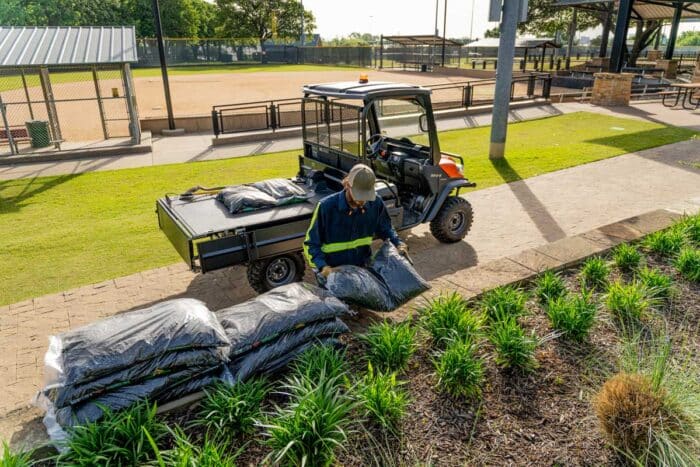
Municipal and parks crews work hard, so naturally, they need equipment that does the same. Utility vehicles are the perfect solution for that. These hardworking, versatile vehicles have the ability to carry people and move materials across town. Plow sidewalks in the winter and spread fertilizer in the spring. Sweep pathways after an event and carry flats of flowers and loads of mulch to the playground … and so much more.
“Utility vehicles play an important role in municipal and park operations as they combine efficiency, durability and versatility in a compact platform,” says Jacob Mandoza, senior product manager — RTV for Kubota. “UTVs offer all-terrain mobility, allowing staff to move across parks, trails, construction zones and public spaces where pickup trucks may not fit.”
When choosing a UTV for working in municipal and parks applications, durability, reliability and fuel sources are key considerations. The vehicle needs to be able to move across changing ground conditions, as well carry and tow large loads of various materials. Buyers can choose between gas, diesel or electric models, depending on their preferences, needs and any environmental regulations.
“Operators need a machine capable of working year-round in changing weather and terrain conditions, with sufficient payload and towing capacity for heavier-duty tasks,” says Eric Halfman, go-to-market manager for John Deere. “Drivetrain options are also important, as some applications may require 2WD while others benefit from 4WD for improved traction on uneven or slippery surfaces.”
To aid in traction and turf protection, Brady Lafrinere, product manager at Polaris Commercial, suggests selecting a UTV with tires that are made from heavy-duty, non-directional materials and higher ply construction. He explains these types of tires can better handle sharp debris and rugged terrain while distributing weight more evenly to reduce surface damage.
Below, we highlight other features to consider when selecting a UTV for municipal and parks work.
Cargo Bed
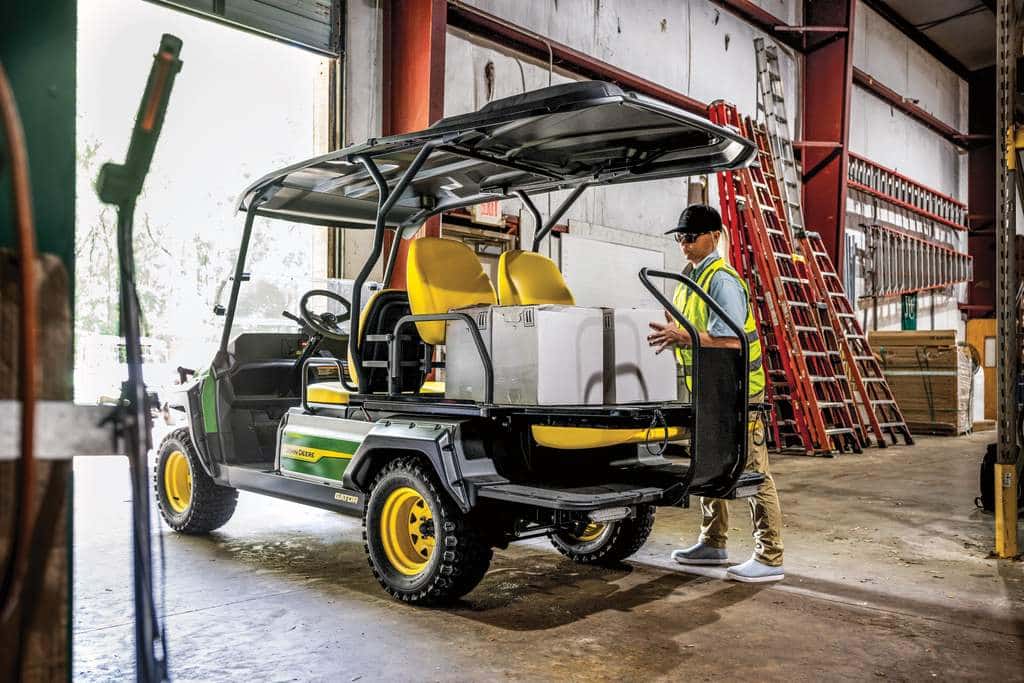
One of the biggest advantages of a UTV is its cargo bed and the ability to haul a variety of materials like mulch, dirt and more. When spec’ing a UTV for municipal and parks work, Mandoza says to consider what a crew plans to move and select a unit with a cargo bed that can handle those loads. This will help determine the right dimensions, weight capacity and whether a plastic or steel bed is needed. Depending on how rough you’ll be loading and unloading the UTV, as well as the materials that will be transported, an all-steel cargo bed may be a better option than plastic. Bed liners are also available.
Mandoza encourages buyers to consider how easy it is to load and unload the bed. A hydraulic dump bed is a good choice for crews who need to unload materials often.
If there’s a need for even more bed capacity, Kubota offers its RTV-X Long Bed model. This UTV is a one-row, long bed model with the highest cargo bed volume and capacity in the company’s lineup. Kubota’s Pro-Konvert cargo bed is another option to consider. The Pro-Konvert solution allows an operator to convert the bed into a flatbed without tools, and load from the rear or either side.
Speed
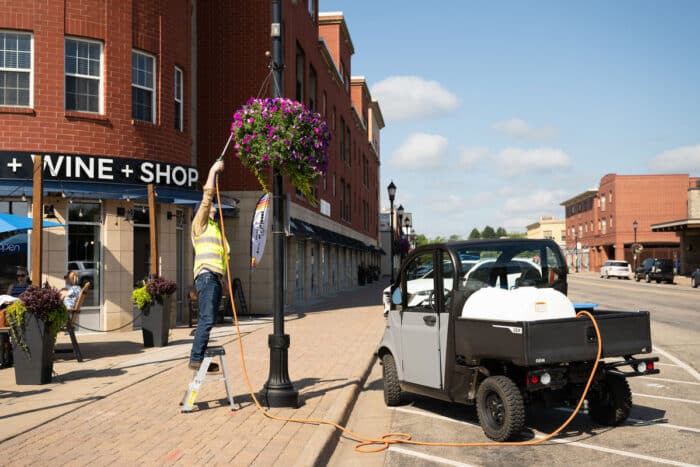
When using a UTV for municipal and parks work, maintaining a safe speed is a must — especially when crews are working around the public. With that, it’s important to find a unit that offers the ability to limit speed when needed. Fortunately, manufacturers offer a wide range of models with various speeds and limits to fit any need. Luke Mulvaney, chief revenue officer and vice president of Waev Inc., explains that while speed requirements vary by location, 25 mph is a common operating limit on many jobsites.
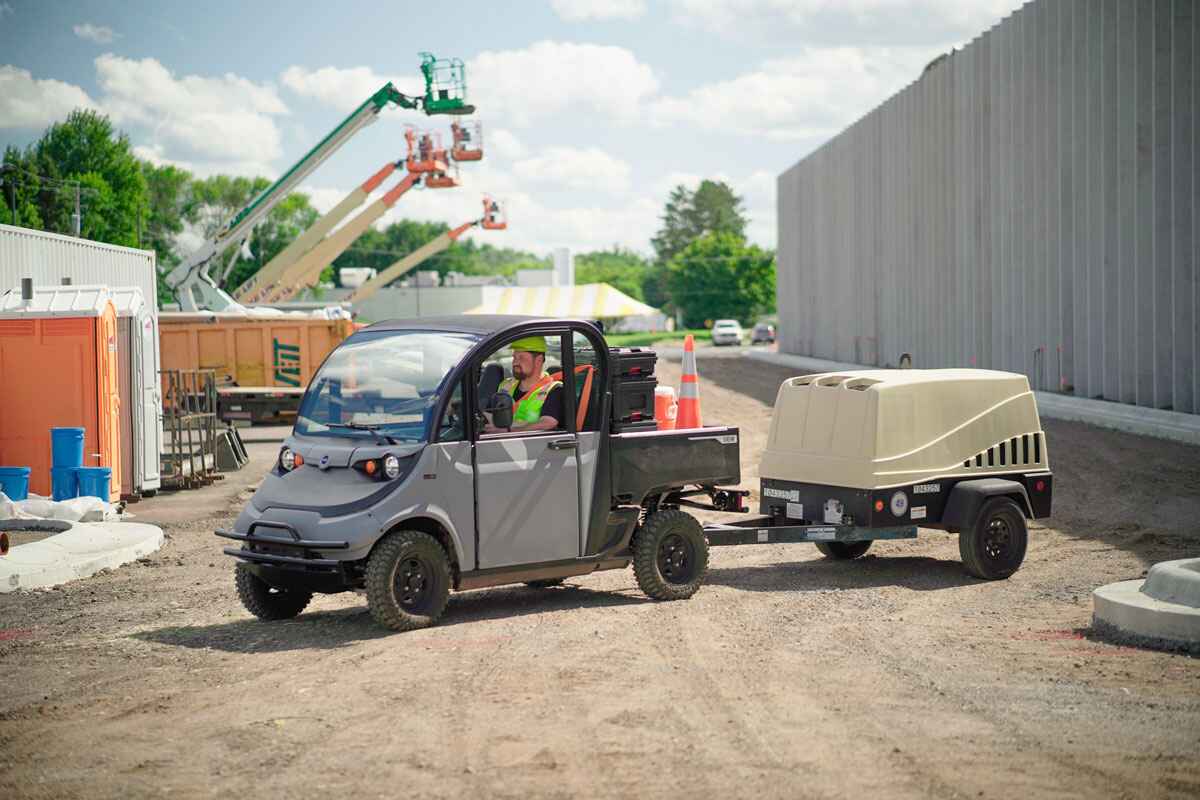
“The GEM eX has a top speed of 25 mph and is street legal on roads posted 35 mph or less,” he says. “To ensure site-specific compliance, GEM dealers can also adjust the speed downward to meet stricter internal limits often enforced in municipal areas.”
Halfman points out that John Deere UTVs typically offer moderate top speeds that are designed for safety and control, including many models operating in the 15- to 25-mph range with speed governors or selectable modes available. He adds that these options make the UTVs well-suited for environments where pedestrian safety and controlled operation are priorities, such as parks, campuses and public facilities.
Pro XD UTVs from Polaris offer adjustable speed limiting which allows operators to cap maximum speed based on site policies or job requirements. Lafrinere says this is especially critical on shared-use sites with pedestrian traffic.
“Pro XD top speed can be calibrated between 5 to 40 mph — depending on the model — with the ability to limit top speed anywhere within that range,” he says. “This flexibility helps departments maintain consistency across operators while supporting compliance in public-facing spaces.”
Mandoza emphasizes that Kubota prioritizes controlled, safe operation. He says many of the company’s diesel work-oriented models, like the RTV-X CREW, feature a maximum speed of 25 to 35 mph when in high and typically range from 8 to 12 mph when in low.
“Our X-Series tops out at 25 mph across the lineup,” he says. “Gas-powered models like the Sidekick offer higher speeds, but municipalities often govern speed based on worksite or pedestrian density. For those machines with higher top-end speeds, a speed governor is usually available through the OEM or aftermarket.”
Accessories
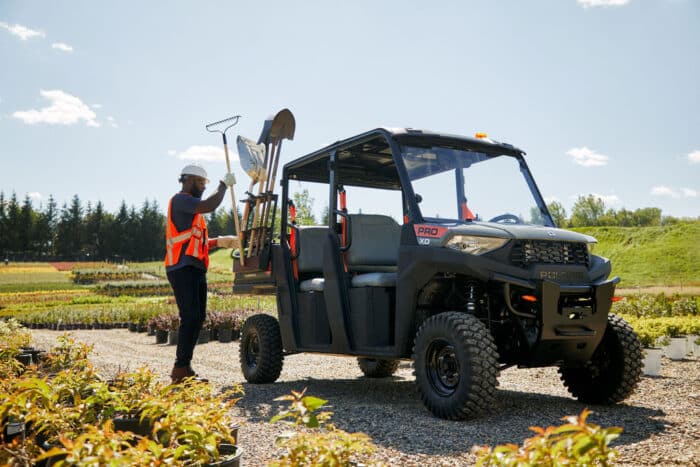
UTVs can be customized with different accessories to help them excel in municipal and parks applications. These tools can improve operator experience, enhance safety and aid in productivity. One of the most common add-ons are lighting packages to help increase visibility during early morning or evening work.
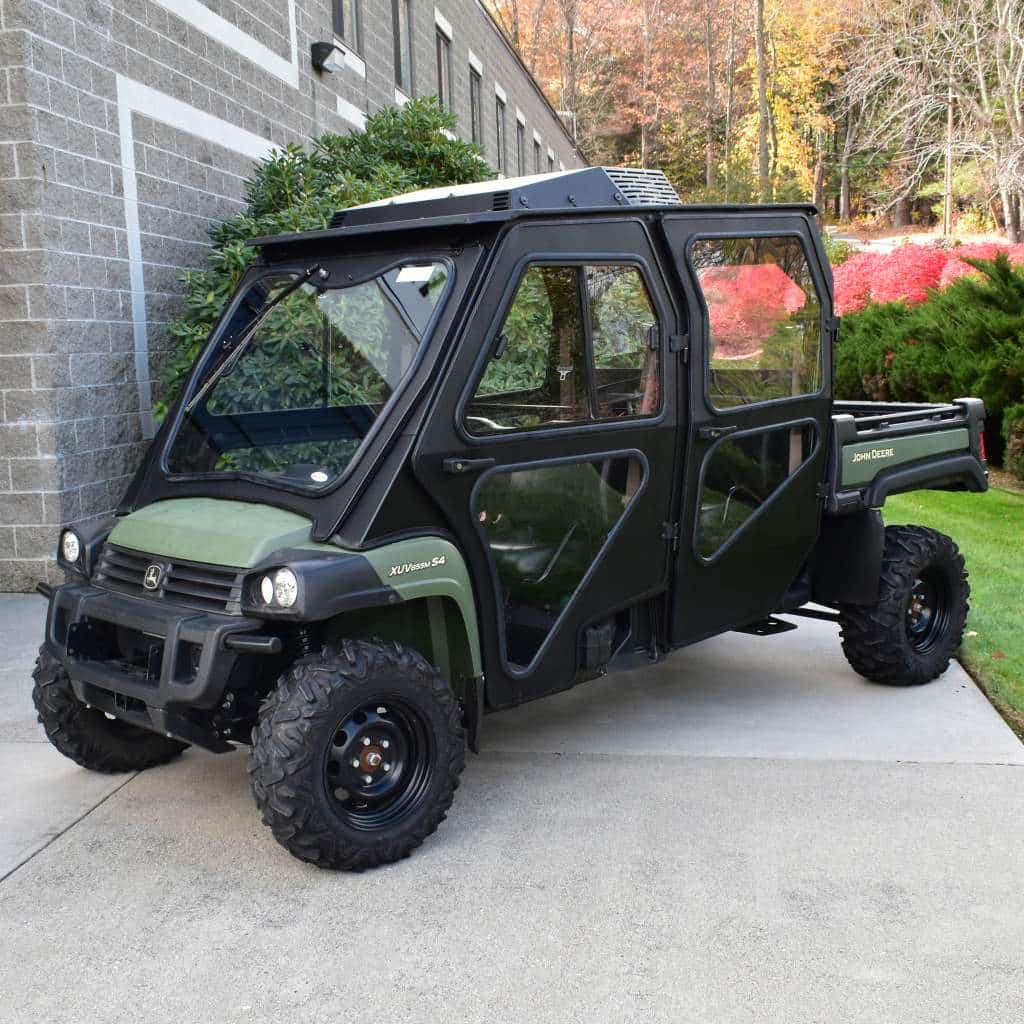
“Since municipal work doesn’t always happen in ideal conditions, we recommend roof lighting options such as a beacon or light bar to improve visibility and increase safety around facilities and work zones,” says Mulvaney. “Operator comfort is also critical; when a vehicle is used through heat, rain or snow, opting for available hard doors and HVAC directly affects crew utilization.”
Other safety and comfort accessories can include upgraded seating, mirrors, backup alarms and cameras. Tool and cargo management accessories are also important for this type of work.
“Racks, mounts and secure storage solutions help crews securely transport equipment like trimmers, blowers or hand tools while keeping the vehicle organized and ready for the next task,” says Lafrinere.
Attachments
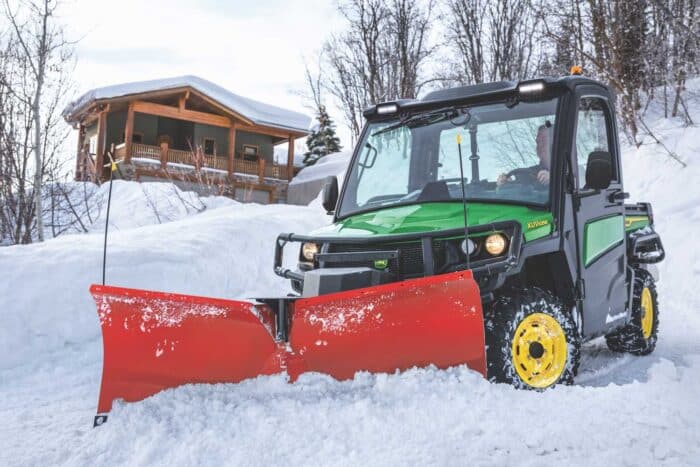
Work doesn’t stop because the seasons change. Luckily, there’s a variety of attachments that allow a UTV to support municipal and parks crews year-round. For example, snowplows, blades and blowers are ideal for winter maintenance. They’re often paired with a spreader for salt in the colder months. Spreaders can also be used to distribute sand or fertilizer throughout the rest of the year.
“During warmer months, sprayers, utility beds and hauling attachments like hitches support groundskeeping, landscaping and facility maintenance tasks even more by allowing a trailer to be pulled,” says Lafrinere. “A high-capacity winch can especially transform a UTV’s versatility, such as aiding in stump removal and getting out of difficult-to-maneuver areas like heavy snow or muddy areas.”
If cleanup’s on the to-do list, crews can rely on brooms and debris blowers for keeping paved paths, plazas and event spaces clear.
Other Considerations
If a UTV is needed to haul people more often than materials and tools, multi-row models are always an option. These UTVs offer extra room but do come at a higher price. Keep comfort in mind and pick a unit with quality seats, ample legroom and good suspension. Busy municipal and parks crews can’t afford downtime, so picking a UTV that’s designed with features that promote easier maintenance is critical.
“Features like extended maintenance intervals, fault alarms and universal parts significantly reduce the time and resources required to keep the vehicle in optimal working condition,” says Lafrinere. “Pro XD work UTVs, for example, include warning alarms for key service conditions such as low oil pressure, belt-related issues and engine overheating, helping operators identify potential issues early and reduce the risk of unplanned downtime.”


Comments are closed here.