Seven Things to Know When Renting a Mini Excavator
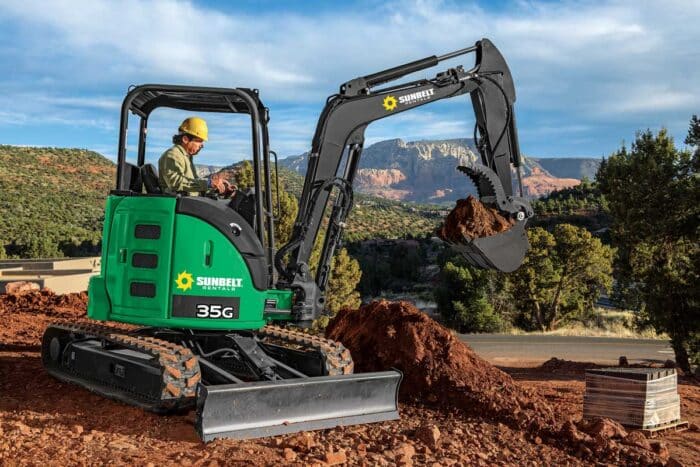
Whether you need another machine to meet a tight deadline or tackle a job you’ve been wanting to get done but need extra muscle for, then rental is the perfect option to give your fleet the boost it needs. Mini excavators, in particular, make great rental machines to serve all sorts of customers and applications.
“Mini excavators are very versatile, which is what makes them such a popular rental choice,” says Darren Ashton, product manager — compact equipment, Volvo Construction Equipment. “Their compact size and agility allow them to squeeze into tight spaces where larger equipment can’t, making them perfect for anything from an urban utility job to a backyard renovation. Using a mini excavator can significantly speed up a job where manual digging with a shovel was required in the past.”
Here are seven things to consider when renting a mini or compact excavator.
1. Application + Size
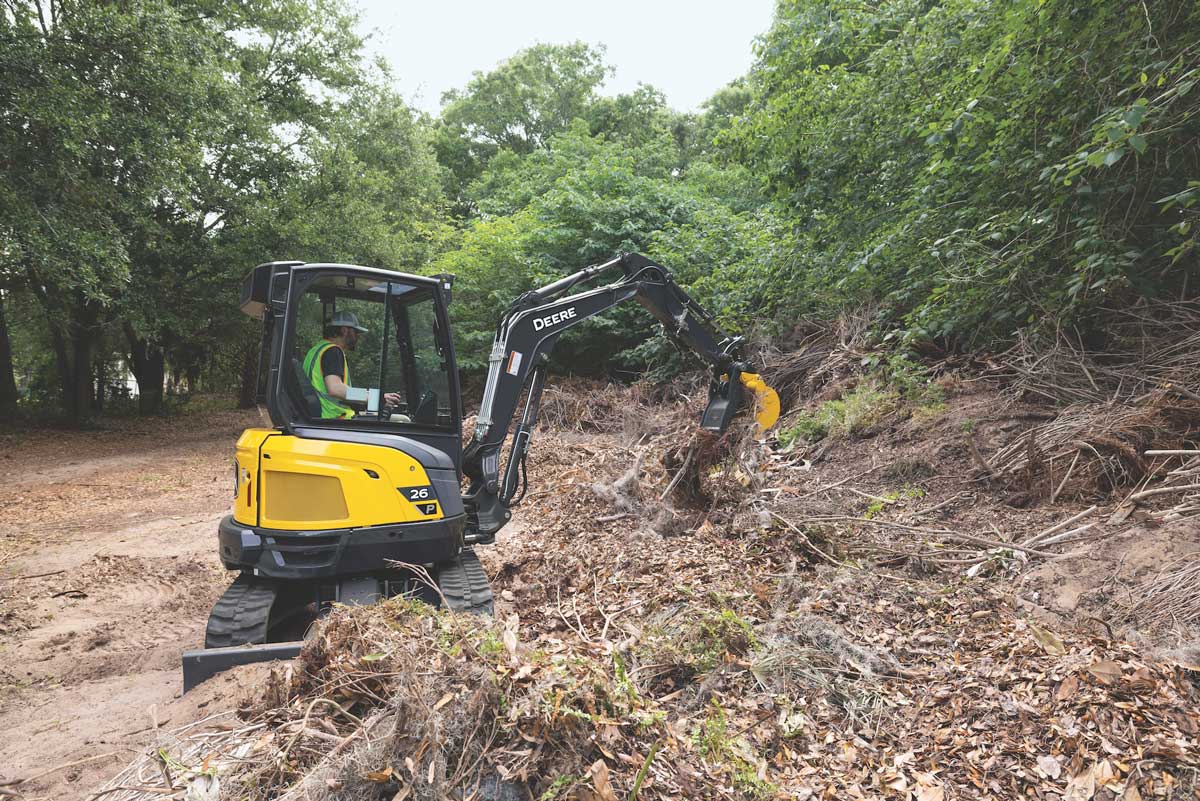
As mentioned above, mini excavators are incredibly versatile machines. They’re a popular rental option among contractors, landscapers, utility crews and homeowners for a variety of jobs such as trenching, grading, digging footings, installing drainage and more. A mini excavator is especially useful when working in tight urban spaces or in yards. Dale McLemore, director of sales at Hyundai, says rental demand is especially strong for models between 3 and 6 metric tons.
He says, “The 3.5-ton unit is the most popular size in North America, offering an ideal balance of power and maneuverability while remaining towable on a standard equipment trailer.”
Ashton adds that Volvo is also seeing a significant increase in the use of electric mini excavators in the rental market. He emphasizes that this type of machine is perfect for jobs where noise and emissions are a big concern.
“Machines like our ECR25 Electric are becoming the go-to choice for things like indoor demolition, urban projects in crowded areas or any job that requires working at night,” he says.
2. Capabilities
Once a renter has a clear understanding of their needs, they can work to find a mini excavator that’s capable of handling the job. Adequate dig depth is critical for trenching and utility installation. Most rental mini excavators range from 8 to 15 ft in dig depth. It’s also important to find a machine with enough reach, so the mini excavator can reach the project’s required depth without having to constantly reposition. Other considerations are a model’s lift height and lift capacity.
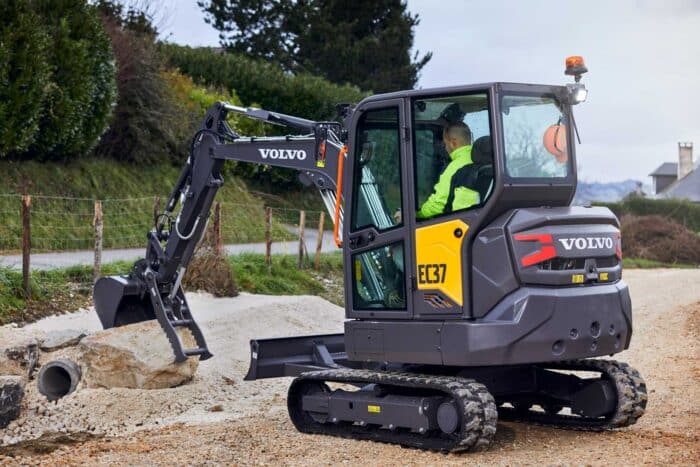
“If you’re lifting or loading, these are the top two specs to consider,” says Ashton. “We see a lot of customers using compact excavators for material handling like lifting concrete slabs, moving landscape boulders or loading trucks. If this is the type of work you do, identify the machine’s lift height and lift capacity. Keep in mind that a machine with a bigger counterweight or a dozer blade that can be lowered for stability will have a greater lifting capacity.”
If you’re working in a confined space — like a backyard or between buildings — zero or reduced tail swing models help avoid obstacles. Ashton says these models can rotate 360 degrees, mostly within their own footprint, which is a lifesaver on congested jobsites.
3. Comfort
A comfortable operator is a productive one, so it’s vital to find a rental machine that features intuitive controls, good visibility and a comfy cab. Easy-to-use controls are especially important if a renter does not have a lot of experience using a mini excavator.
“Nothing slows progress more than a machine that’s hard to understand,” says Ashton. “At Volvo, we work hard to ensure that our machines include the technology people need to get work done quickly, but we also design our cabs in a way that the average DIYer can quickly grasp how to use them.”
Brad Woods, market sales leader at Sunbelt Rentals, notes that most mini excavators have controls that can be switched between right- and left-hand functions based on what is most ergonomic for the operator.
Good, clear visibility is crucial for safety, as well as comfort and productivity. Renters should consider a mini excavator with large windows and LED lighting for safe operation in low-light conditions. Ashton suggests for renters to hop into the cab of a prospective mini excavator to find out how well they can see the end of the arm (where the attachment will be) and their surroundings.
A roomy cab with heat and air conditioning is a great choice for keeping a renter comfy and protecting them from the elements. Suspension seating and ergonomic controls assist in reducing fatigue.
4. Attachments
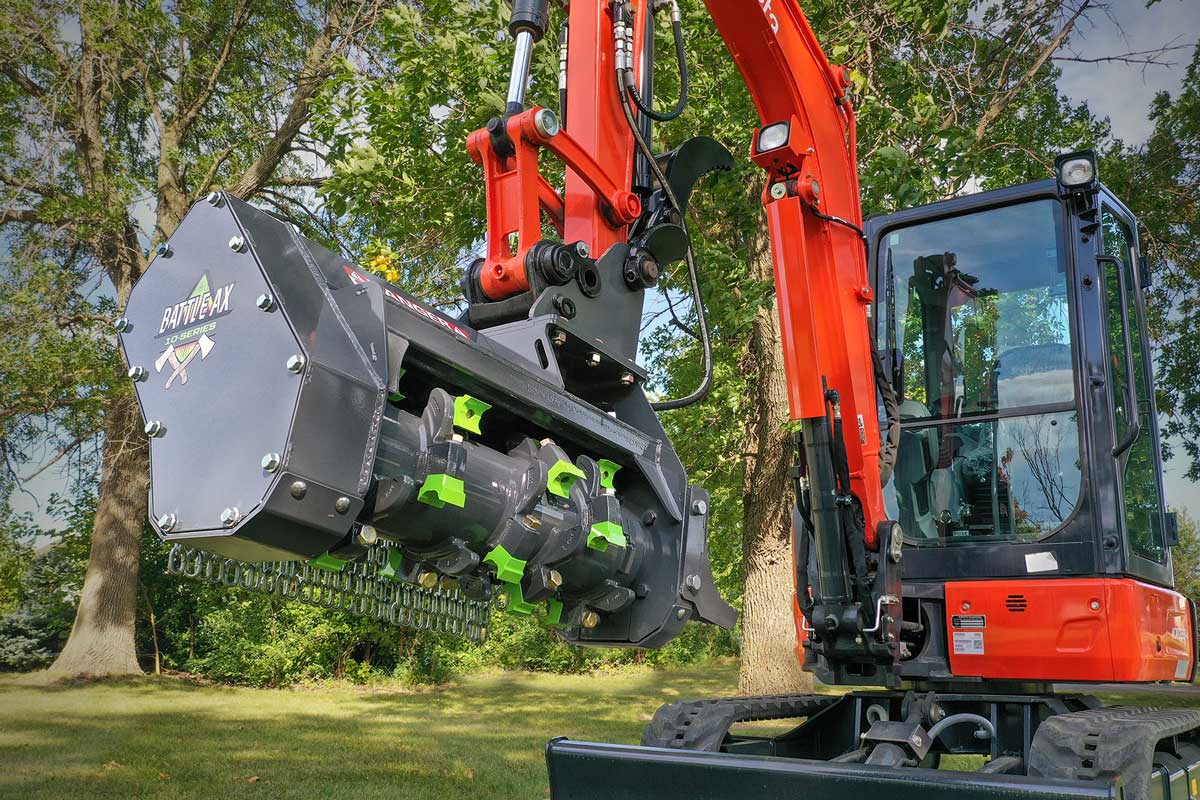
Just like any piece of compact equipment, attachments help unlock a mini excavator’s potential. Luckily, there’s a large variety of attachments for renters to choose from to tackle any project on their to-do list.
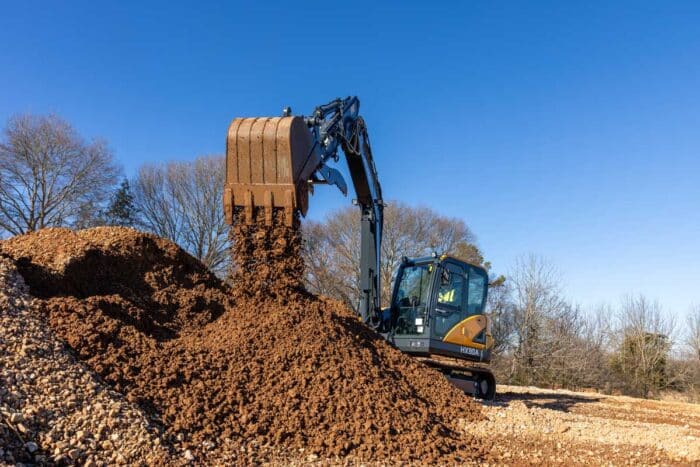
“Renters often rent auger attachments for digging holes and hammers for breaking up concrete, along with standard buckets,” says Woods. “Trenching buckets for digging trenches for cable installation, grading buckets for smoothing groundwork and cribbing buckets for clearing near railroads or narrow areas are also popular. One of the most popular rentals, however, is thumb attachments for gripping and moving materials.”
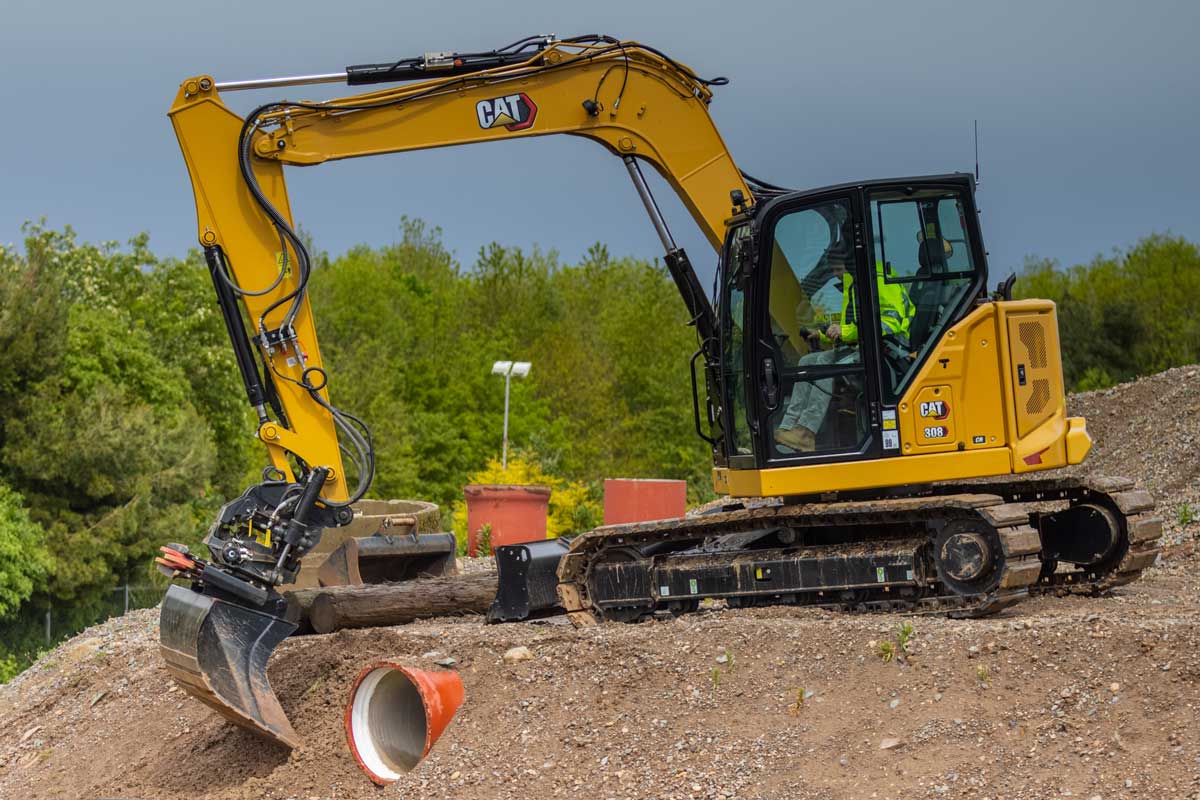
If a renter plans to frequently change attachments on a job, they should consider selecting a machine with a quick coupler. That way, they can swap attachments quickly and save time compared to manually changing pins. Ashton recommends a tiltrotator for projects that demand maximum productivity and precision.
He says, “A tiltrotator gives you 360-degree rotation and a wide range of tilt, so you can position the attachment exactly where you need it without having to constantly reposition the excavator.”
5. Cost + Timeframe
Although rental pricing for a mini excavator varies by region and attachment configuration, Julio Vargas, compact equipment product manager for Hyundai, offers these general cost guidelines:
- Daily rates: $250-$450, depending on machine size
- Weekly rates: $1,000-$1,500
- Monthly rates: $2,500-$3,500
As for delivery and pickup fees, renters can typically expect to add $100-$250 each way, depending on distance. If a machine is needed for an extended period of time, Vargas says that many rental houses offer discounts for longer rental commitments.
6. Transportation
While having a rental house deliver and pick up the machine is easiest, it is possible to avoid that cost and haul it yourself depending on its size. McLemore explains that many 3- to 4-ton mini excavators can be hauled on a standard tandem-axle equipment trailer with a 3/4-ton pickup truck. As for larger 6- to 9-ton models, he says that transport typically requires a flatbed or roll-off truck arranged by the dealer or rental yard. It’s important to confirm your machine’s weight (including any attachments) with your equipment dealer to ensure the load can be moved properly.
Ashton offers this advice for renters who choose to transport their machines on their own:
- Know the operating weight of the excavator and any attachments you’ll be transporting and check them against your truck’s towing capacity and your trailer’s payload capacity. It’s a matter of safety and legality, so don’t skip this step.
- Secure the machine properly using heavy-duty chains and binders on the designated tie-down points on the machine and the trailer. You should have at least four tie-downs — one at each corner — to prevent any movement. Always lower the boom, arm and bucket to the deck of your trailer to lower the center of gravity and ensure that nothing shifts during transport. Your rental company can check to make sure everything looks good before you head out.
- Know your route and the road conditions. Be aware of any low bridges or weight restrictions.
7. Safety + Operation
Prior to operating, it’s important for renters — especially first-time users — to become familiar with the mini excavator and prioritize safety. Greg Worley, market professional for Caterpillar, encourages renters to “know before you go.” That includes reading the operator’s manual, as well as watching learning/educational videos on YouTube. He says renters should start off “slow and easy” and take time to get comfortable with the machine.
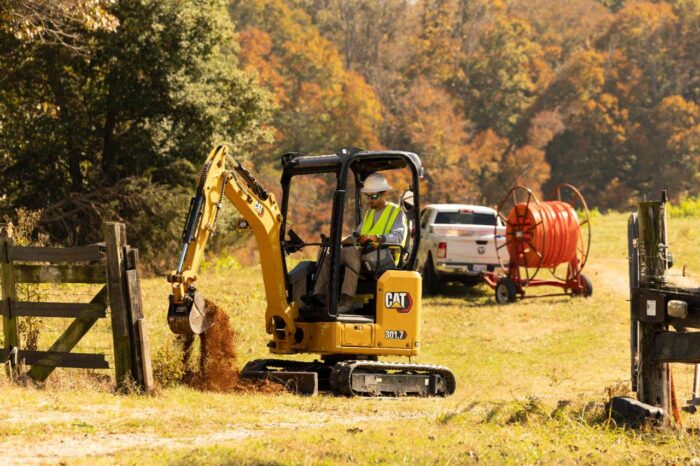
Before using the machine, operators should scope out the jobsite for any obstacles and overhead power lines. If you plan to dig, make sure to call 811 beforehand to get any underground utilities marked. Renters should also conduct daily inspections of the mini excavator to make sure it’s free of leaks or any damage. Woods says, if any aspect of the machine seems questionable, renters need to report the issue to the dealer.
“Proper personal protective equipment [PPE] is always necessary when operating a mini excavator — hard hat, safety boots, high-vis gear and safety glasses,” he adds. “When operating the machine, renters should work on stable ground, avoid swinging loads over others on the jobsite and never exceed the lifting capacity of the mini excavator. If visibility is limited, renters need to have someone to spot their work.”
Pam Kleineke is managing editor of Compact Equipment.