
Find the Perfect Sized Mini Excavator for Your Needs
When trying to find the right mini excavator for your needs, all the options may seem overwhelming. The good news is that size is one of those factors that help narrow down the search. However, what size will work? How can a buyer decide between a 2-, 4- or 6-ton machine?
“Contractors first look at jobsite access, material type and project scope,” says Bill Holton, product manager at Kubota Compact Construction Equipment. “If the site is tight or residential, smaller machines are favored; if heavy lifting or deeper digging is required, larger classes become necessary.”
Let’s take a look at some things to consider when picking the right sized mini excavator.
Jobsite Access
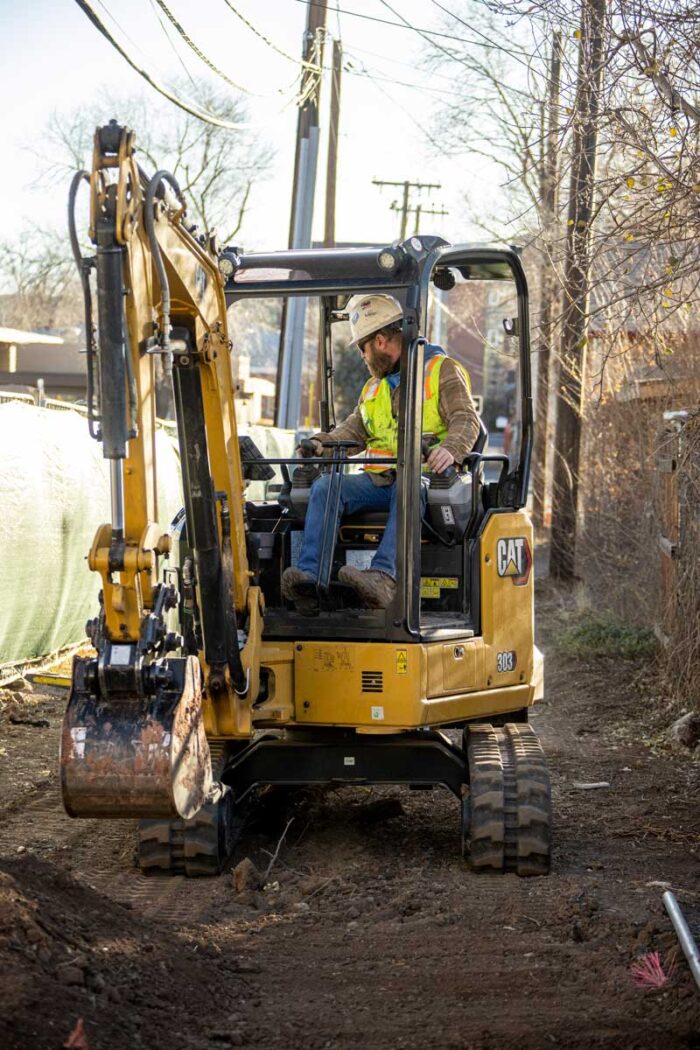
Perhaps the most important consideration in deciding the right size of a mini excavator would be jobsite accessibility, as well as any constraints. A buyer will need to select a machine that can easily access jobsites but still has the power to complete tasks.
“Starting with the smallest size class, 2-ton compact excavators can easily be maneuvered in tight, residential spaces where a 4- or 6-ton machine may not fit as easily,” says Justin Steger, product marketing manager at John Deere. “Knowing the size of pathways, gates and jobsite obstacles can help determine the proper machine size needed to complete the task at hand.”
Since smaller excavators work well in residential areas, they excel in smaller irrigation, landscaping and trenching jobs. They’re also popular in new housing developments.
“Landscape work often requires a smaller excavator to fit through a gate or in between structures that are close together,” says Tim Cicora, product manager of excavators at Takeuchi-US. “Housing is being built more densely, and even single-family homes are closer together, so equipment dimensions are more important in most residential locations than they are on a larger jobsite.”
When looking at 4-ton machines, Holton says this size is great at handling small to medium foundations, septic installs and moderate lifting. Six-ton or larger excavators are typically chosen for heavier utility runs, pipe placement and small commercial projects.
Performance
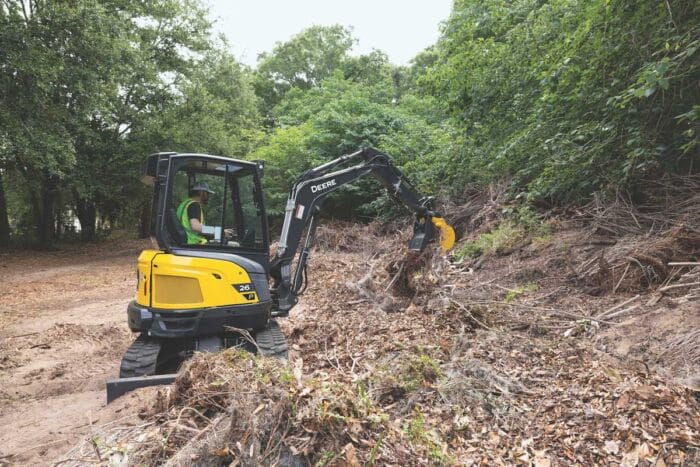
Another step in selecting the right sized mini excavator includes considering performance specs such as a machine’s breakout force, lift capacity, dig depth and more. These specs vary quite a bit among weight classes, so it’s important to know your intended applications. Determining how deep you’ll need to dig or how much weight you need to lift will help you decide if a 2-, 4- or 6-ton machine is best for your needs.
“When looking at what performance specs to prioritize, contractors should consider their jobsite needs and any limitations they may face,” says Steger. “If contractors regularly run into tough terrain and compacted soil, they should prioritize breakout force, whereas lift capacity and machine stability matter most if they plan to frequently handle pipe, vaults or concrete units.”
When considering a machine’s breakout force, a buyer needs to understand that it varies significantly across different sized excavators. Steger says contractors and fleet managers should match breakout force to the toughest conditions they encounter regularly, not just occasional jobsite needs.
“A 2-ton machine has the breakout force necessary for light trenching and digging needs, but the machine may struggle in more dense or intensive cleanup situations,” he says. “Four-ton compact excavator models provide a step up in breakout force, which excels in tougher terrain. The 6-ton class more than doubles the digging force of a 2-ton machine, making it far better suited for production work and harder grounds.”
As for lift capacity, Greg Worley, Caterpillar’s market professional for 1- to 10-ton mini hydraulic excavators, says buyers need to know and understand what type of weight they will need to lift or manipulate in their general applications. He asks, “Is it normally just lifting over the front with the blade down? How much over side work will you be doing and do you actually need to carry or load the weight?”
Cicora adds that as a boom and stick are extended up or out, lifting capacities are reduced. “As a result, it’s important to know if the work being done is close to the chassis or extended away from it,” he says. “A good example is using a cutting head over a guardrail on the side of a road or up an embankment. The weight of that head is going to make the excavator struggle more and be less stable working that far from the chassis.”
Steger says dig depth and reach are also important performance specs to consider. For example, he explains that “a 2-ton machine will work for shallow utilities, but if you’re frequently hitting larger depth requirements, a 4-ton machine or larger is a better fit.”
Hydraulic Flow and Attachments
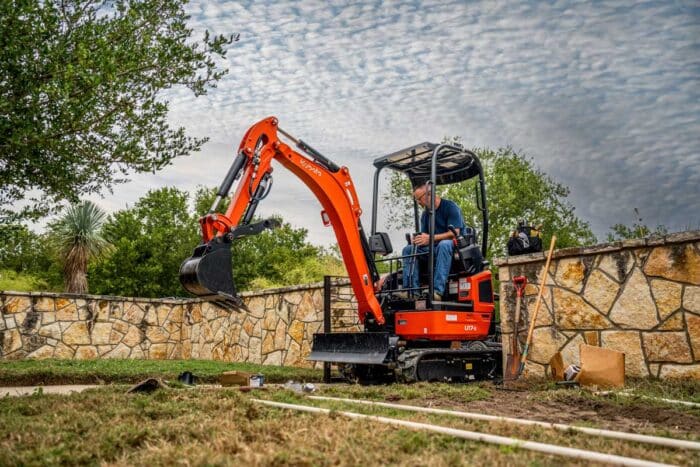
The size of a mini excavator can also impact its ability to power attachments. Smaller machines are better suited for standard flow attachments, while larger ones can provide the power needed to run high-flow tools. Steger says auxiliary hydraulic flow dramatically expands what a machine can do with attachments.
“A 2-ton machine typically manages smaller breakers and light augers well, but larger tools can overwhelm its flow capacity, he says. “Four-ton excavators and larger offer significantly higher auxiliary flow, opening the door to bigger breakers, more productive augers and hydraulic plate compactors that maintain better performance.”
Larger machines with higher flow also allow the use of mulchers, mowers and cold planers.
Transport
Transporting the mini excavator is another consideration when deciding on a size. As the machine gets bigger, logistics get more complex and larger towing equipment may be needed. Worley says buyers should be prepared to answer these questions when deciding on an excavator:
- How am I going to transport the unit?
- Will my current truck or trailer work? Or do I need new transport equipment?
- Do I need to transport a mini excavator and a compact loader on the same trailer?
- How can I match the two pieces of equipment on a trailer for maximum efficiency?
When debating over a mini excavator’s size, buyers must properly match the machine’s weight to a trailer class and truck capacity. It’s vital to understand your state laws for transport and how mistakes — like overloading trailers, failing DOT compliance, etc. — can lead to fines or unsafe hauling.
“States will have specific requirements for total combined weights of vehicle, trailer and load, so the owner-operator needs to be aware of those laws to comply,” says Cicora. “Smaller excavators are a good fit for a sole proprietor, someone who’s an owner-operator. They’re also good for any contractor who tends to bid smaller jobs and doesn’t want or need larger equipment due to its higher cost, as well as the related costs of the larger tow vehicles and trailers that it will require. DOT registration comes with increased costs and regulations as well as higher insurance rates. A common mistake — whether intentional or not — is overloading a trailer and getting noticed by a Department of Highway Safety officer.”
Just Right
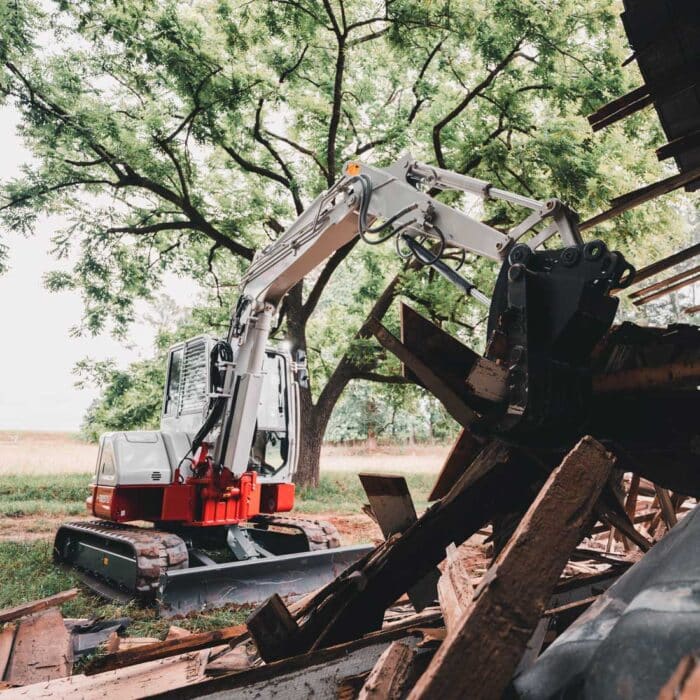
By spec’ing the right sized mini excavator, operators are able to secure a machine that offers the proper balance of maneuverability, performance, transportability and more. However, if a buyer purchases a mini excavator that’s undersized for its applications, they can run into operational limitations.
“If a customer underestimates their needs and requirements, they may be limited to what the machine can do, such as not being able to lift enough or dig deep enough,” says Worley. “This will lead to frustration, and it can be expensive if you must rent another machine to get the job done on a regular occasion. It could also mean that you may have to turn work down or that it takes far longer to complete the work.”
Steger says oversizing your mini excavator has its own set of drawbacks.
“Larger excavators burn more fuel, often significantly more than 2- or 4-ton models, especially when idling or moving between tasks,” he says. “Access and maneuverability are also impacted, as bigger machines don’t navigate tight yards or urban spaces as easily. Contractors who oversize without planning may find that transport and fuel costs offset productivity gains, and that machine size limits where they can excel.”


Comments are closed here.