
How to Navigate Tow-Behind, Truck-Mount and Other Air Compressor Options Without Overthinking It
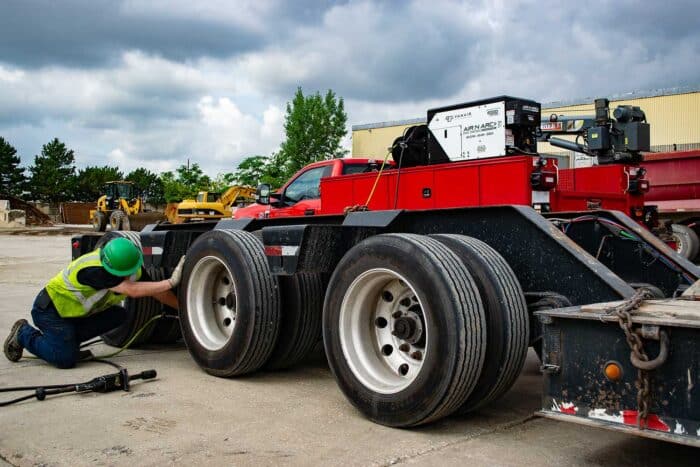
Air compressors have perhaps more choices than any other tool … and that’s a problem. When we’re presented with too many choices, it can become nearly impossible for us to make any choice at all. The technical term for this is “choice overload”; “overchoice,” “choice paralysis” and the “paradox of choice” are other common terms. Air compressors offer a lot of choices, so let’s work through them in a logical fashion and jump beyond choice overload.
Tow-Behind Pros and Cons
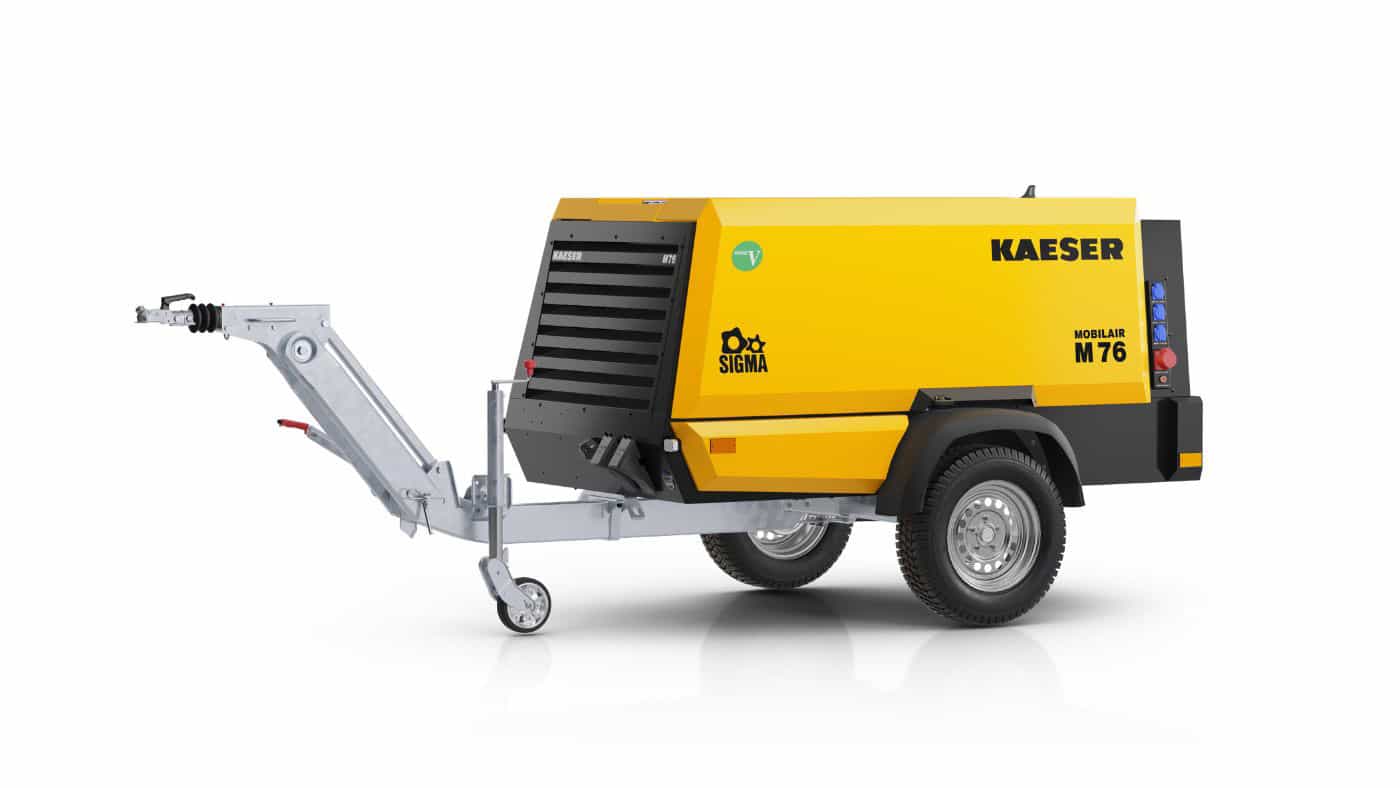
Tow-behind models (aka portable, towable) are common in the rental market, making up 75 percent of all tow-behind sales according to Jerel Cole, global portable product manager at Hitachi Global Air Power. Rental makes sense for anyone who needs a compressor for a specific job or a specific task within a job. Even renting a compressor several times a year can be a better choice than owning since the customer has limited responsibility for maintenance and repair, has no capital tied up in an asset and isn’t affected by downtime since the compressor runs from the beginning to the completion of the application and is then returned to the rental yard. Most rental yards have several compressors in popular sizes and the bigger yards may have a selection of bigger compressors. Tow-behinds, whether rented or owned, can be left at the site and are always available for use there. They don’t take up space or load capacity the way truck-mounted compressors do.
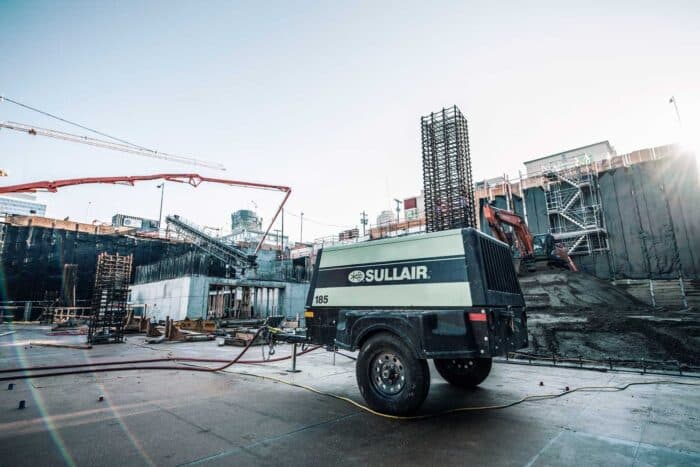
Tow-behinds are less mobile than truck-mounted units, requiring that they be put on and off a hitch every time they’re moved. If the compressor is moved every few weeks, no big deal. But if it’s moved a couple of times a day or even several times a week, the logistics become cumbersome. Tow-behinds can be lost or stolen. They cost more and weigh more than truck-mounted units that rely on truck power, such as PTO drive or hydraulics. John Dunn, national sales manager, utility and municipal sales, Vanair, says cost is another factor. “Towables commonly range from $27k to $34k, whereas truck-mounted units of comparable performance are $18k to $20k, installed.”
And VMAC product specialist JP Chartier says, “Tow-behind air compressor systems produce a massive amount of compressed air. They are perfect for remote jobsites that require large amounts of compressed air every day. Their disadvantage is their maintenance requirements for their diesel engine, taillights and wheels.” He notes that some fleets will take the running gear off a tow-behind and mount it on a truck deck. “This adds literally thousands of pounds to the truck’s GVW and is not an efficient use of available space or weight.”
Truck-Mount Pros and Cons
A truck-mounted compressor leaves the trailer hitch open for trailers with equipment. The compressor goes where the truck goes; there’s no need to go back to the shop if an unexpected need for a compressor pops up. Depending on the type of compressor, there are various maintenance and repair tasks, but fewer than with a tow-behind.
“Year, make, model, engine type, fuel system, transmission, chassis size, available mounting space and whether the truck is an existing fleet unit or a new upfit all influence system selection,” notes Chartier. Other considerations include what electrical loads already exist and whether hydraulics are installed or planned.
Between-the-rails underdeck systems occupy what would normally be wasted space. Underdeck systems are best spec’ed as part of a truck acquisition, since they rely on external power and the truck needs to be configured to provide that. Retrofitting an externally powered compressor to a truck that lacks a PTO or other drive option may not be possible. Abovedeck compressors can be mounted almost anywhere there’s space. However, they do take up space that might be required for other tools and equipment; depending on design (external power or self-powered) and features (compressor only vs. multifunction), that can be a lot of space.
A subset of truck-mount is underhood. Pros are the ability to use engine drive via a belt, an out-of-the-way installation site in otherwise wasted space and sizes to run mid-size tools, such as a 90-lb jackhammer. Cons are access to the compressor for service and repair, potential negative effect on engine access and while there are models to fit most popular work trucks, the range of models is not as wide as it is for above-deck models.
Power Options
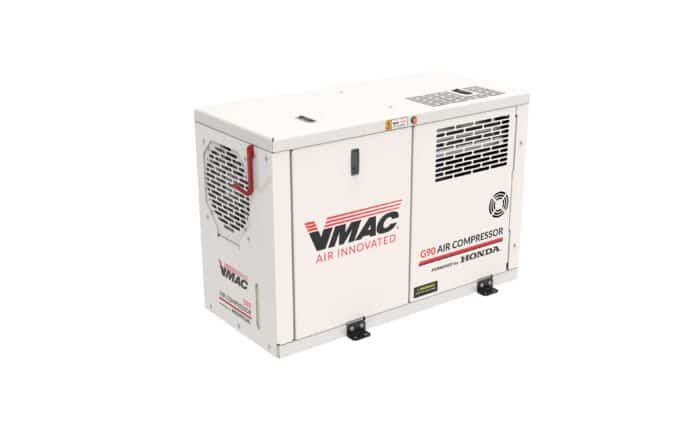
Self-powered compressors have gasoline, diesel and electric options. External-power units can be run by PTO or hydraulics. PTO requires a PTO drive on the transmission. Some transmissions have a standard PTO drive; some have two; some have none.
Which style is most fuel efficient? That depends on overall system efficiency and that depends on a lot of variables. A well-designed abovedeck or tow-behind with its own engine has the potential of being most efficient. With good mechanical efficiency, a PTO-drive unit can perform well. Hydraulic-powered systems have the inherent loss of power found in any fluid-drive system (and typically exhibited as waste heat), but modern technology and engineering has minimized that. The loss of efficiency in any truck-drive system includes the fact that the compressor is driven by an engine that is grossly overrated for the job. The diesel engine on a powered air compressor may have 25 or 30 hp, while the diesel truck engine may have 20 times that output.
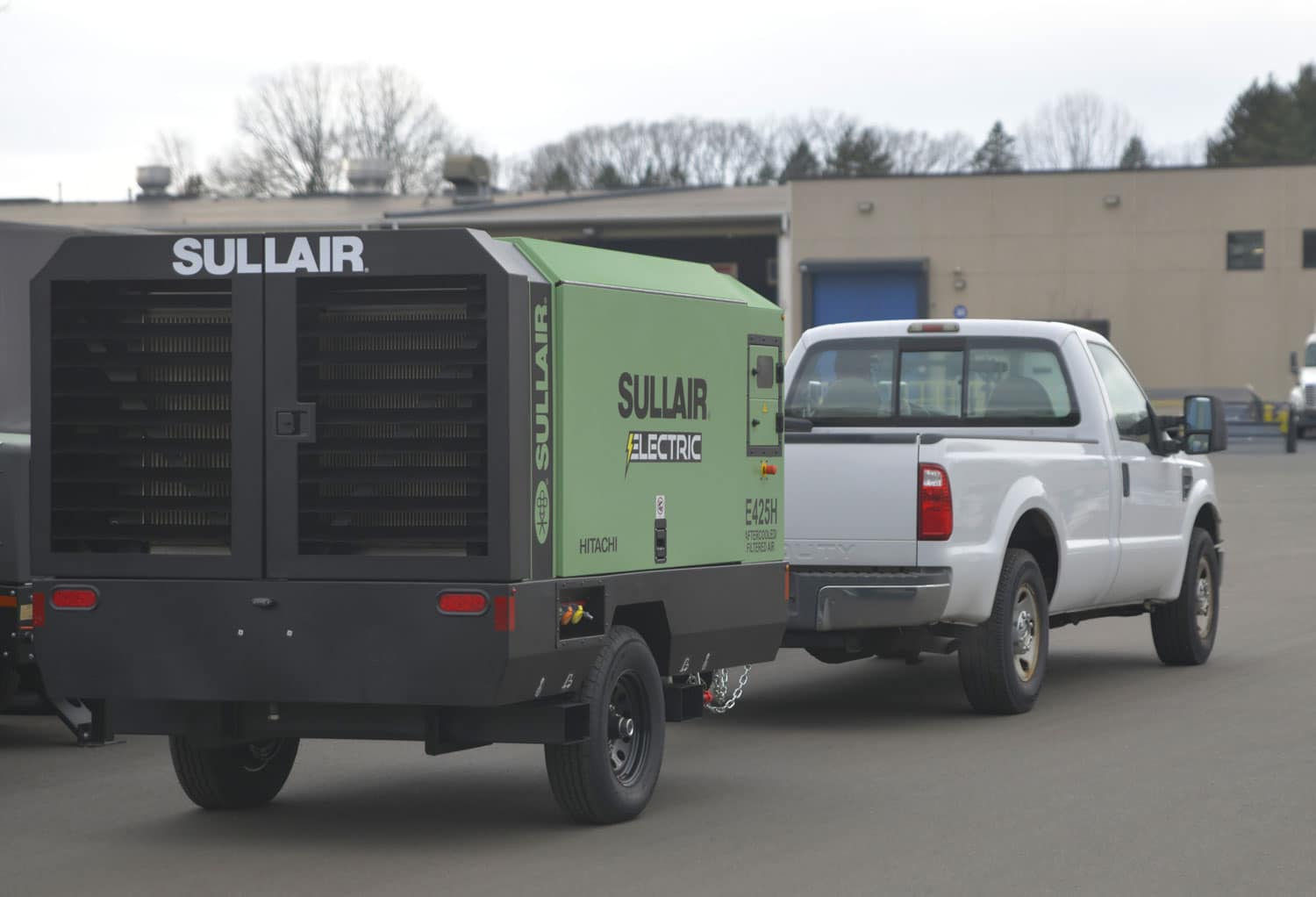
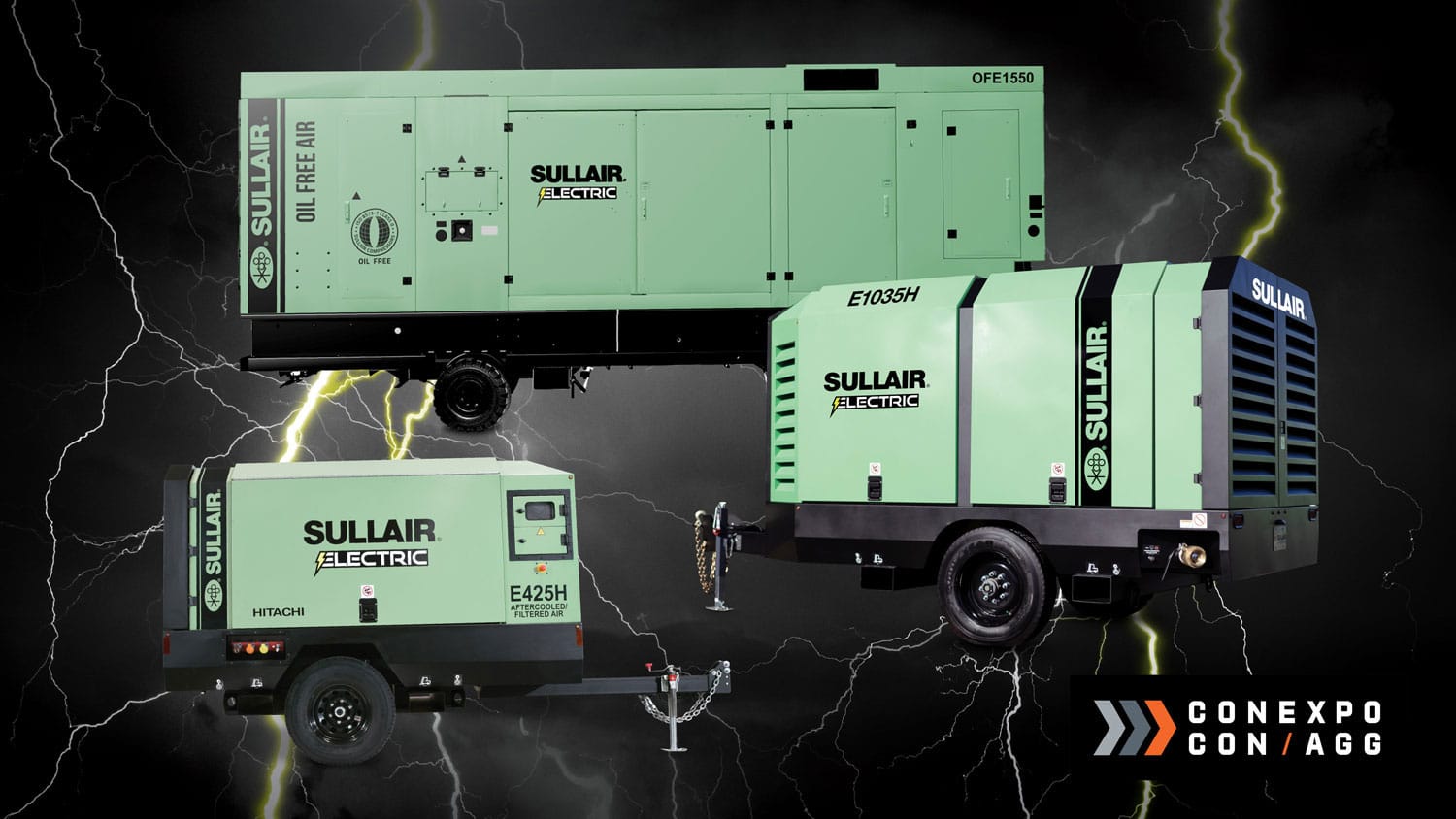
Electric is a growing segment and is well suited for anyplace where exhaust gas is an issue. Efficiency is high, although overall efficiency depends on the electrical source. Some are corded, such as the Sullair E425H and E1035H. Some are battery, such as the EPEQ (Electrified Power Equipment) line from Vanair.
More than Air and More with Air
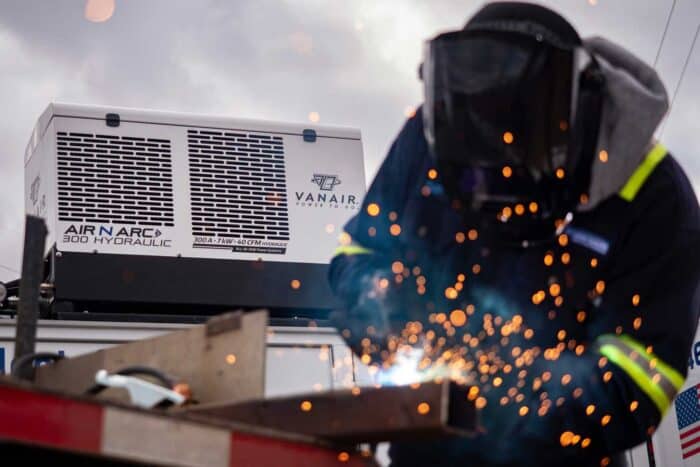
Most styles of compressors are available as combination units that also have electrical generation, welding, battery boost/charging/ jump starting and hydraulic power output. Underhood models are the exception, providing only compressed air.
Dunn says Vanair serves multiple customer types. Their Genair compressor/generator is often used for fusing HDPE pipe. They also offer dual pressure systems with, for example, 100 psi for jackhammers and 150 psi to pressure test the installed product. “Vanair customers often use Air-Excavation with an “air knife” to remove the last several inches of soil when accessing in-place utilities, reducing the risk of an excavator strike,” says Dunn. Compressed air can be used for rudimentary directional drilling for short runs, such as under driveways and sidewalks. It can be tracked and steered, although not with the same sophistication of true directional drilling.
Cole says some applications, such as dry ice blasting, need treated air that is filtered and cooled beyond what a standard compressor provides. He says that air treatment must be part of the original spec; there is no realistic means to retrofit later.
Choosing the Right System
“Compressed air is not a one-size-fits-all utility,” says Chartier. “It is a working tool that behaves very differently depending on how it is used. A grinder, impact wrench, jackhammer, drill, or pneumatic pump may look similar on a tool list, but their real air demands can vary widely once duty cycle and simultaneous use are factored in. Furthermore, two customers can be running the same tool and still need completely different systems. How long and how often the tool runs matters more than what the tool is called.”
When spec’ing most equipment — skid steers, compact wheel loaders, etc. — the advice is to clearly understand your applications both now and those you’ll include in the future. With air compressors, that information is necessary but not sufficient. Air compressors are too varied. A skid steer is often chosen based on rated operating capacity plus such specs as hydraulic flow and pressure and lift height. An air compressor has similar basic specs, mostly pressure and volume, but the customer must also choose a mounting option, configuration of such things as controls and PM points (especially for between-the-rails undermount compressors) plus the inclusion of other systems such as welders and generators.
What’s a Poor Customer to Do?
Talk to the dealer. Yes, that’s another aspect of spec’ing equipment that’s shared with skid steers, CTLs, etc. But it is a deeper, more involved discussion driven by the array of considerations that go into compressor selection. (See “Permutation” sidebar below for insights into this process.) Dunn suggests a three-way conversation between the manufacturer, the dealer/upfitter and the customer. He says such discussions often present features that the customer didn’t know existed but will now consider.
Permutations Matter
In mathematics, there are combinations and permutations. In a combination, the order doesn’t matter. With permutations, it does. Your dealer can help you select the right specifications in the right order to arrive at the right compressor or multipurpose system for your needs.


Comments are closed here.