
Discover Why Compact Track Loader Undercarriage Design, Operation and Maintenance Matter
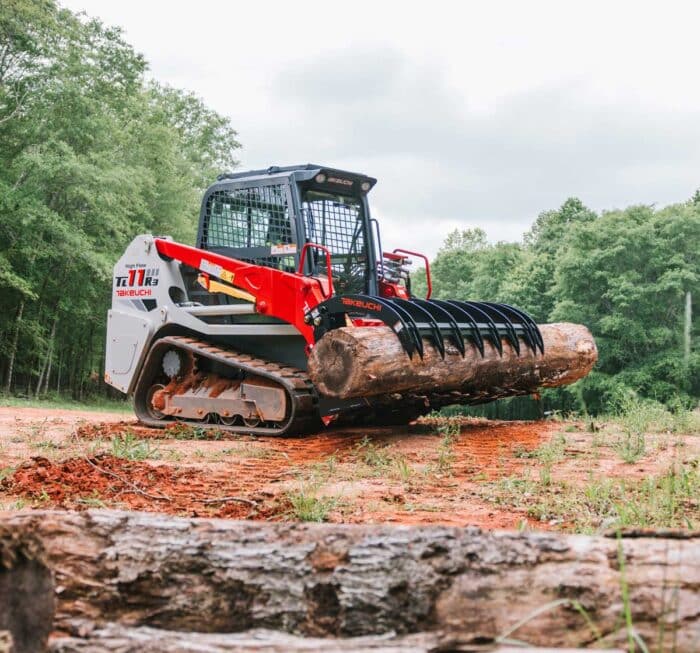
When contractors are in the market for a new compact track loader (CTL), they tend to prioritize a few specs, like horsepower, lift capacity and hydraulics. And while those are certainly important factors, according to Dylan Freeman, product manager at Takeuchi-US, undercarriage performance is one of the most important — and misunderstood — factors in long-term CTL durability.
“From what we often see in the field, undercarriage longevity often comes down to how well the system is matched to the machine,” says Freeman. “Purpose-built components generally deliver longer life and more consistent performance because they are designed to withstand the kind of wear and tear expected from the machine’s primary application, whether that’s grading, pushing, material handling or demolition, for example.”
Efficiency, Control & Performance
Undercarriage design plays a central role in how a compact track loader performs under real-world working conditions. Beyond supporting the machine, the undercarriage must manage weight distribution, absorb shock loads and maintain consistent traction while operating across uneven terrain and demanding applications.
How forces generated during compact track loader operation — including machine weight, tractive effort and impact loads from grading and pushing — move through the machine directly affects grading accuracy, pushing performance and long-term durability. During high-traction work, those loads need to be transferred efficiently through the machine’s structure rather than concentrating stress in specific components. When undercarriage systems are engineered as an integrated part of the loader’s overall design, they are better equipped to handle repeated shock and stress without sacrificing performance.
“When shock loads aren’t managed effectively, they don’t just disappear — they get redirected,” says Freeman. “Over time, that extra stress shows up in places like pins, bushings and other structural components, which can accelerate wear and affect how the machine performs on the jobsite.”
Undercarriage design also influences operator efficiency and machine control. Stable ground contact improves responsiveness and precision, which is particularly important for fine grading and finish work. At the same time, managing vibration and load transfer helps protect critical systems, supporting longer service life and more consistent performance.
Matching Design to Application
Rigid and suspended undercarriage systems are engineered to prioritize different performance characteristics, making application demands a critical factor in the selection process. Rather than one design being universally better than the other, each addresses jobsite challenges in distinct ways.
“There isn’t a single undercarriage design that’s ideal for every job,” says Freeman. “Some applications benefit from a more rigid platform that prioritizes pushing and grading performance, while others place greater value on ride quality and operator comfort. Understanding how the machine will be used day to day is key to making the right choice.”
Rigid undercarriages typically rely on a solid, fully welded structure with fewer moving components. This simplified design can reduce maintenance requirements and support long-term durability in demanding applications. By distributing loads through the machine’s frame, rigid undercarriage systems help limit stress on loader arms, pins and bushings, which can otherwise experience accelerated wear during high-traction work. That structural approach often contributes to higher rated operating capacities and tip loads, making rigid undercarriages well suited for grading, pushing and other applications that place sustained loads on the machine.
Suspended undercarriages are designed to introduce greater compliance between the machine and the ground. By allowing the undercarriage to move independently, suspension systems can help absorb shock and reduce vibration transmitted through the machine. This can result in a smoother ride, particularly during load-and-carry work or when operating on harder surfaces. Improved ride quality may also contribute to reduced operator fatigue and better control in certain applications, especially over longer operating periods.
From a selection standpoint, understanding how each design manages load, movement and vibration is essential. “Contractors should evaluate their typical jobsite conditions, operating habits and performance priorities,” says Freeman. “That will help them determine which undercarriage configuration aligns best with their day-to-day work.”
Practices Make Perfect
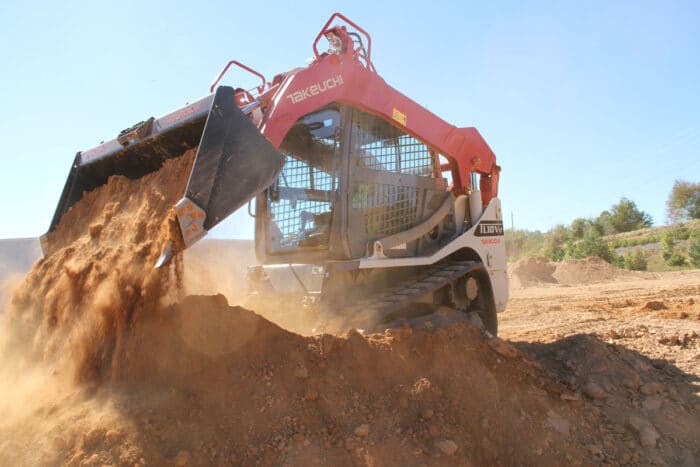
Even with a well-engineered undercarriage, operator practices play a significant role in how quickly components wear over time. Compact track loaders are frequently used in tight spaces and demanding conditions, making technique an important factor in undercarriage longevity.
Aggressive turning is one of the most common contributors to accelerated wear. Counter-rotating turns place increased stress on tracks, rollers and idlers, particularly on abrasive surfaces. While this maneuverability is a key advantage of compact track loaders, minimizing sharp turns when conditions allow can help reduce unnecessary strain and extend undercarriage service life.
Operating habits carried over from skid steers can also affect undercarriage performance. Applying excessive downward pressure with the bucket, for example, may cause a track loader to spin, increasing wear on tracks and rear rollers. Taking wider turns and allowing the machine to work within its design limits helps maintain traction while reducing component stress.
Traveling across slopes instead of up and down them introduces uneven loading across the undercarriage, increasing wear on tracks, rollers and idlers. Whenever conditions permit, approaching slopes vertically helps distribute forces more evenly and improves machine stability.
Undercarriage wear can be further compounded when multiple operators share the same machine. Differences in experience level, operating style and jobsite habits can introduce inconsistent loading patterns that accelerate wear over time. A machine that is operated carefully during one shift may experience very different stresses during another, particularly if aggressive turning or track spin becomes routine.
“In fleet applications, undercarriage wear often reflects how consistently the machine is operated,” says Freeman. “Even small differences in technique can add up over time and affect long-term durability.”
Understanding how operating techniques and usage patterns influence undercarriage forces allows crews to make adjustments that help protect components. Consistent operation across shifts supports more predictable wear, smoother performance and improved durability over the life of the machine.
Small Checks, Big Payoff
Preventive maintenance plays a critical role in managing undercarriage wear. While design and operating practices influence how forces act on the undercarriage, consistent inspection and adjustment help catch issues before they lead to costly downtime.
Track tension is one of the most critical undercarriage maintenance considerations and is sometimes overlooked during day-to-day operation. Tracks that are too loose can increase the risk of de-tracking, while overly tight tracks place unnecessary stress on rollers, idlers and drive components. Checking track tension regularly and adjusting it according to manufacturer recommendations helps balance performance and component life.
Keeping the undercarriage clean is equally important. Compact track loaders often operate in mud, debris and abrasive materials that can pack into the undercarriage and restrict component movement. Accumulated material accelerates wear and can reduce efficiency by increasing rolling resistance and trapping heat around drive motors. Regular cleaning allows components to move as intended and makes it easier to spot uneven wear or damage.
“When machines are shared across crews, maintenance becomes even more important,” says Freeman. “Consistent inspections and basic upkeep help offset variability in operation and make undercarriage wear more predictable over time.”
Monitoring undercarriage condition also allows crews to identify developing issues early. Uneven wear patterns, damaged tracks or leaking rollers and motors can signal alignment or loading concerns that may not be obvious during operation. Addressing those issues promptly helps prevent secondary damage and extends overall service life.
Following recommended maintenance schedules — and using available machine data to plan service proactively — supports more consistent performance and reduces unplanned downtime. Combined with thoughtful operation, disciplined undercarriage maintenance helps protect one of the most critical systems on a compact track loader.
Lynette Von Minden is the director of public relations at Swanson Russell.


Comments are closed here.