Video: What Contractors Should Know About Vermeer’s Next-Gen ML-Series Loaders
In this episode of Machine Heads Interviews, host Wayne Grayson talks with Vermeer’s Ryan Pangman about the company’s next generation ML-Series tracked mini loaders. Instead of talking spec sheets, the two dig into how contractors actually use these machines and how that shaped the ML80, ML100, ML130 and ML150. The result is a useful half hour for landscape, tree care and rental pros trying to slot a stand-on loader into their fleets.
Mini Loaders Solve Labor and Access Challenges
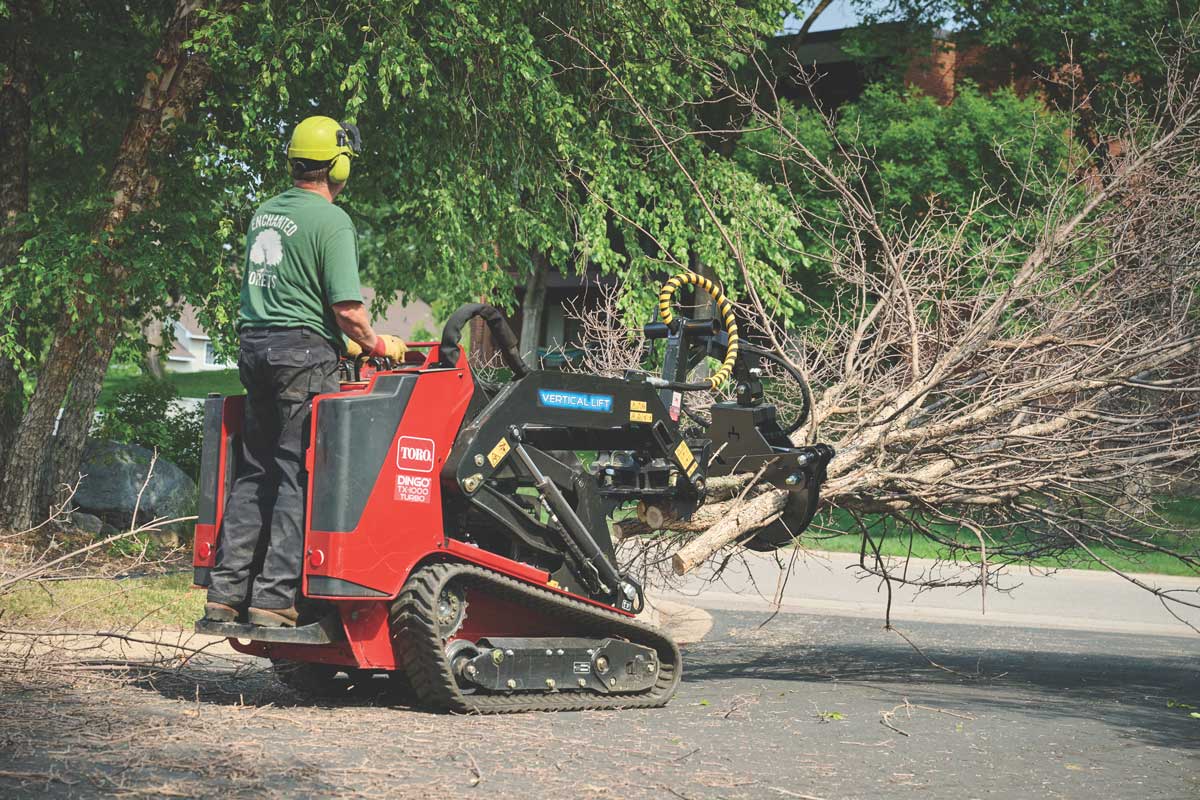
Pangman notes that mini loaders surged in relevance when they hit the 1,000-lb lift class (we have a whole video on that too). Crews began using them to replace wheelbarrow work, reduce strain and move material through yards, gates and tight urban spaces where larger machines do not fit. Stand-on operation also supports this shift. Operators jump on and off quickly and maintain a clear view of the attachment. This helps with forks, grapples and trenchers in cluttered residential environments.
Attachment Choices Drive the Model Decision
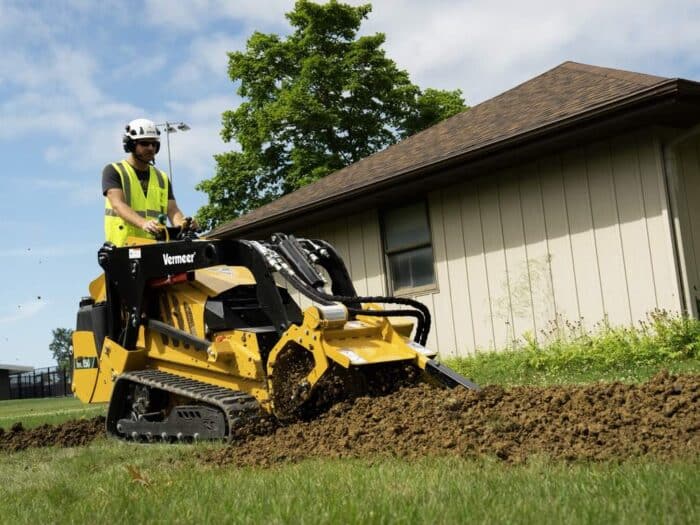
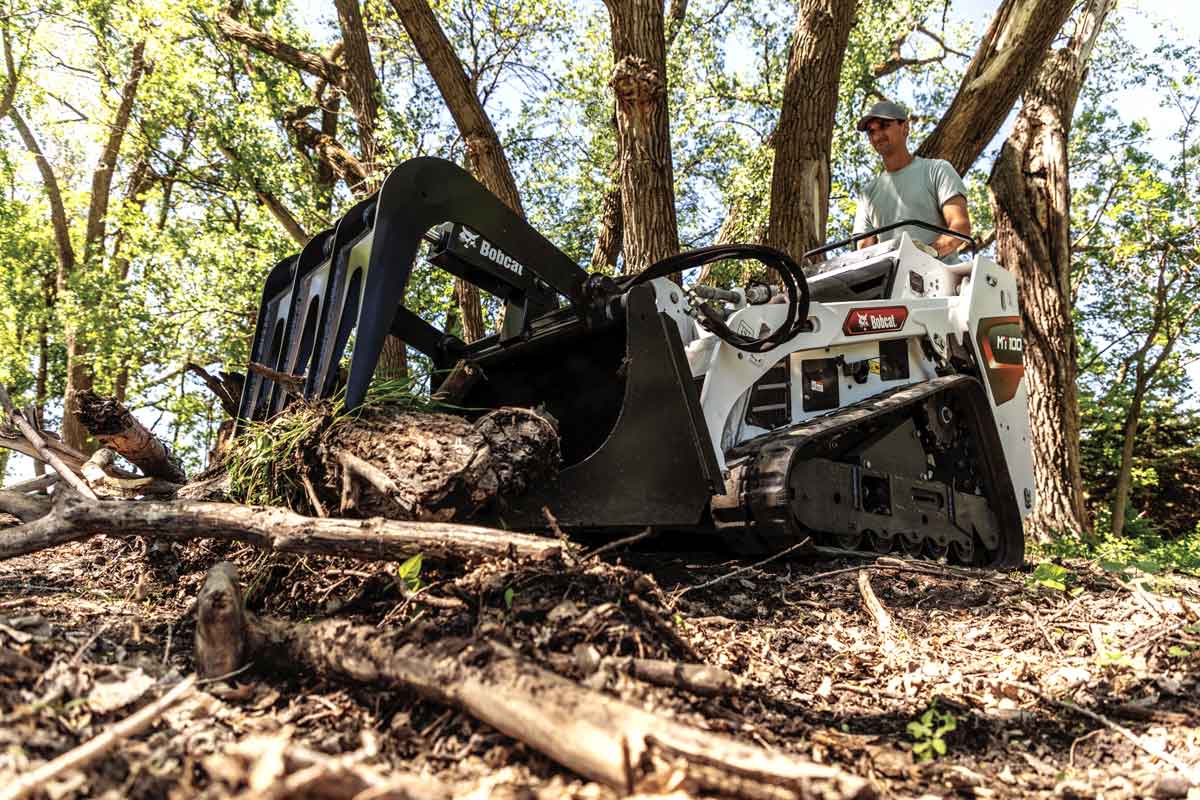
The interview returns several times to attachments as the true deciding factor between models. Vermeer’s core tools for tree care and landscape work — grapples, buckets, forks, trenchers, breakers and soil tools — often dictate hydraulic needs. Lighter tools and basic bucket work fit the smaller platform. High-demand attachments like trenchers, augers and rakes work better with the higher flow of the ML130 and ML150. If a loader struggles to maintain torque while counter-rotating or pushing into piles, Pangman says it is time to step up in horsepower or flow. A major ML-Series update focuses on hydraulic plumbing and filtration. Jobsite dirt enters systems through attachment changes, so Vermeer increased filtration capacity and optimized routing to protect long-term performance. Cleaner oil improves consistency for the first owner and preserves value for the second.
Operator Station Built for Predictability and Fatigue Control
Pangman explains Vermeer’s emphasis on operator experience. A rear chair-style surround gives users a defined space on busy jobsites. This helps operators feel more secure when backing, turning or working near crews. The spring-loaded platform reduces fatigue over uneven terrain. Vermeer designed the loader to keep operators comfortable and confident through a long day on their feet.
Radial vs Vertical Lift Paths
Grayson and Pangman break down the lift-path split:
- Radial lift (ML80, ML100) favors ground engagement tasks like trenching, grading and leveling.
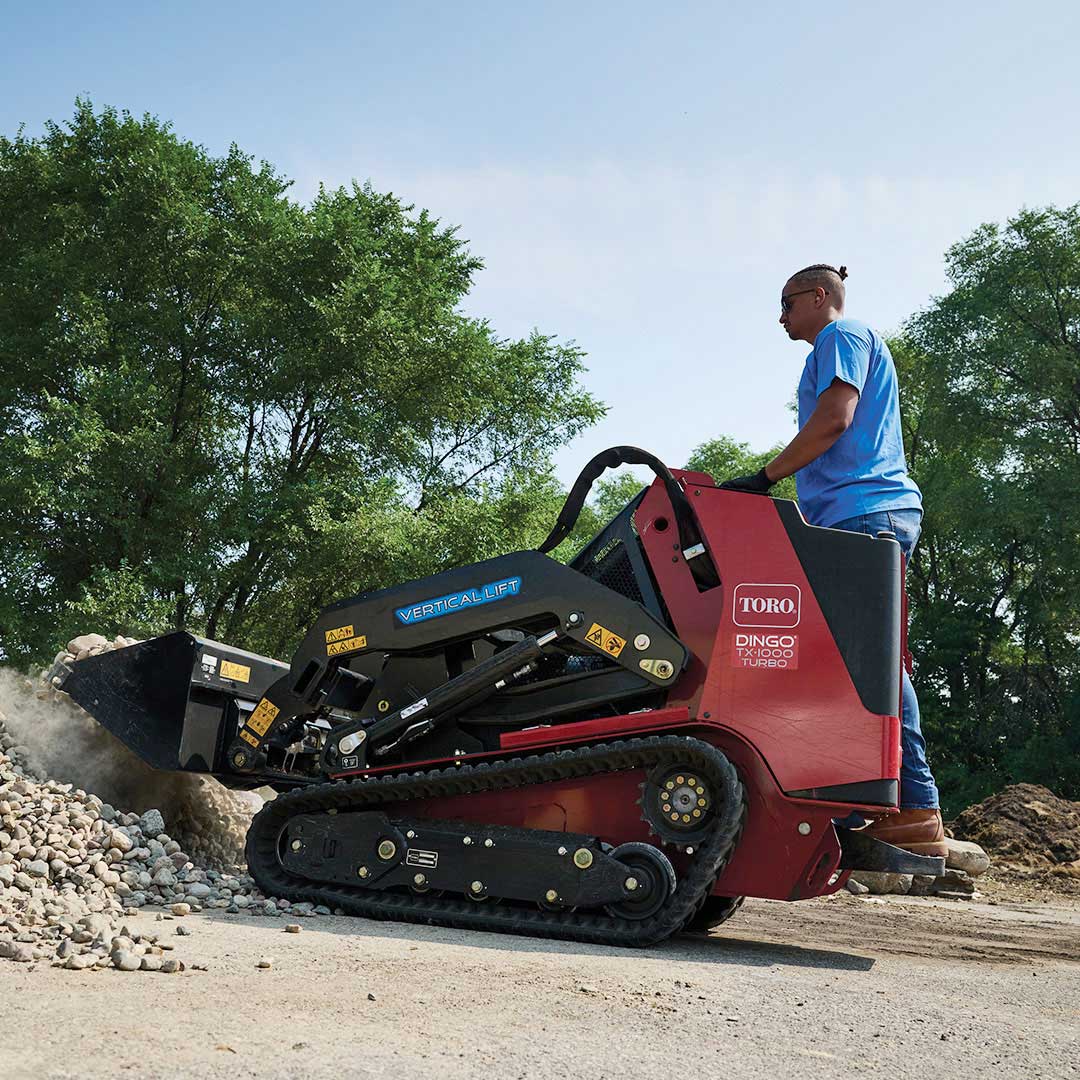
- Vertical lift (ML130, ML150) serves crews handling pallets, logs and material loading thanks to higher hinge-pin heights and stronger reach.
Contractors should start with the type of work they perform most.
How Each ML Model Fits Contractor Workflows
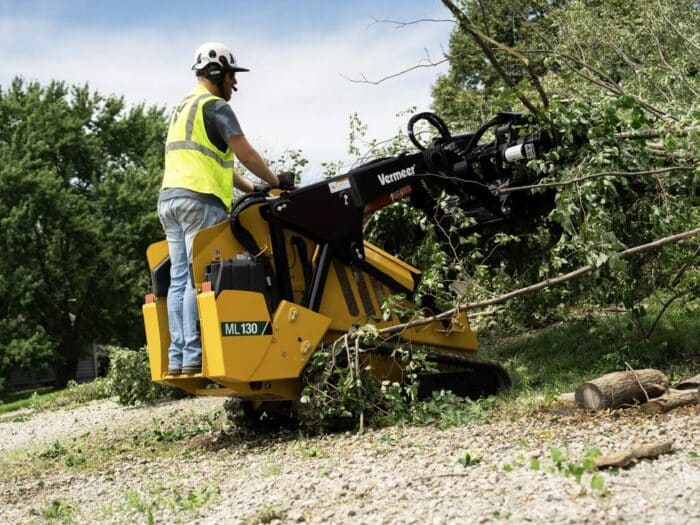
The ML80 serves cost-conscious buyers and rental fleets. With optional narrow tracks, it fits 36-in. gates and works well for light grading, trenching and bucket work. The ML100 becomes the core choice. Its turbocharged 25-hp diesel delivers better torque under load, improving counter-rotation and attachment performance in the 1,000-lb ROC class. The ML130 and ML150 step into heavier lifting and higher-flow attachments. Contractors moving full pallets of sod, loading chip trucks or running demanding hydraulic tools will notice the difference. The choice between the two often comes down to how much lift a crew needs and how often they push a loader to its limit.
Pangman closes by encouraging contractors to demo the machines. Running them back-to-back often reveals which loader delivers the right mix of lift, power and comfort for the work ahead. Watch it all above! Then subscribe to more right here.
Keith Gribbins is publisher of Compact Equipment.
Check out our Machine Heads video detailing John Deere’s 334 P-Tier skid steer and 335 P-Tier track loader.