Learn All About JLG’s Hands-On Approach to Ending Labor Shortage
JLG Industries Inc. recently shared its plans to address skilled labor shortages and workforce development.
The company outlined its intentional, people-first approach to rebuilding the industrial talent pipeline in America. It includes partnering with high schools, technical colleges, trade associations and industry organizations in order to help students discover careers in the trades while giving current workers opportunities to advance their craft.
JLG said the result is a growing community of individuals ready to power the future of construction and manufacturing, such as:
- welders
- painters
- assemblers
- manufacturing and robotics engineers
- maintenance professionals
- service technicians
- equipment operators
“In America today, there are more students who want hands-on technical education than there are classroom seats available,” said Andy Tacelosky, chief operating officer at JLG. “We saw an opportunity, not just to hire talent but to help create it one student, one trainee and one craft professional at a time. These programs give people a pathway to build a career, earn a living and stay in the communities they love.”
School-to-Work
Through JLG’s School-to-Work (S2W) program, local high school juniors and seniors local are welcomed into the company’s manufacturing facilities in McConnellsburg, Shippensburg, Bedford, Greencastle and Chambersburg, Pennsylvania. There, students can earn school credits while working paid roles in welding, assembly, painting, fabrication, warehouse support and more. JLG noted that students receive real-world experience, mentorship and the chance to transition into full-time roles after graduation. S2W+ — an advanced extension of the program — is also available. This opportunity places students in specialized roles like maintenance, robotics, machining, engineering and testing for deeper technical exposure.
“Our School-to-Work program gives young people a real opportunity to help us rebuild the future of the skilled trades,” says Tacelosky. “These are students who want to work with their hands and solve real problems, but the classroom alone can’t always give them that experience. Through S2W and S2W+, they earn school credit, a paycheck and the chance to work alongside experienced professionals. We’re creating more skilled workers in the Pennsylvanian communities where our team members live and work, as well as shaping the next generation of craft professionals and manufacturing leaders.”
TCAT Partnership
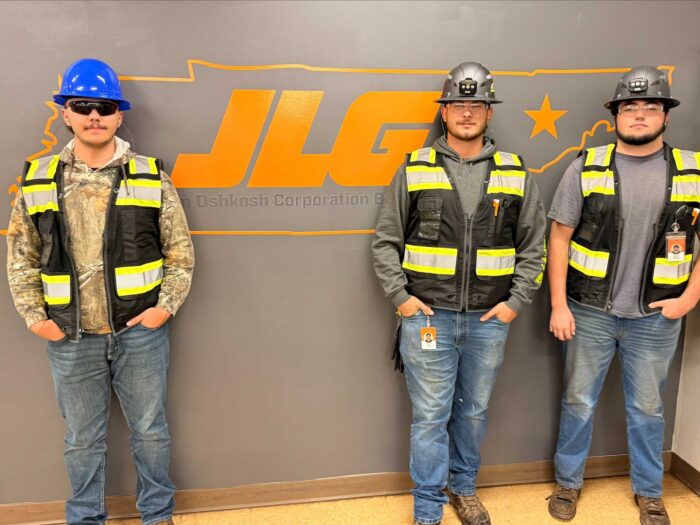
This year, JLG established a partnership with the Tennessee College of Applied Technology (TCAT), near the company’s manufacturing facility in Jefferson City, Tennessee. Together, JLG and TCAT are helping to integrate technical education with real-world factory experience. For example, after campus visits, interviews and plant tours, several students are now working part-time on JLG’s maintenance team while attending school. The company said students rotate between first and second shift to learn from specialists across multiple disciplines.
“This is what modern technical education should look like,” said Tacelosky. “Students are learning in class and applying it in real-world situations the same day.”
Investing in Team Members
JLG is also focused on investing in those already working in the trades.
From the press release:
Through its internal trainee programs, JLG is helping current team members and new hires advance into high-demand skilled positions — particularly in areas like welding and industrial painting, where manufacturers across the country struggle to hire experienced workers.
JLG’s Weld Trainee Program provides entry-level team members and external candidates with the opportunity to become certified welders. Participants complete three to four weeks of classroom and lab-based instruction, followed by three weeks of on-the-job training alongside experienced JLG welders. Similarly, the Paint Trainee Program is designed to develop industrial painters from within the workforce. Through hands-on training and mentorship, participants gain the skills needed to move into full-time painter roles.
“Welding and painting require skill, safety, precision and pride in craft, and these are often some of the most difficult roles in manufacturing to fill,” says Tacelosky. “Instead of waiting for talent to come to us, we’re choosing to grow it — building careers and strengthening our workforce for the future.”
Building Relationships
According to the press release, JLG partners with trade associations, unions, training schools and equipment rental providers to upskill craft professionals across North America in operating and servicing MEWPs (mobile elevating work platforms) and telehandlers. JLG highlighted partnerships with organizations such as:
- Associated Builders & Contractors (ABC)
- Association of General Contractors (AGC)
- Association of the Wall & Ceiling Industry (AWCI)
- Mason Contractors Association of America (MCAA)
- Steel Erectors Association of America (SEAA)
- regional apprenticeships
- trade unions
- community colleges
- correctional/vocational programs
“We know we can’t solve the skilled labor shortage on our own. That’s why we’re partnering with trade associations, unions, technical schools and industry groups to help upskill these professionals to bring real-world equipment, certified training and industry standards directly to the people who need it most,” says Tacelosky. “Working alongside these organizations, we’re not just training people; we’re helping them build lasting careers. It’s good for workers, it’s good for employers and it’s good for the future of the trades.”
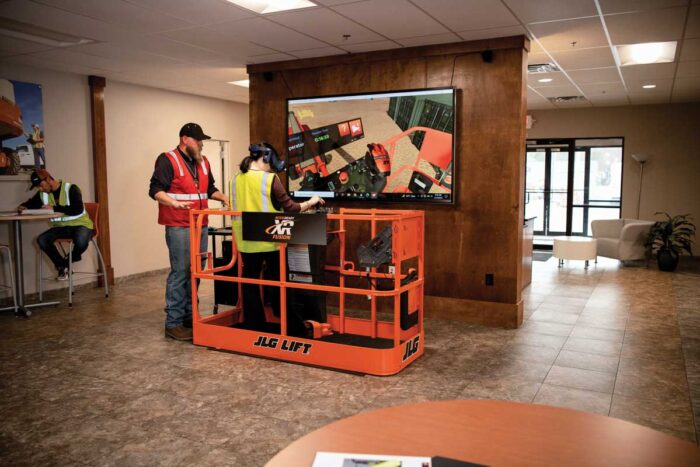
The company’s JLG University delivers hands-on operator training, telehandler service instruction and ANSI/OSHA-compliant safety education to thousands of workers each year. It helps contractors and employers employ safe, capable crews.
Pam Kleineke is managing editor of Compact Equipment.