8 Things We Learned from JLG’s New IoT Automation Whitepaper
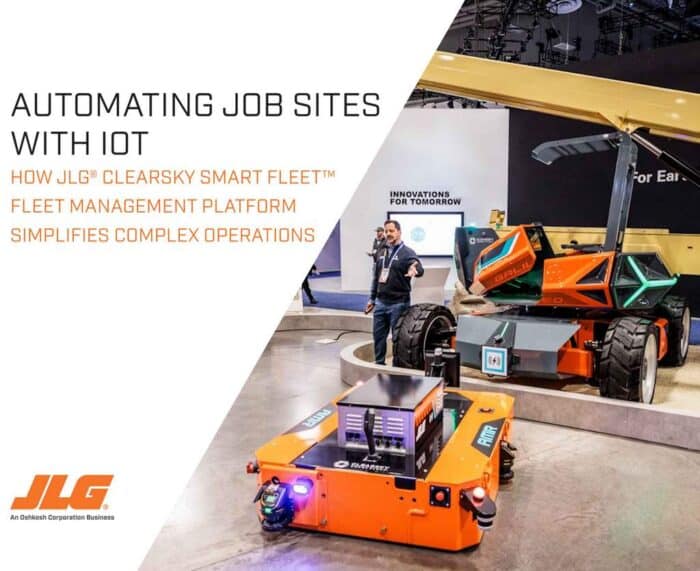
Jobsites keep getting tighter, busier and harder to manage. Machines move constantly. Crews stay lean. Time disappears into small manual tasks that add up fast. JLG’s new whitepaper, Automating Job Sites with IoT, looks at how connectivity is shifting from simple tracking to actual automation, which we thought sounded pretty post-worthy. Download the paper right here. It focuses on removing friction from daily fleet operations, not just adding a bunch of new dashboards. Here are eight takeaways that stood out — and why they matter for compact equipment fleets trying to do more with less.
1. One-Way Telematics No Longer Scales
Basic telematics still dominates many fleets. That’s cool, but that approach only sends data out. It does not allow interaction. As jobsites add machines and complexity, one-way systems slow decision-making. Managers must request data, interpret it and act manually. Each step adds friction. The whitepaper argues that automation starts when machines can also receive instructions. Interesting…
2. Two-Way Connectivity Enables Real Automation

IoT becomes useful when fleets can talk back to equipment. That shift changes how daily work happens. Two-way connectivity lets managers control access, deploy updates and group machines digitally. JLG says this turns telematics from reporting into action. This cool concept sits at the core of the whitepaper’s argument.
3. Manual Geofencing Creates Hidden Labor Costs
Geofencing sounds simple. We thought so too, but in practice, it eats time. Traditional systems require setup, reassignment and constant cleanup. Machines move. Sites change. Boundaries break. JLG’s paper explains how automation removes those steps entirely. The takeaway: time lost to admin work often hides in plain sight. Gah!
4. Jobsites Are Networks, Not Dots on a Map

Most fleet tools think in coordinates. Jobsites do not work that way. Machines arrive together, work together and leave together. The whitepaper reframes the jobsite as a dynamic network. This shift improves visibility at the site level, not just the asset level.
5. Access Control Has Become a Digital Problem
Keys, codes and keypads still dominate equipment access. They do not scale across crews and locations. The whitepaper outlines how cloud-based access simplifies control. Managers set machine states remotely. Crews gain clarity. Security improves without adding friction on the jobsite.
6. Software Updates Drain Skilled Labor
Machine software updates remain slow and manual — just like all software updates. Technicians often touch each unit one at a time. JLG’s paper quantifies how much labor this consumes across fleets. It also explains how automation compresses update windows.

7. Vertical Jobsites Break Traditional Tracking
GPS works horizontally. It struggles vertically. Multi-story projects expose this gap, and lots of MEWPs work on multi-story projects, right? Crews lose time searching floor by floor. The whitepaper introduces elevation-aware tracking as a solution, which is a pretty cool idea. It reframes location as a three-dimensional problem. Very cool.
8. IoT Platforms Must Improve Over Time
Some digital tools freeze at launch. Others evolve. The whitepaper stresses long-term platform thinking. Features roll out digitally. Fleets gain value without retrofits. For compact equipment owners, this matters. Machines stay productive longer without disruption.
The Bigger Takeaway for Compact Fleets
Automation does not replace people. It removes repetitive work that burns time and talent. JLG’s whitepaper focuses on workflows, not buzzwords. It highlights where labor disappears and how connectivity brings it back. Readers who want the full technical depth, examples and architecture details should download the complete whitepaper directly from JLG. This article only scratches the surface.
Keith Gribbins is publisher of Compact Equipment.
Let’s take a look at the smallest mini excavators on the market.