
Learn to Unlock Attachment ROI, Build a High-Performing Compact Fleet
When contractors invest in compact equipment, machine selection is usually deliberate and data-driven. Horsepower, operating capacity, hydraulics and price are carefully evaluated before a purchase is made. Attachments, however, are often treated as secondary purchases, added later when a specific job demands it and with far less long-term planning.
That reactive approach can limit productivity and profitability. Attachments directly affect what a compact machine can do, how efficiently it performs and how often it is working instead of sitting idle. In today’s construction environment, where labor is tight, timelines are compressed and costs continue to rise, those details have a direct impact on jobsite performance and the bottom line.
A more strategic, ROI-driven approach to attachment selection allows contractors to get more value from the machines they already own. By viewing attachments as part of a broader fleet strategy rather than one-off solutions, contractors can improve utilization, reduce downtime and position their compact equipment to handle a wider range of work without adding more machines.
Evaluating Attachments as Long-Term Assets
The true return on an attachment is not determined by how useful it is on a single job, but by how often it contributes to productive work over time. An attachment that solves a short-term problem but spends most of the year parked represents tied-up capital and missed opportunity.
Consider a construction contractor operating a small fleet of skid steers averaging 20 to 25 hours of use per week. Much of that time is spent on core material handling, while tasks like site cleanup, debris removal or light demolition are handled manually or subcontracted. Adding the right attachments, such as a grapple or breaker, allows those same machines to stay productive through additional phases of the job. Increasing utilization by just five to 10 hours per week can translate to hundreds of additional productive hours over the course of a year.
Those gains also affect labor planning and even help protect margins in highly competitive markets. When compact machines take on work that would otherwise require a subcontractor or additional labor, crews stay focused on higher-value tasks. Eliminating even a few subcontracted activities over a season can result in meaningful cost savings while improving schedule control.
Evaluating attachments as long-term business assets requires asking different questions. How often will this attachment be used? Can it support more than one application? Does it align with the work the business performs today and plans to pursue in the future? Just as important, does the attachment deliver the right balance of durability and efficiency for how it will be used most often?
Investing Where It Counts
Durability is critical on construction jobsites, but more steel does not always translate into better ROI. One common mistake contractors make is assuming heavier construction automatically delivers greater value. In practice, overbuilding an attachment can reduce productivity and increase labor costs.
Every pound of attachment weight subtracts from a machine’s rated operating capacity. If an attachment reduces usable capacity by even 100 lbs, additional passes may be required to move the same volume of material. Extra time spent cycling material, even 10 to 15 minutes per hour, adds up.
A more effective attachment strategy aligns duty level with how the attachment will be used most often. Contractors handling concrete, demolition debris or abrasive materials may benefit from heavier construction. Others focused on grading, site preparation or general material handling may see better ROI from a well-built standard-duty attachment that preserves lifting capacity and machine efficiency.
Understanding this balancing act, industry-leading OEMs are optimizing strength-to-weight ratios through smarter engineering, reinforcing high-stress areas without overbuilding the entire attachment. Over time, these attachments can provide hundreds of additional productive machine hours and better returns on both equipment and labor.
Versatility Over Redundancy
Once duty level and weight are aligned, the next opportunity to improve ROI comes from evaluating versatility across the fleet. Many contractors accumulate attachments to solve specific problems, only to find that several tools perform similar functions but see limited use. The result is capital tied up in underutilized equipment while crews lose time switching attachments or waiting for the right tool.
Versatility is not about finding one attachment that does everything. It is about selecting attachments that perform well across multiple phases of a job. It’s common sense: Reducing attachment changeovers improves productivity. Losing just 10 minutes per change, four to six times per day, can result in nearly an hour of lost production. Over the course of a week, that downtime adds up quickly.
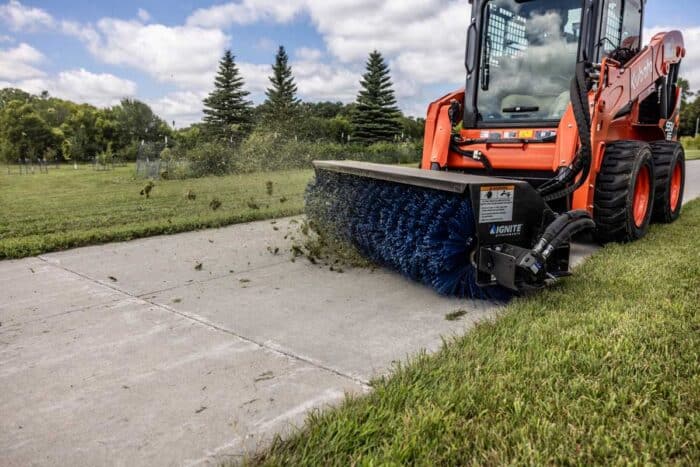
Instead, grapples that handle debris clean-up, material handling and light demolition, for example, can stay on a machine longer. The same is true for attachments like angle brooms that support cleanup and finish work without requiring additional labor.
Reducing Downtime and Protecting Productivity
Fit and compatibility issues create the same type of productivity loss as frequent changeovers, but with less predictability and less control. Downtime tied to poor fit is often underestimated. Losing 20 to 30 minutes troubleshooting fitment issues or swapping machines directly cuts into productive labor hours. On fast-paced construction sites, those delays can add up to several lost hours per week.
Leading brands offering compatibility tools that remove guesswork from attachment selection help reduce this risk. Digital fit tools, detailed specification matching and clear compatibility guidelines help ensure attachments align with machine requirements before reaching the jobsite. That confidence minimizes downtime, supports stronger utilization and contributes to tighter timelines and more predictable job costs.
A Smarter Attachment Strategy
The goal is not to own more attachments, but to own the right ones. When selected with intention, attachments help contractors get more consistent production from existing machines, make better use of available labor and respond more effectively to changing job requirements.
By evaluating attachments as long-term assets, matching duty level to real-world use, prioritizing versatility and ensuring compatibility across the fleet, contractors can increase utilization without adding machines. In a competitive bidding environment, those efficiencies help protect margins and support long-term fleet performance.
Darin Gronwold is a product manager for Ignite Attachments.


Comments are closed here.